
← Back
10/19/1987 • 4 views

Black Monday: Wall Street’s Worst Single-Day Crash, October 19, 1987
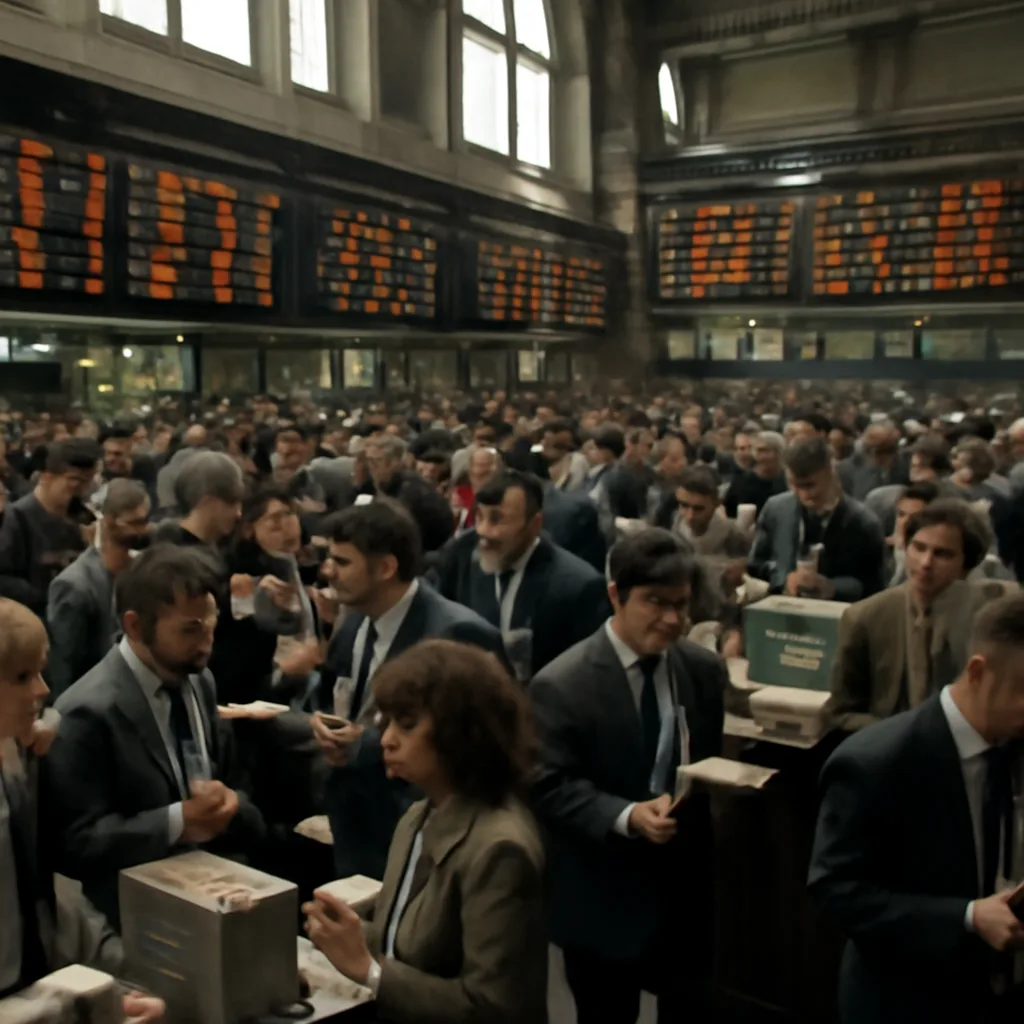
Crowded trading floor of the New York Stock Exchange in the 1980s showing traders at terminals and paper printouts during a market decline.

On October 19, 1987—dubbed Black Monday—U.S. stock markets suffered their largest single-day percentage decline in history, with the Dow Jones Industrial Average plunging 22.6%, triggering global market turmoil and prompting new attention to computerized trading and market safeguards.


On Monday, October 19, 1987, global financial markets experienced a dramatic and sudden collapse that became known as Black Monday. The Dow Jones Industrial Average (DJIA) fell 508 points, a 22.6% drop—the largest single-day percentage decline in its history. The crash was not limited to the United States: major stock markets around the world also posted large losses, intensifying concerns about market stability and interdependence.

Context and immediate causes
The mid-1980s had seen a prolonged bull market following the 1982 trough. By 1987 valuations and trading volumes had risen substantially. A mix of factors contributed to the October collapse. Rising interest rates and concerns about inflation weighed on investor sentiment. Portfolio insurance—an automated hedging strategy that involved selling stock index futures as markets fell—has been widely cited by researchers and regulators as amplifying the downward move: as prices dropped, these programs generated additional sell orders, which in turn pushed prices lower in a feedback loop. Other factors included market liquidity constraints, heavy use of leverage by some investors, and the growing speed and coordination of computerized trading. International linkages transmitted the shock across borders.

Market behavior and trading conditions
Trading was characterized by extreme volatility and, in many cases, thin liquidity. Numerous securities experienced outsized price moves. Some exchanges temporarily widened bid-ask spreads; in several instances, trading became difficult or halted for certain issues. The NYSE and other exchanges later reviewed their rules and systems in response to operational stresses revealed by the event.

Economic impact and policy response
Though the immediate financial damage was severe in terms of market capitalization lost, the crash did not precipitate an economic recession in the United States; GDP growth continued in the quarters that followed. Nonetheless, the event prompted regulatory and structural changes. U.S. and international regulators investigated the causes and considered reforms to reduce systemic vulnerabilities. One practical outcome was the development and later implementation of market-wide “circuit breakers” and trading halts designed to pause trading during extreme moves, giving market participants time to reassess and potentially limiting self-reinforcing selling.

Longer-term significance
Black Monday highlighted the potential for automated trading and rapid information flows to amplify market stress. It also underscored the interconnectedness of global financial markets. Academic studies and official reports from the period and subsequent decades have examined the roles of portfolio insurance, market liquidity, trader behavior, and institutional structures. The crash influenced both market participants and regulators to focus more on risk controls, liquidity management, and mechanisms to slow trading during extreme volatility.

Uncertainties and debate
While portfolio insurance and computerized trading are frequently cited as important amplifiers, economists and market analysts continue to debate the relative importance of different causes. No single explanation fully accounts for the complexity of market dynamics that day. Historical analyses draw on contemporaneous data, market microstructure studies, and regulatory inquiries; disagreements remain about how much of the move was endogenous (driven by market mechanisms) versus triggered by external economic or geopolitical news.

Legacy
Black Monday remains a reference point for discussions of market fragility, the interaction of technology and finance, and the design of safeguards. The changes implemented after 1987—procedural, regulatory, and technological—aimed to reduce the odds that a single trading day’s stresses would cause comparable systemic dislocations in the future.

Share this

Email Share on X Facebook Reddit

Did this surprise you?