
← Back
11/10/1989 • 5 views

Beijing orders sweeping crackdown after student-led protests
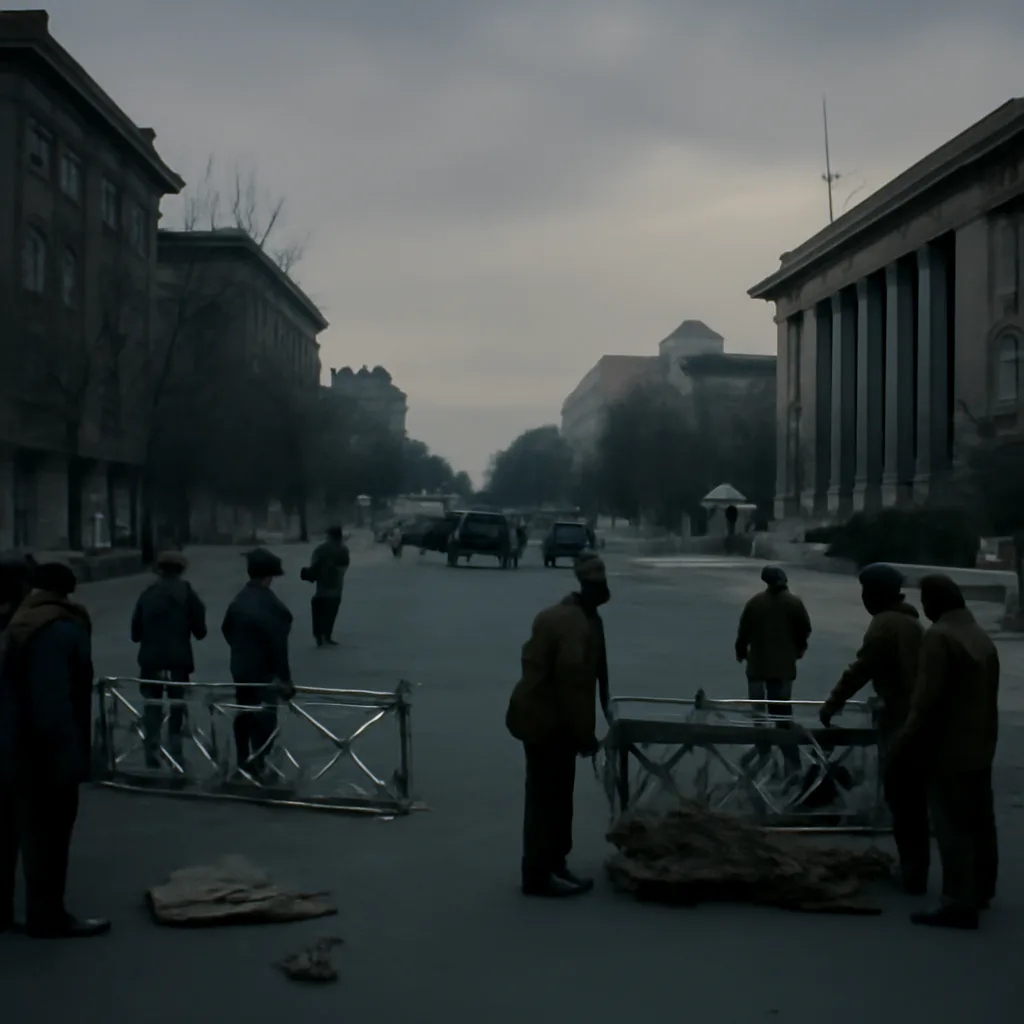
Late 1980s Beijing street with uniformed security personnel, closed university buildings, and students dispersed; vehicles and barricades visible, no identifiable faces.

On November 10, 1989, Chinese authorities launched a broad security operation across Beijing and other cities in response to months of pro-democracy student protests, marking an escalation that included arrests, press restrictions and mass troop deployments.


In the months following the death of former Communist Party leader Hu Yaobang in April 1989, student-led demonstrations calling for political reform, greater transparency, and an end to official corruption grew into a broad, sustained movement centered on Beijing's Tiananmen Square. By early June the gatherings had drawn nationwide attention and prompted a strong response from the Chinese leadership. After intermittent negotiations and political wrangling at the top levels of the Communist Party, authorities moved to end the sit-ins and protests.

On or around November 10, 1989, officials implemented a wide-ranging security campaign that built on earlier measures taken in June. The November actions included increased police and military patrols, checkpoints, curfews in some districts, mass arrests of activists and suspected organizers, closures of student dormitories and campus facilities, and tighter controls on domestic media and foreign correspondents. Local party committees and public-security organs issued directives to identify and detain individuals considered responsible for organizing or sustaining protest activities. Universities across the country were pressured to discipline or expel participants and to resume ideological and political education programs.

The crackdown also entailed information controls: reporting by Chinese state media emphasized the need to restore order and blamed “counterrevolutionary” activities for social unrest, while foreign news coverage and international broadcasts faced new restrictions or expulsions of correspondents. Communications surveillance and censorship intensified, with the authorities monitoring letters, telephone calls, and public assemblies to prevent the re-emergence of coordinated demonstrations.

The November operations were part of a broader pattern of post-summer suppression. In June 1989, the most dramatic confrontation occurred when troops and tanks cleared Tiananmen Square; estimates of deaths and arrests vary significantly and remain disputed. The later measures in November aimed to consolidate the Party’s control, remove dissent from campuses and city streets, and deter future large-scale activism. The campaign also coincided with political purges within the Party and government: officials perceived as sympathetic to protesters were pressured to resign or were removed from positions of influence.

International reactions to the crackdown included widespread condemnation from Western governments, temporary diplomatic sanctions, arms embargoes, and calls for investigations into human-rights abuses. Within China, the security campaign and subsequent legal actions created a climate of fear and political conformity that reshaped campus life, intellectual debate, and civil-society activity for years to come.

Historical assessments emphasize the mixed legacy of the 1989 protests and the subsequent crackdowns. The events exposed deep-seated public grievances about corruption and political accountability while demonstrating the Chinese Communist Party’s willingness to use force and legal repression to maintain stability and its monopoly on power. Precise casualty figures, the number of detainees, and the full scope of arrests during November operations remain subjects of scholarly research and dispute due to restricted access to official archives and differing contemporaneous accounts.

The November crackdown constituted a decisive step in the post-1989 normalization process carried out by Chinese authorities: reasserting centralized authority, restricting political dissent, and prioritizing economic and social stability under tightened political controls. Its effects influenced China’s domestic policies and international relations into the 1990s and beyond.

Share this

Email Share on X Facebook Reddit

Did this surprise you?