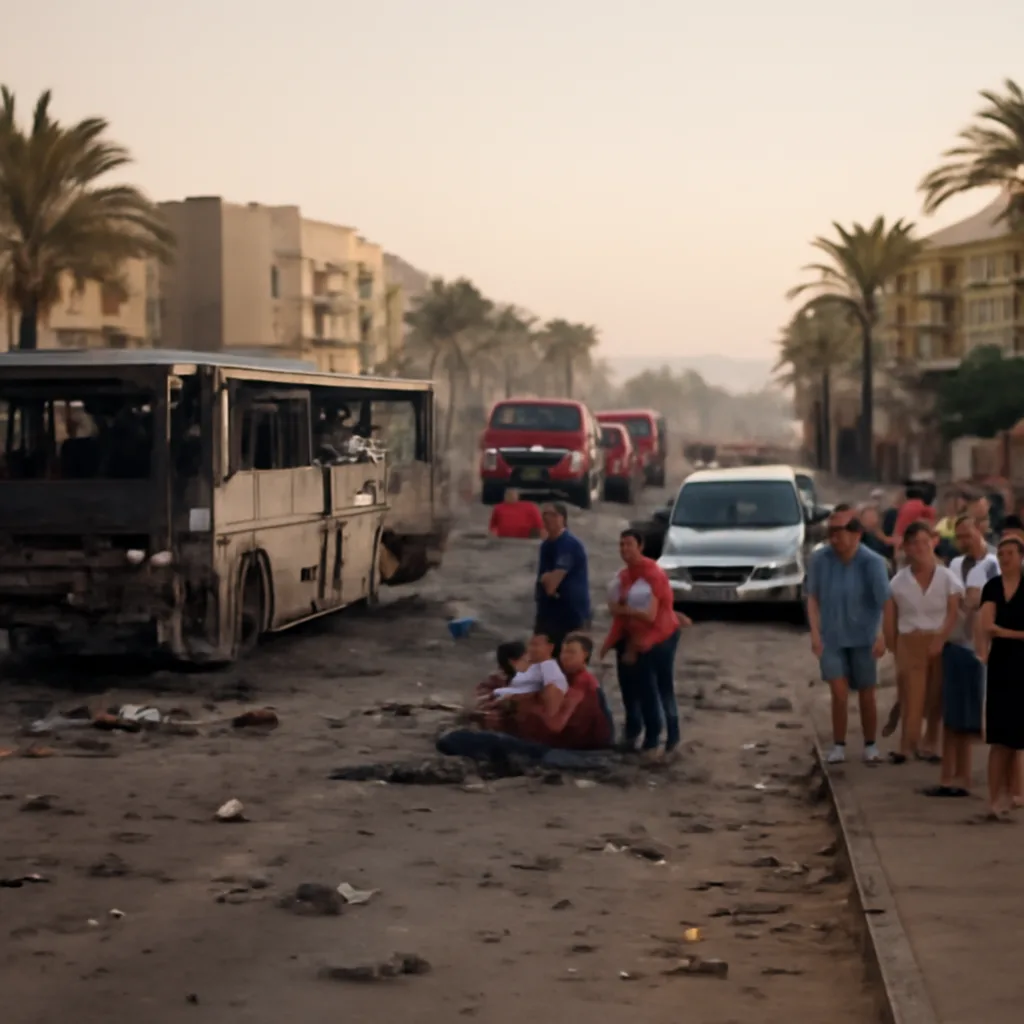
On Oct. 7, 2004, a bomb exploded near tourist buses in the Red Sea resort of Taba, Egypt, killing and injuring visitors and local residents; investigations pointed to a militant attack amid regional instability.
On October 7, 2004, a bomb detonated near a line of tourist buses in Taba, a Red Sea resort town in Egypt near the Israeli border, causing multiple deaths and dozens of injuries among foreign tourists and Egyptians. The attack occurred in a popular area used by tour operators shuttling visitors between resorts and border crossings. Initial reports identified significant civilian casualties and widespread shock among the local community dependent on tourism.
Egyptian authorities launched a rapid investigation and security lockdown in the area. Law enforcement collected forensic evidence from the blast site and questioned witnesses and bus drivers. Domestic and international media coverage focused on the victims — many of whom were holidaymakers — and on the implications for regional tourism and security.
Responsibility for the bombing was disputed in early reporting. Egyptian officials and some international observers linked the attack to Islamist militant activity in the Sinai region and to broader patterns of politically motivated violence that had affected Egypt and neighboring areas in prior years. However, definitive attribution to a specific organization was not universally agreed at the time, and investigations involved multiple security agencies.
The bombing occurred against a backdrop of heightened tensions in the Middle East in the early 2000s, including spillover effects from conflicts in neighboring territories and a domestic security environment in Egypt that had seen periodic militant attacks. The Egyptian government emphasized improving security for tourists and bolstering counterterrorism efforts, citing the economic importance of the tourism sector to local communities such as those in the Sinai and Red Sea resort corridor.
International reactions included condolences from affected countries and calls for support for victims. Some foreign governments issued travel advisories or reviewed their guidance for citizens traveling to parts of the region. Humanitarian and medical responders treated the injured in local hospitals; some critically injured victims were reported to have been evacuated or transferred for further care.
The Taba bombing of October 7, 2004, reinforced concerns about the vulnerability of civilian and tourist sites to politically motivated attacks and sparked debates over security measures at border crossings, transport hubs and resort areas. In the months and years that followed, Egyptian authorities continued counterterrorism operations in the Sinai and invested in measures aimed at protecting tourism infrastructure, while civil society and industry stakeholders discussed resilience and support for affected communities.
Historical assessments of the incident note its immediate human cost and its longer-term impact on perceptions of safety in the region’s tourism industry. Some questions about the specifics of responsibility and motive remained matters of official investigation and analysis by security experts; where claims of responsibility were made or suspected links proposed, they were subject to corroboration and debate among analysts and officials.