
06/24/1845 • 4 views
First reported complete disappearance of an Arctic expedition, June 24, 1845
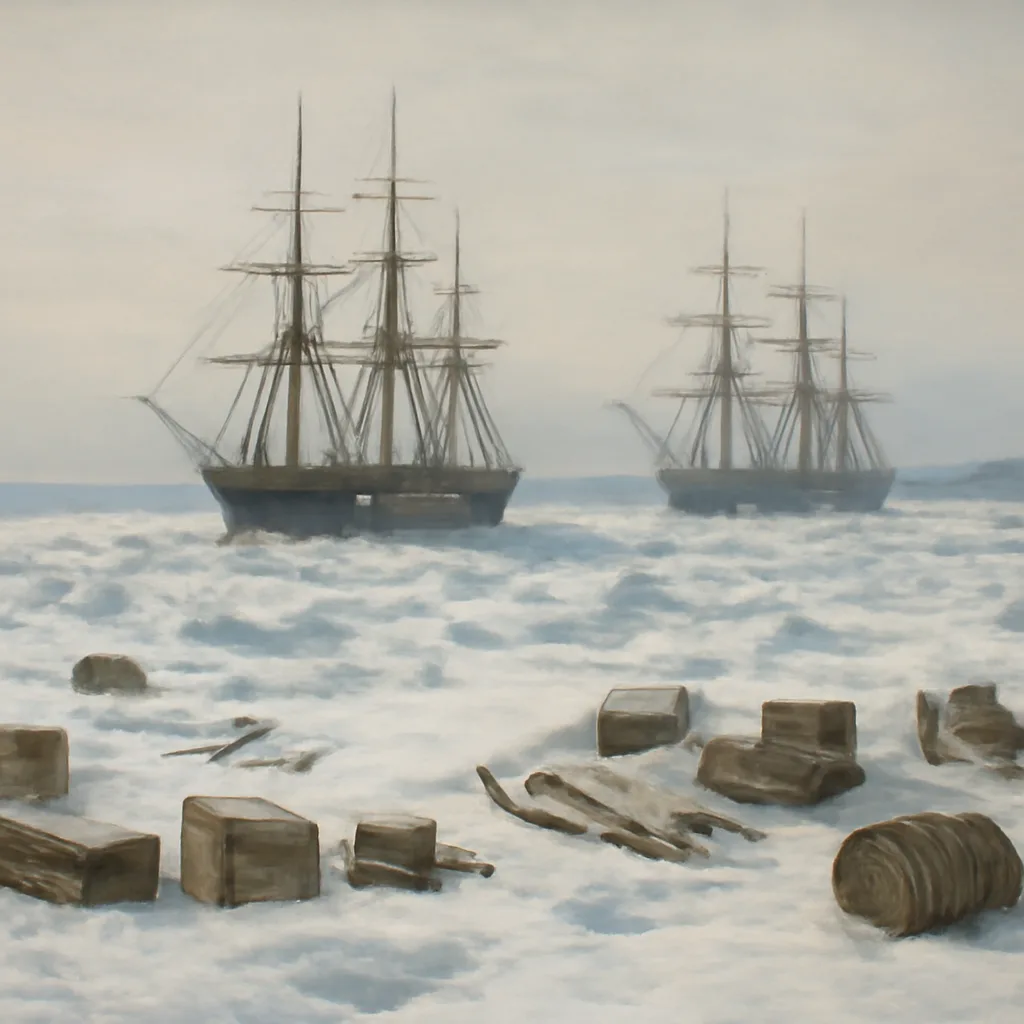
On June 24, 1845, news emerged that an entire British Arctic expedition led by Sir John Franklin had sailed and subsequently vanished—marking the first widely reported instance of a whole expedition disappearing without immediate explanation.
Initial expectations were high: the expedition left with official orders and a timetable, and government and naval circles anticipated seasonal delays but expected eventual return. When months passed without arrival at scheduled ports and no routine reports were received, concern mounted. By late 1845 and into 1846 the absence of any communications, rendezvous, or sightings of the ships became notable. Newspapers, naval authorities, and families of the officers and crew treated the situation with growing alarm; the disappearance of all members—rather than a single ship lost or an isolated set of casualties—was unprecedented in the British public record for a polar undertaking of this scale.
Search efforts were organized over subsequent years by the Admiralty, private sponsors, and other nations. Numerous search voyages, overland sledging parties, and later inquiries slowly revealed fragments of the expedition's fate: ice-bound ships, abandoned camps, skeletons, and artifacts left on the shores of the Canadian Arctic. These discoveries, uncovered intermittently during the decades after 1845, showed that Franklin's ships had become trapped in pack ice off King William Island and that survivors had attempted overland marches southward. Evidence pointed to a chain of calamities—extreme cold, starvation, disease, and possible lead poisoning from tinned provisions or ship fittings—contributing to the expedition's loss. The precise sequence of events, decision-making on board, and the full number who attempted escape remain subjects of historical investigation and debate.
The Franklin case changed how polar exploration was conceived and supported. It prompted improvements in expedition provisioning, the collection and preservation of records, and coordination of rescue or relief attempts. The prolonged mystery around the expedition also spurred public interest and a generation of search missions that mapped previously uncharted Arctic regions. In recent decades, archaeological surveys and the 2014–2016 identification of the wrecks of HMS Erebus and HMS Terror have added material evidence to the historical record, confirming that both ships were lost in the Arctic and providing new data for researchers reconstructing the final months of the voyage.
While later findings have clarified many aspects of the expedition's end, some questions endure—about the timing of specific events, the roles of disease, nutrition, and environmental conditions, and the decisions made by Franklin and his officers when the crisis unfolded. The initial reporting around June 24, 1845, thus stands as a marker in history: it transformed a planned naval enterprise into the first widely documented disappearance of an entire expedition, a case that would occupy public attention and scholarly inquiry for generations.