
← Back
08/04/1936 • 7 views

Luz Long’s gesture to Jesse Owens at the 1936 Olympics
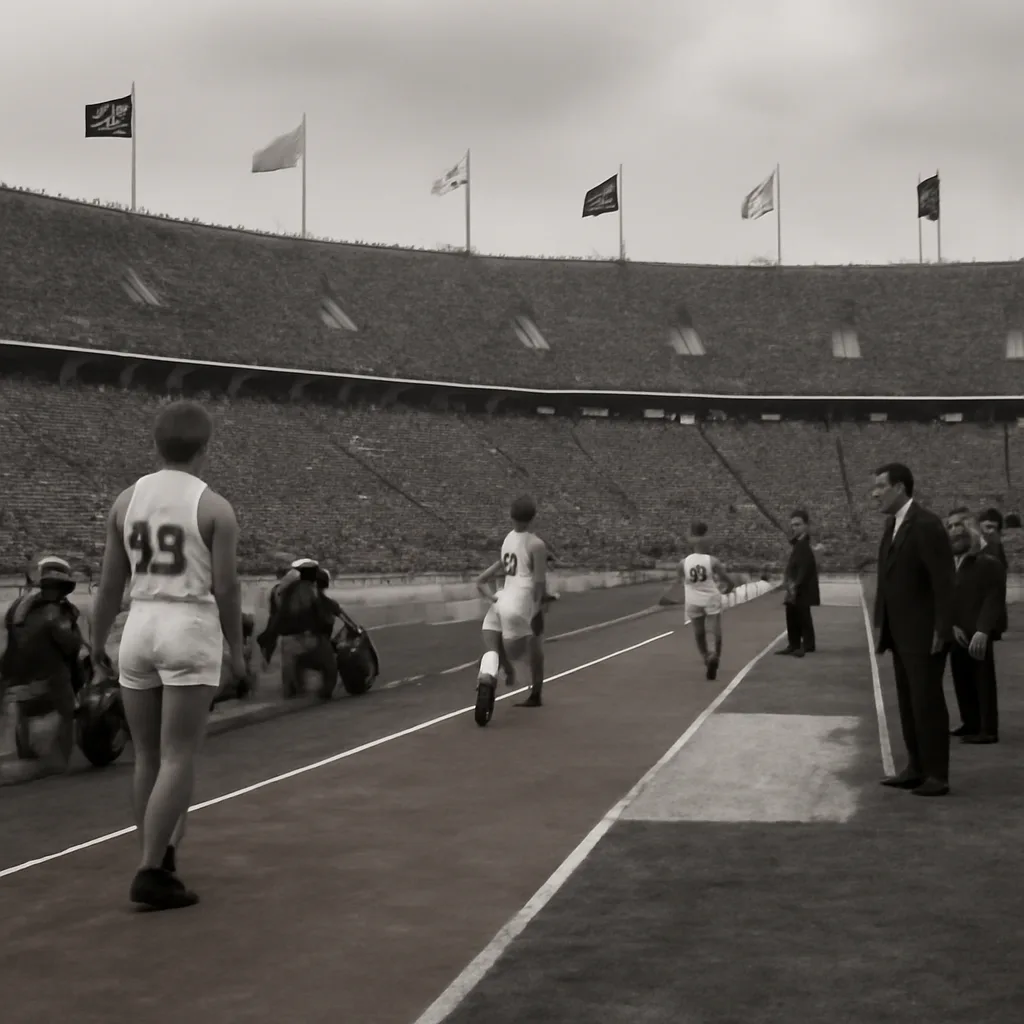
1936 Olympic long jump runway and sandpit at the Berlin stadium showing athletes and officials in 1930s sports attire.

At the 1936 Berlin Olympics, German long jumper Luz Long reportedly offered advice and visible encouragement to American Black athlete Jesse Owens after Owens fouled his first two attempts, a moment later seen as a quiet rebuttal to Nazi racial ideology.


On August 4, 1936, during the Olympic long jump final at the Berlin Games, Jesse Owens of the United States won gold in a competition that became emblematic of athletic excellence amid the politics of Nazi Germany. German long jumper Carl Ludwig “Luz” Long finished second, and contemporary and later accounts describe a brief episode in which Long appeared to advise and encourage Owens after Owens had fouled his first two jumps. Owens then produced a legal jump—recorded as 8.06 meters (26 ft 5 in)—to take the lead and ultimately win the event.

Eyewitness reports and Owens’s own retellings helped cement the scene in public memory: while preparing for his final attempts, Owens struggled with fouls, and Long walked over, spoke to him, and suggested Owens take off a few inches from the takeoff board to ensure a legal mark. Owens followed that advice and achieved the jump that secured his victory. Photographs of the competition show the athletes on the runway and in the pit, but no single definitive image captures the exact moment of the conversation; much of the story relies on participant recollection and contemporary reporting.

Historians caution that some details around the interaction are disputed or have been simplified in later retellings. The popular narrative—Long as a deliberate act of friendship and defiance toward Nazi racial doctrine—reflects both documented kindness between competitors and the broader symbolic reading that emerged after the Games. Luz Long was a German athlete who, unlike the Nazi leaders present at the stadium, competed alongside and congratulated Owens; after the Olympics, Owens and Long corresponded, and Owens later attended Long’s funeral in 1943 after Long was killed in World War II.

Context matters: the 1936 Olympics were heavily politicized, staged by the Nazi regime to showcase Aryan superiority. Owens’s victories (four gold medals) challenged that narrative in the public eye. Long’s conduct—sportsmanship toward a Black American champion—was noted at the time and has been commemorated since as an example of personal decency in a politicized setting. At the same time, some historians emphasize caution about attributing overt anti-Nazi intent to Long based solely on this episode; his actions are best documented as sportsmanlike assistance and encouragement.

Primary sources for this episode include contemporary newspaper accounts, Jesse Owens’s own memoirs and interviews, and later biographies of both athletes. Secondary analyses place the encounter within the contested symbolism of the Berlin Games, showing how personal acts between athletes were sometimes later reframed as moral statements against a repressive regime. While the essential facts—that Owens won, Long placed second, and that Long is reported to have advised Owens during the competition—are well-attested, finer points such as exact wording, intentions, or the theatrical framing of the moment remain matters of recollection and interpretation.

The Long–Owens episode endures as a concise story of sportsmanship: an on-field gesture that has been read as both personal kindness and a quiet repudiation of the racial politics surrounding the 1936 Olympics. Its continued resonance arises from the verified outcomes of the competition, the participants’ own accounts, and the larger historical backdrop against which their interaction took place.

Share this

Email Share on X Facebook Reddit

Did this surprise you?