
← Back
09/12/1958 • 5 views

Supreme Court Affirms Federal Power to Enforce School Desegregation
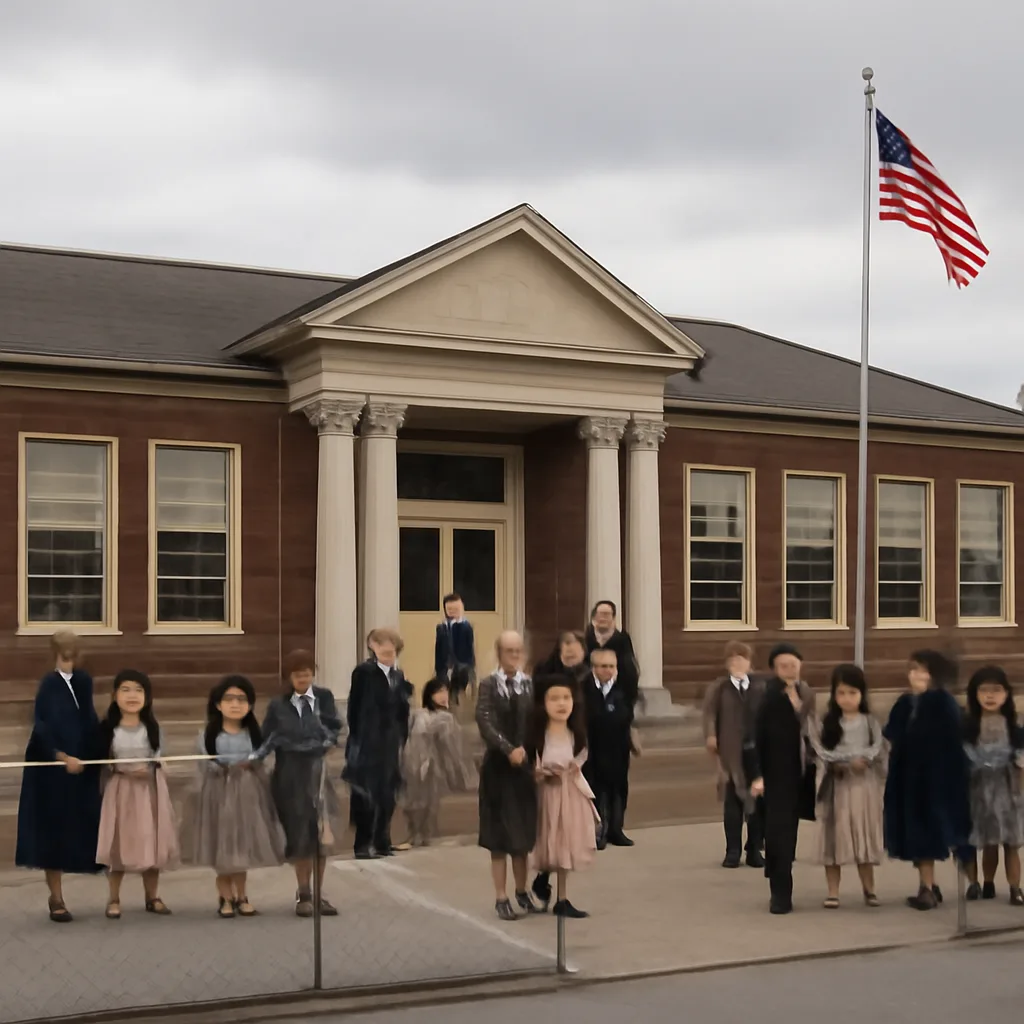
A mid-20th-century classroom exterior at a public school building with children and parents gathered outside; signage indicates a public school, and clothing reflects 1950s attire.

On September 12, 1958, the U.S. Supreme Court addressed how federal courts and officials may enforce school desegregation orders, clarifying remedies and the scope of coercive relief in the wake of Brown v. Board of Education.


Background
In 1954 the Supreme Court’s decision in Brown v. Board of Education declared state laws establishing separate public schools for Black and white students unconstitutional. After Brown, lower courts and federal actors confronted recurring questions about how far courts could go to compel compliance, what remedies were appropriate, and what role federal officials might play when local authorities resisted desegregation.

The 1958 decision
On September 12, 1958, the Supreme Court issued an opinion addressing enforcement mechanisms for school desegregation. The Court considered petitions and appeals arising from lower-court desegregation orders and disputes over what relief federal courts could fashion to secure compliance with constitutional mandates. The ruling emphasized that federal courts have authority to order equitable remedies to enforce constitutional rights and clarified limits and procedures for such relief.

Legal significance
The decision reinforced a principle central to post-Brown litigation: federal courts may use their equitable powers to effectuate desegregation when local governments fail to comply with constitutional requirements. That included injunctions against discriminatory practices and other court-ordered measures aimed at dismantling segregated systems. The opinion contributed to a line of cases in the late 1950s and 1960s establishing that the injunction power could reach various facets of school administration to eliminate segregation “root and branch.”

Context and impact
The ruling came during a period of sustained resistance to desegregation in parts of the country, including episodes of “massive resistance” and state-level maneuvers intended to impede court orders. By reaffirming the availability of federal equitable relief, the Court helped provide a legal basis for subsequent orders that required school districts to implement plans—often monitored by courts—to achieve unitary, nonsegregated systems. Enforcement sometimes required ongoing federal supervision, appointment of special masters, or other remedial procedures approved by courts.

Limitations and practice
Although the decision endorsed robust enforcement tools, it also recognized procedural and doctrinal limits: courts must tailor remedies to the constitutional violation, respect principles of equity, and consider concrete facts rather than issuing overly broad or indefinite orders without appropriate evidentiary support. The ruling thus guided trial judges in crafting specific, purposive remedies while signaling appellate courts’ willingness to uphold such orders when they were properly grounded in the record.

Aftermath
In practice, the Court’s enforcement jurisprudence evolved through later cases and through continued litigation in federal district courts. The 1958 decision formed part of the evolving doctrinal framework that allowed federal courts to dismantle de jure segregation and to supervise remedial measures when necessary, ultimately shaping the trajectory of school desegregation enforcement in the decades that followed.

Note on sources
This summary synthesizes the legal context and general consequences of Supreme Court rulings in the late 1950s concerning desegregation enforcement. Specific case names, opinions, and textual quotations are not supplied here; readers seeking the precise opinion texts and case citations from September 1958 should consult official Supreme Court reports and contemporaneous legal analyses for verification.

Share this

Email Share on X Facebook Reddit

Did this surprise you?