
← Back
10/05/1936 • 4 views

French Government Falls as Nationwide Strikes Paralyze the Country
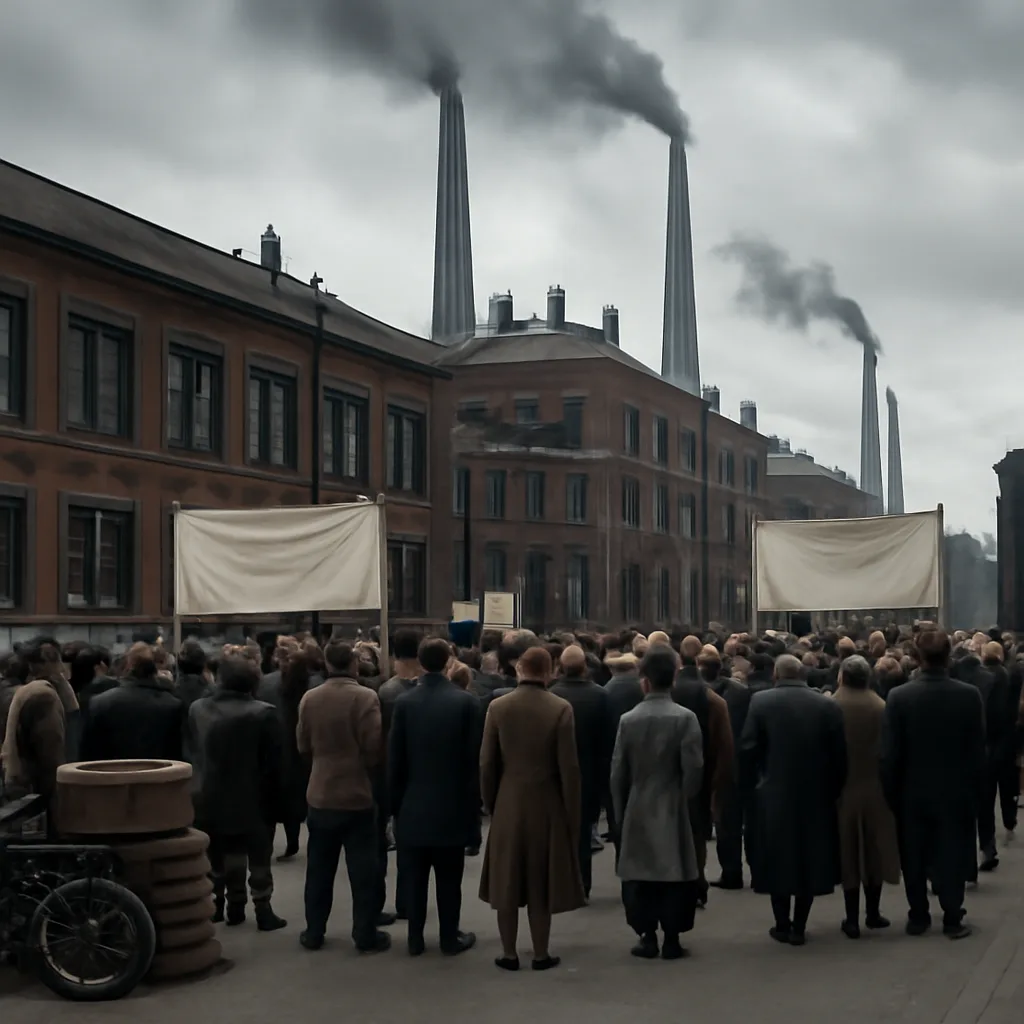
Crowd of French factory workers and union banners gathered outside an industrial complex in 1930s clothing during mass strikes and factory occupations.

On 5 October 1936, the French government collapsed amid a wave of mass strikes and factory occupations that began in late June, forcing political reshuffling and accelerating social reforms initiated after the Popular Front's electoral victory.


On 5 October 1936 the French government resigned after months of social upheaval that began following the Popular Front victory in the legislative elections of May–June 1936. The period since the ballot had seen an unprecedented wave of wildcat and organized strikes, sit-downs and factory occupations across key industrial regions, which placed enormous pressure on both employers and the new government.

Background
The Popular Front coalition—uniting socialists (SFIO), radicals, and left-wing republicans—won a decisive victory in the spring of 1936, reflecting widespread demands for economic relief and social reform during the economic crisis of the 1930s. Léon Blum, leader of the SFIO, became prime minister in June and presided over an atmosphere of high expectation and social mobilization. Workers, encouraged by electoral gains and emboldened by a tradition of direct action, launched mass stoppages that quickly spread through automotive, metalworking, textile and public transport sectors.

Course of the strikes
What began in factory gates and workshops evolved into broader occupations and demands: higher wages, shorter hours and greater job security. Significant concessions were negotiated in many places—most famously the Matignon Agreements of June 1936, brokered by the government with employers and trade unions, which granted collective bargaining rights, paid vacations and a 40-hour week for many workers. Despite these gains, unrest continued in some sectors where workers sought faster implementation, greater protections, or political reforms beyond what employers and ministers were willing to accept.

Political consequences
The sustained industrial turmoil strained the cabinet and parliamentary support for Blum’s government. Conservative and centrist opponents criticized what they saw as government weakness in handling both the economy and public order; employers warned that rapid concessions undermined competitiveness and fiscal stability. Internal divisions within the Popular Front—between radicals seeking to moderate policy and socialists pressing for deeper reforms—intensified. By early October the coalition’s parliamentary majority and ministerial cohesion had eroded to the point that the government could no longer sustain itself, leading to its resignation on 5 October 1936.

Aftermath and significance
The collapse did not erase the immediate social gains of the summer—paid vacations, collective bargaining and reduced working hours remained landmark achievements that shaped French labor law and workplace norms. Politically, the episode exposed the fragility of coalition governance during moments of heightened social conflict and contributed to shifting alignments on the French left and center-right. Internationally, the events of 1936 in France were watched closely amid growing tensions in Europe, as social turmoil and political instability in major democracies fed broader anxieties about the continent’s future.

Historiographical notes
Scholars continue to debate the balance of forces that prompted the government’s fall: some emphasize economic constraints and employer resistance, others focus on political fracturing within the Popular Front or on the unpredictable dynamics of mass action. Contemporary documentation—newspaper reporting, parliamentary records and trade-union archives—supports a multifaceted explanation in which social mobilization and political division interacted to precipitate the resignation on 5 October 1936.

Share this

Email Share on X Facebook Reddit

Did this surprise you?