
10/05/1952 • 5 views
The Great Smog of London, October 1952
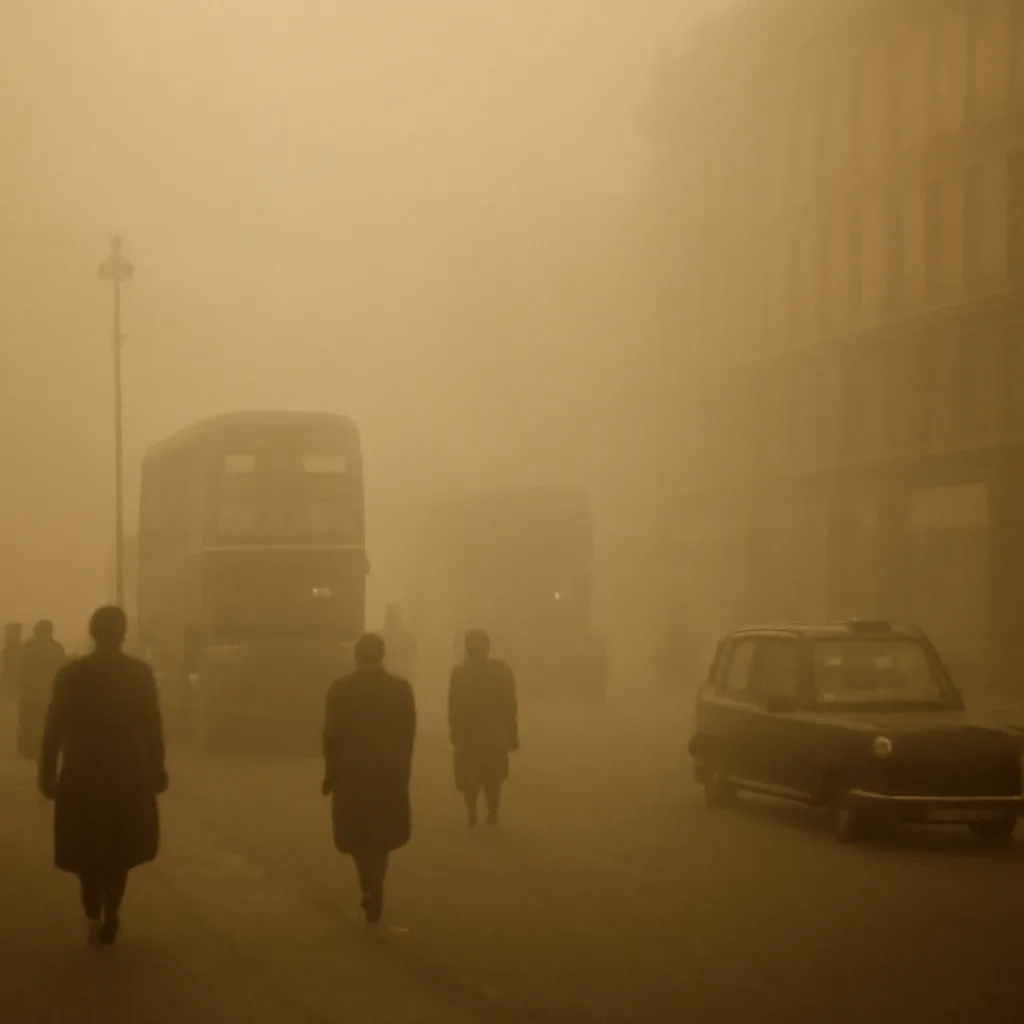
A severe air-pollution event beginning on October 5, 1952, blanketed London in a dense, coal smoke–laden fog that caused widespread respiratory illness and is estimated to have caused thousands of deaths and many more illnesses over subsequent weeks.
Hospitals and clinics were rapidly overwhelmed with patients suffering from acute respiratory distress, bronchitis and other complications. Contemporary medical observers reported sharp increases in emergency admissions and in deaths from respiratory and cardiovascular causes. Initial official death counts were modest, but later epidemiological studies—most notably a 1954 analysis by statisticians and public-health researchers and subsequent reappraisals—estimated that the event contributed to roughly 4,000 to 12,000 excess deaths in the weeks and months after the smog. The wide range reflects differences in methodology and attribution; many historians and public-health authorities commonly cite an estimate of about 4,000 deaths directly attributable to the episode and up to 12,000 when including subsequent effects on vulnerable populations.
The smog exposed the human cost of urban reliance on high-sulfur domestic coal and the absence of effective pollution controls. It also demonstrated how meteorological conditions—temperature inversion and little wind—can trap pollutants close to the ground and amplify harm. The event received intense public and political attention in Britain and internationally, prompting inquiries and public debate about clean air policy.
Policy responses followed: the British government commissioned investigations into the causes and consequences of the smog, and the episode became a decisive factor leading to the Clean Air Act of 1956. The Act introduced measures such as smoke-control areas, restrictions on domestic coal burning in urban zones, and encouragement of alternative fuels and cleaner technologies—changes credited with reducing urban smoke pollution in subsequent decades.
The Great Smog also influenced the development of environmental health science, strengthening links between air quality measurements and health outcomes and highlighting the need for regulatory responses to industrial and domestic emissions. Memorialization of the event appears in histories of public health and environmental policy as a pivotal moment that shifted both public understanding and legislative action on air pollution.
While there is consensus that the smog caused substantial harm and spurred major policy change, exact figures for deaths and illnesses vary between contemporary reports and later studies; researchers caution about attributing every subsequent respiratory death directly to the event. Nonetheless, the Great Smog of 1952 remains a well-documented and consequential case in the history of urban air pollution and public-health regulation.