
← Back
05/25/1924 • 4 views

1924 Everest Tragedy: First Confirmed Fatalities on the Summit Push
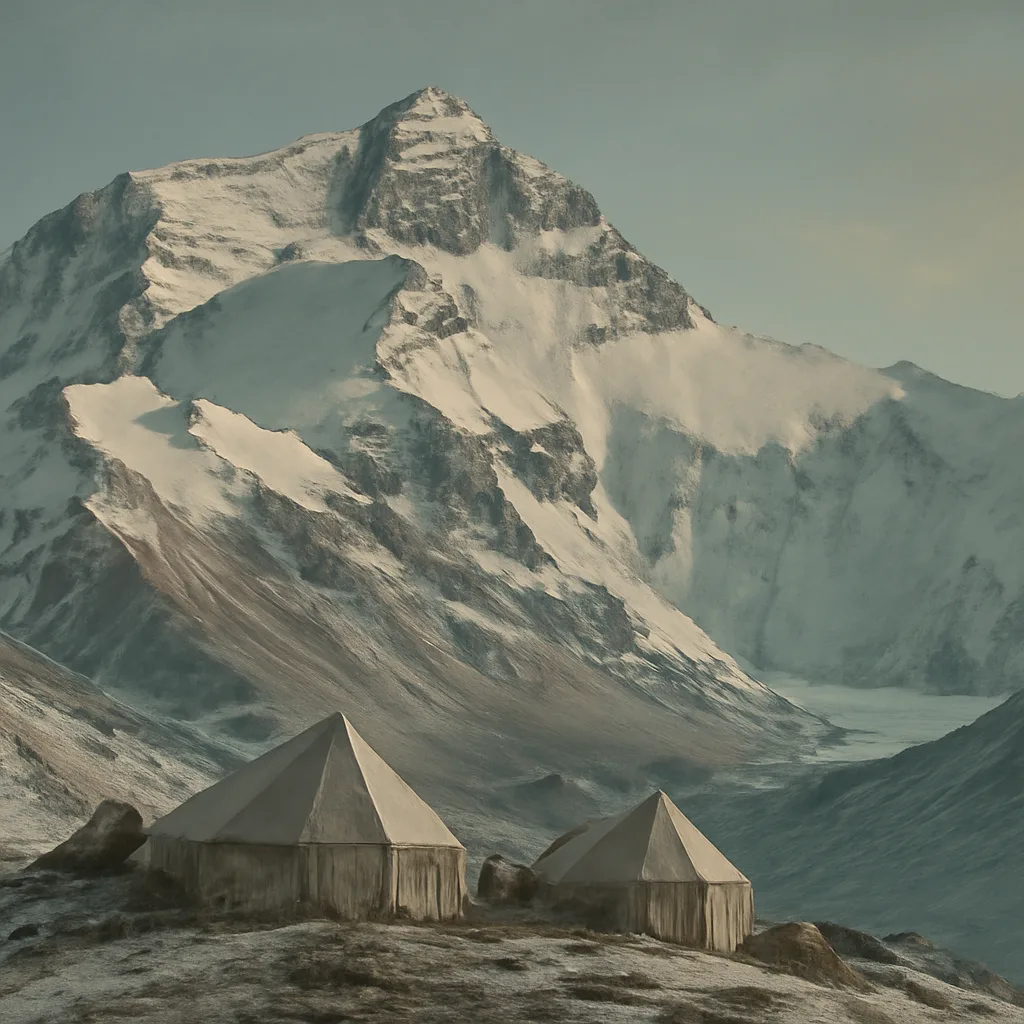
A wide view of the north face of Mount Everest covered in snow and ice in the early 20th-century style; steep rocky steps and high glaciers under a pale sky, no identifiable people.

On 25 May 1924, during the British Mount Everest Expedition, climbers George Mallory and Andrew 'Sandy' Irvine disappeared high on the mountain during a summit attempt; their disappearance marked the first known fatalities tied directly to a summit bid on Everest.


On 25 May 1924 two members of the British Mount Everest Expedition—George Mallory and Andrew "Sandy" Irvine—set out on a summit attempt and never returned. Their disappearance during the final push became the earliest well-documented fatal incident connected to an attempt to reach Everest’s summit and has since loomed large in mountaineering history.

Background

The 1924 expedition was the third British expedition to Everest and followed the unsuccessful 1922 and 1921 efforts. Mallory, an experienced mountaineer who had been part of earlier Everest expeditions, and Irvine, a younger climber and mechanic known for his technical skill with the expedition’s oxygen equipment, formed a high pair for the attempt. The team sought to follow routes established in earlier years, operating in an era before modern clothing, radios, reliable bottled oxygen systems, or established high camps.

The disappearance

Mallory and Irvine left their final high camp late on 24 May or in the early hours of 25 May (accounts differ on precise departure times) and were last seen by fellow climber Noel Odell near a high rock step later known as the Second Step. Odell reported seeing one or two silhouetted figures ascending a steep rock feature before clouds closed in; thereafter Mallory and Irvine did not return to camp.

Immediate aftermath and searches

The expedition mounted searches on the mountain but, given the harsh environment, limited equipment, and deteriorating weather, they were unable to locate the missing climbers. The expedition left Everest without recovering Mallory and Irvine’s bodies or definitive evidence of whether they had reached the summit. The lack of remains, summit photographs, or other conclusive artifacts left the question of whether Mallory and Irvine achieved the summit unresolved.

Legacy and later developments

The disappearance marked the first widely publicized deaths linked to a summit attempt on Everest, underscoring the mountain’s extreme hazards. The mystery persisted through the 20th century. In 1999 Mallory’s body was found on the north face at about 8,150 meters (26,700 feet); the condition and position of the body and some personal items offered clues but did not settle whether he and Irvine had reached the summit. Irvine’s body and the camera he carried—potentially the most decisive evidence—have not been found, and debate among historians and climbers continues.

Historical significance

The 1924 incident highlights the dangers of early high-altitude mountaineering: limited knowledge of physiology at extreme altitude, rudimentary oxygen equipment, heavy clothing and boots, and the absence of the fixed ropes, weather forecasting, and rescue infrastructure common in later decades. It also illustrates how singular events can shape public perception of exploration: Mallory, already a prominent figure, became an emblem of both heroic exploration and the perilous cost of such endeavors.

What is certain and what remains disputed

Documentary evidence places Mallory and Irvine on the mountain during a summit attempt on 25 May 1924, and Odell’s sighting is a primary contemporary account. What remains disputed is whether they reached the summit before their deaths. The discovery of Mallory’s body in 1999 provided further forensic and contextual material but did not provide conclusive proof of a summit. Irvine’s camera, which could potentially contain summit photographs, has not been recovered.

Conclusion

The 25 May 1924 disappearance of George Mallory and Andrew Irvine stands as the first known fatal incident directly associated with a summit bid on Mount Everest. Their fate remains a mixture of established fact—their disappearance during a summit attempt—and enduring uncertainty about whether they reached the top before dying. The episode continues to be a pivotal and contested chapter in the history of high-altitude mountaineering.

Share this

Email Share on X Facebook Reddit

Did this surprise you?