
← Back
05/06/1987 • 4 views

Town Alarmed After Tree Develops Human-Shaped Burl
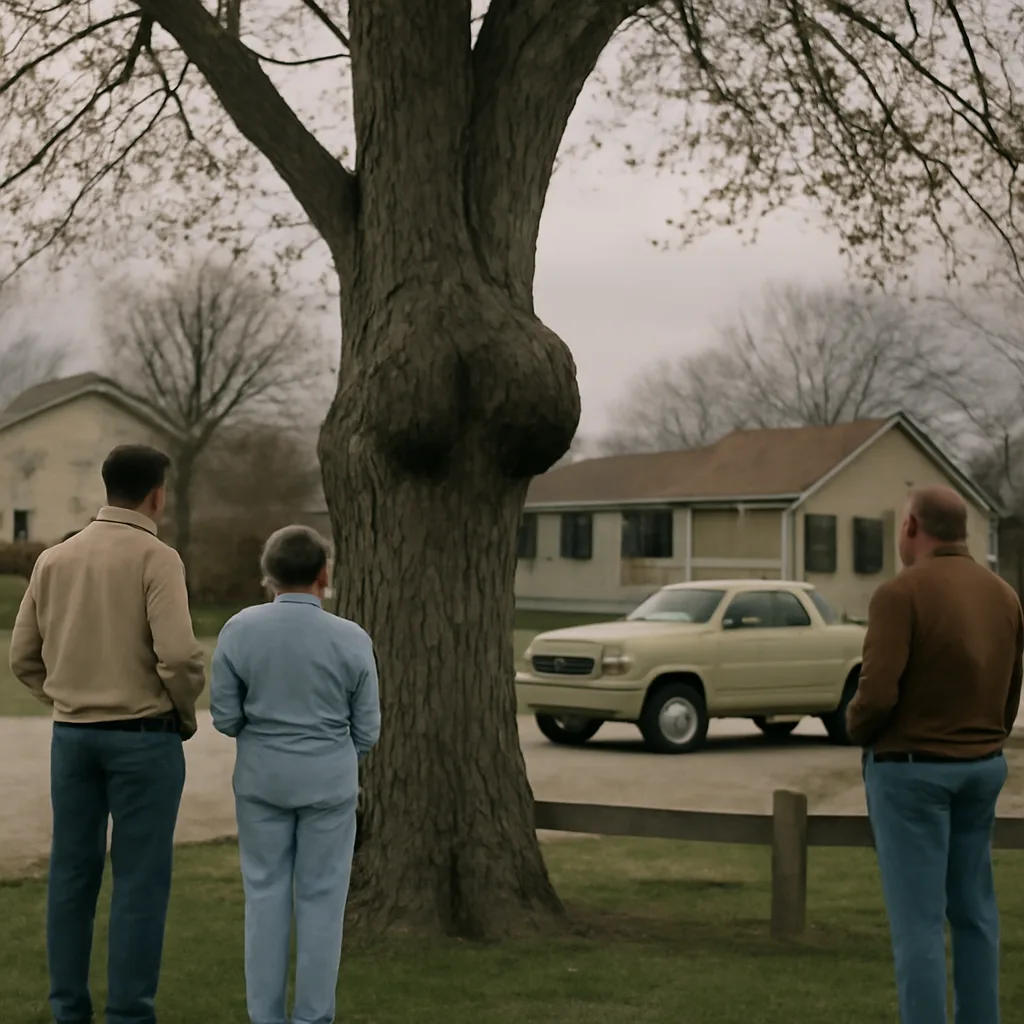
A mature tree with a large, irregular burl on its trunk that suggests a rough human-shaped silhouette; people stand at a respectful distance on a grassy roadside.

In May 1987 a tree in a small community developed a large burl that residents said resembled a human figure, drawing crowds and local concern. The growth was noted for its uncanny outline but, as with similar natural burls, experts emphasized biological causes rather than supernatural ones.


On 6 May 1987, residents of a small town reported that a mature tree on a private property had developed a prominent burl whose contours many locals described as resembling a human form. The unusual growth attracted attention from neighbors and passing motorists; some people treated it as a curiosity, while others expressed unease and interpreted its shape in spiritual or ominous terms.

Burls are irregular, often bulbous growths on trees caused by stress, injury, infection, or genetic mutation. They arise when the normal pattern of cell growth is disrupted, producing massed, distorted tissue that can take on varied and sometimes suggestive external shapes. Woodworkers and arborists value burls for their distinctive grain patterns, but to lay observers the exterior form can look startling—especially when pareidolia, the human tendency to perceive familiar patterns such as faces or figures, is involved.

The 1987 incident fits a long history of reports in which distinctive natural features—knots, root formations, or burls—take on culturally meaningful shapes and draw public attention. Eyewitness accounts from the period describe increased foot traffic around the property, and local newspapers carried photographs and human-interest pieces. No credible documentation indicated that the growth was anything other than a natural botanical phenomenon. No scientific studies specific to this individual tree were published that year, and there is no verified evidence linking the burl to disease beyond the normal causes of such formations.

Authorities and experts commonly advise caution around large burls because the underlying tree health can be compromised, and removing or cutting into a burl can harm the tree or release wood-boring insects or pathogens. In similar cases, property owners sometimes cut away or sold the burl wood to craftsmen; in other instances, communities marked such trees as local curiosities and preserved them. Records of subsequent action taken with this particular tree are limited in public sources; local archival coverage and landowner statements would be the most direct ways to confirm whether it was felled, preserved, or removed.

Cultural responses to the tree’s shape were varied. Some residents treated the burl as a conversation piece and a source of local folklore; others offered religious or superstitious interpretations. Such reactions reflect broader patterns in which natural anomalies become focal points for community meaning-making, even when the biological explanation is straightforward. Contemporary reporters and later commentators have used the 1987 episode to illustrate how natural forms and human perception intersect to produce stories that outlast the original event.

In summary, the “human-shaped” growth reported on 6 May 1987 appears consistent with a burl—a well-documented botanical phenomenon—rather than any paranormal occurrence. While the growth understandably unsettled some locals and inspired local media attention, there is no verified scientific evidence that it was anything other than a natural tree deformity. Further factual details about the tree’s fate would require examination of local archives or statements from the property owner at the time.

Share this

Email Share on X Facebook Reddit

Did this surprise you?