
05/06/1953 • 7 views
First successful open-heart operation using a heart–lung machine completed
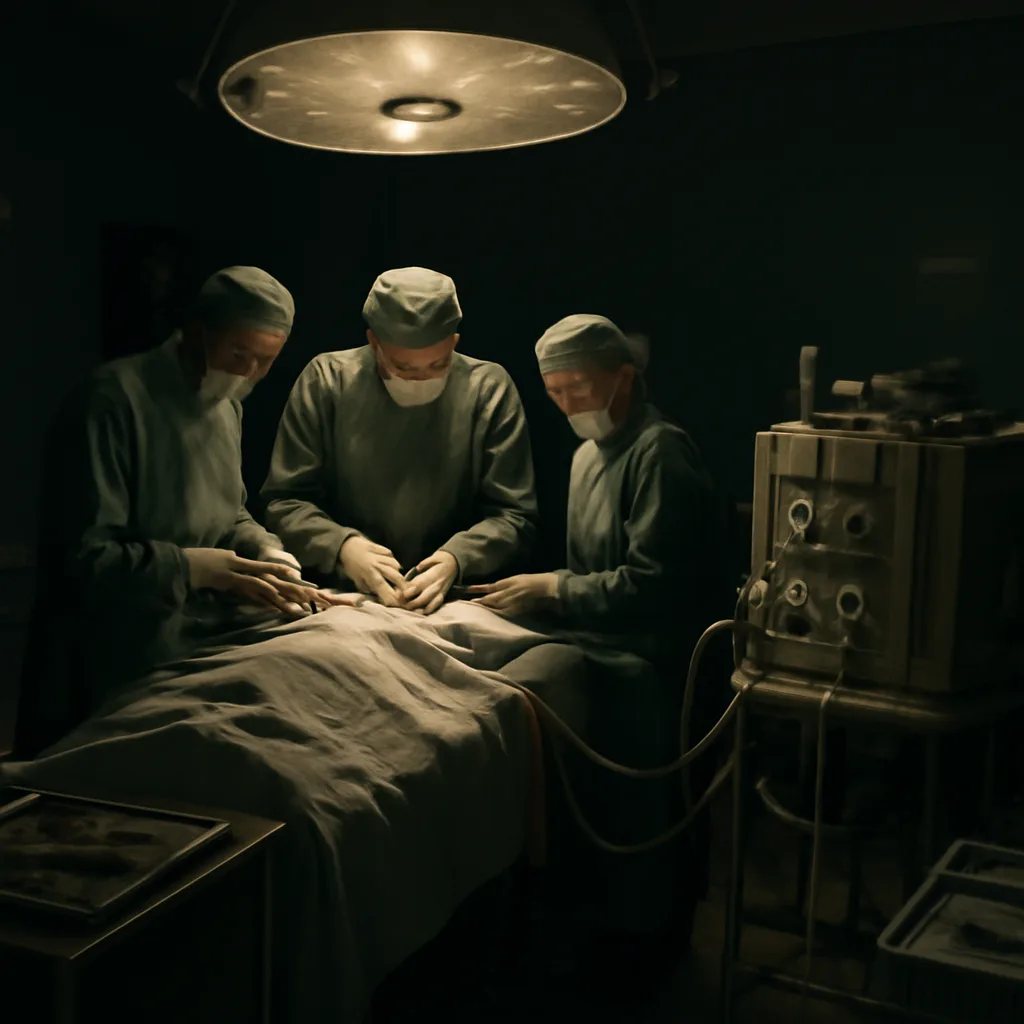
On May 6, 1953, surgeons completed the first widely recognized successful open-heart operation performed with a heart–lung machine, marking a decisive advance in cardiac surgery and paving the way for corrective procedures inside the heart.
Background: For decades, cardiac surgery was limited to procedures on the exterior of the heart or rapid interventions during brief cardiac arrests. Pioneering research on extracorporeal circulation began in the 1930s and 1940s. Dr. John H. Gibbon Jr. developed an early heart–lung machine and reported the first successful use of extracorporeal bypass in 1953 for closure of an atrial septal defect; however, his program had mixed early results and limited dissemination. Independently, teams led by surgeons such as C. Walton Lillehei, who employed cross-circulation techniques (using a human donor to oxygenate blood), and others refined approaches that would allow safer and more reproducible open-heart repairs.
The 1953 operation: Accounts of early 1953 surgeries indicate that teams had begun to perform intracardiac repairs with mechanical bypass support. The successful use of a pump-oxygenator to support circulation during direct repair represented a turning point: it proved the concept that extracorporeal circulation could be used reliably in clinical practice. This success catalyzed rapid development of improved oxygenators, pumps, and perfusion protocols, and encouraged wider adoption of open-heart techniques.
Impact and aftermath: The confirmation that a heart–lung machine could support patients during intracardiac surgery opened the door to corrective operations for congenital and acquired heart defects that had been untreatable. Over the following decade, refinements in pump and oxygenator design, improved surgical techniques, and the emergence of dedicated perfusionists made open-heart surgery increasingly safe and commonplace. By the 1960s, coronary artery bypass grafting and valve replacements became feasible on a larger scale, reshaping cardiac care and dramatically reducing mortality from many heart diseases.
Historiographical notes and disputes: Historians of medicine note that credit for the “first” successful heart–lung machine operation is contested and depends on definitions—whether one emphasizes the first experimental demonstration, the first clinical use that produced long-term survival, or the first widely disseminated, reproducible technique. John Gibbon is often credited with inventing the first practical heart–lung machine and performing an early successful case in 1953; other surgeons, including Lillehei and Lewis, made pivotal, sometimes parallel, contributions that advanced clinical applicability. Sources differ on exact dates and institutional claims; accounts agree, however, that early 1950s work using extracorporeal circulation marked the decisive shift enabling modern open-heart surgery.
Legacy: The advent of reliable extracorporeal circulation transformed cardiac surgery from a set of high-risk, external procedures to a field capable of directly correcting intracardiac pathology. The heart–lung machine and its subsequent technological descendants remain central to many cardiac operations, and the early 1950s milestones are remembered as foundational events in the history of cardiovascular medicine.