
02/07/1990 • 6 views
East Germany Revises Official Berlin Wall Death Toll
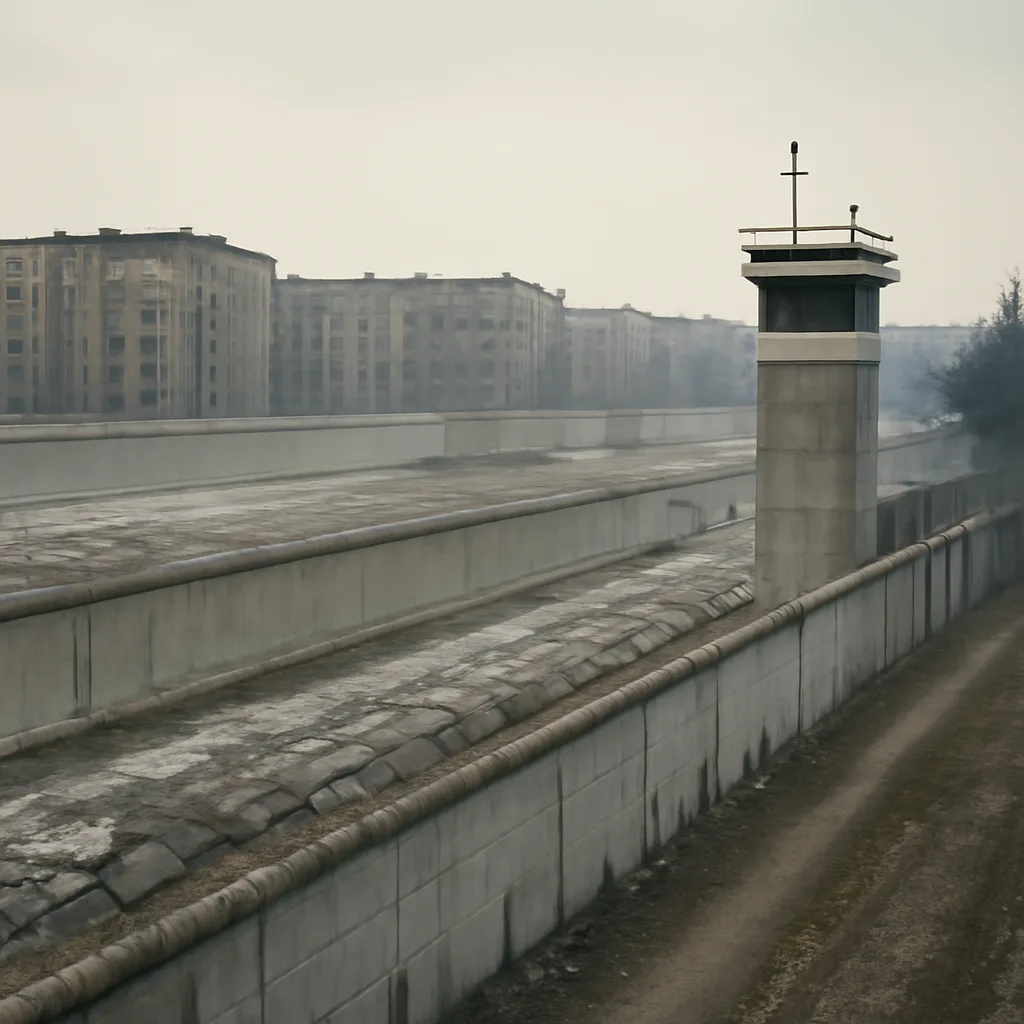
On 7 February 1990 East German authorities published a revised tally of people who had died at the Berlin Wall and inner-German border, updating earlier figures assembled under the GDR. The revision reflected new access to records and investigative efforts after the Wall fell in November 1989.
Background
The Berlin Wall, erected in August 1961, and the fortified inner-German border separated East and West Germany for nearly three decades. During that time, a range of people attempting to cross to the West were killed, including those shot by border guards, killed in accidents while trying to scale or breach the fortifications, or who died as a result of harsh treatment after capture. For decades the GDR controlled information about these deaths; official counts were limited and often suppressed or framed in political terms.
Why the revision mattered
After the collapse of the GDR government in late 1989, citizens, journalists and West German authorities demanded a transparent accounting of state actions. The revised tally published on 7 February 1990 aimed to provide a more complete and documented figure than earlier GDR-era statements had offered. It reflected examination of multiple sources: border unit reports, Stasi files, police records, hospital registers and witness testimony now more readily available in the newly opened archives.
Scope and limits
The February 1990 revision made clear that compiling a definitive list posed methodological and evidentiary challenges. Records were incomplete, some files were destroyed or altered, and witnesses’ accounts sometimes conflicted. Different institutions and later researchers have used varying criteria for inclusion—whether to count only those explicitly shot by border guards, to include those who died attempting escape by other means, or to add persons who died indirectly as a consequence of border enforcement. Because of these differences, subsequent studies and memorial projects have continued to refine casualty lists.
Aftermath and legacy
The 1990 revision was an important early step toward acknowledging victims of the border regime. It fed into later legal and historical inquiries, memorialization efforts and compensation discussions in reunified Germany. Over the following decades, historians, archivists and human-rights researchers have produced more detailed databases and case-by-case investigations, sometimes adding names or adjusting circumstances of death as new evidence emerged.
Historical caution
No single figure can fully capture the human cost of the Wall. The February 1990 revision increased transparency and set a precedent for archival research, but scholars emphasize that casualty lists remain subject to revision when credible new documentation appears. For readers seeking exact numbers or individual case details, authoritative sources include archival compilations, peer-reviewed historical studies and memorial institutions that publish documented lists of victims.
The publication of a revised death toll on 7 February 1990 therefore stands as a milestone in the post-Wall effort to confront the GDR’s border policy, even as the work of establishing a complete, uncontested record has continued into the present.