
← Back
02/07/1991 • 5 views

Pentagon Confirms Existence of Secret Underground Command Centers
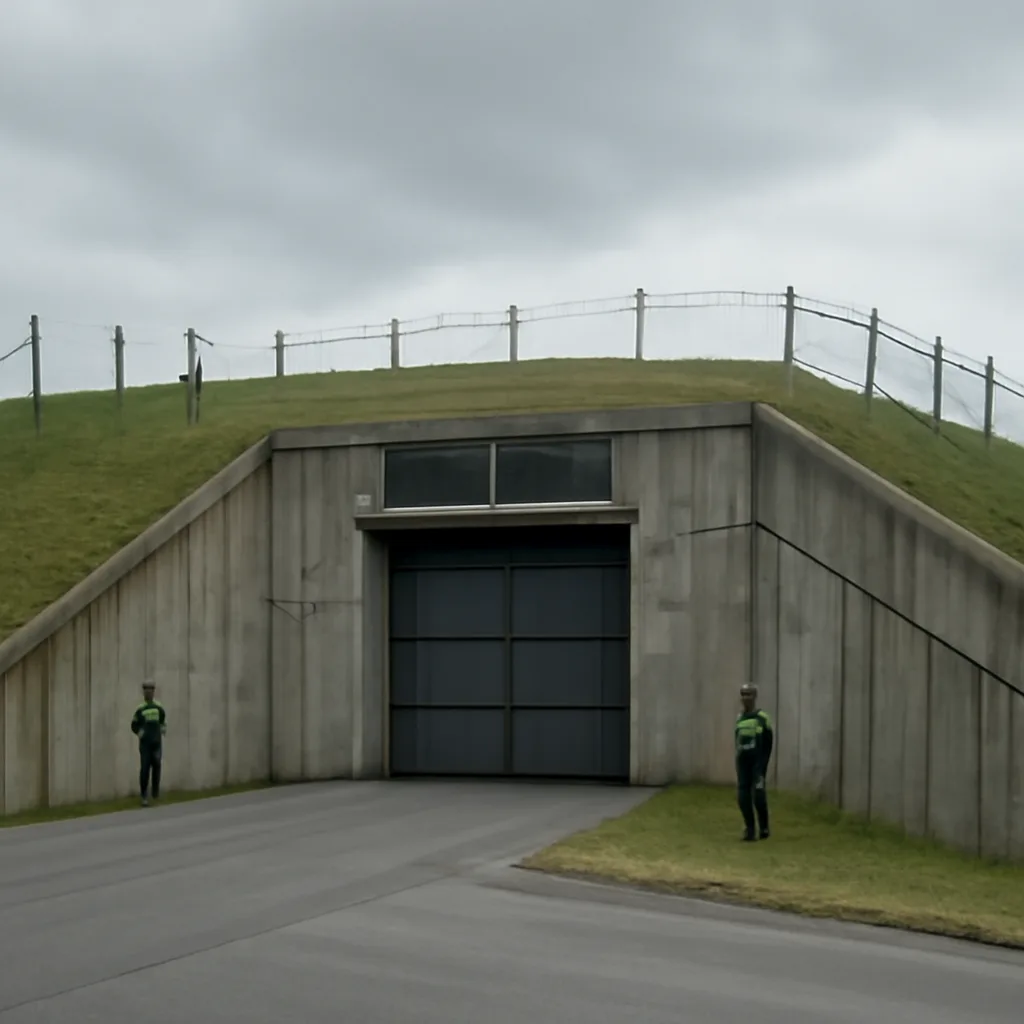
Exterior view of a nondescript government building entrance set into a landscaped hillside, with service roads and ventilation grilles visible—representing an underground command facility without showing identifiable people.

On Feb. 7, 1991, the Pentagon acknowledged the existence of undisclosed subterranean command centers built during the Cold War and later maintained for continuity-of-government and military command purposes; details on locations and capabilities remain limited or classified.


On February 7, 1991, the U.S. Department of Defense publicly confirmed the existence of secret underground command centers that had been constructed and maintained to ensure continuity of government and military command in times of national emergency. The acknowledgment followed decades of classified programs, budget references, and investigative reporting that had suggested the United States maintained hardened facilities designed to protect top officials and preserve command-and-control functions in the event of nuclear war or other catastrophic threats.

Origins and purpose

The origin of deep underground command centers in the United States traces to the early Cold War era, when planners sought secure locations to protect key military and civilian leaders and to house communications, intelligence, and decision-making systems. Such facilities were intended to survive attack, maintain secure communications, and provide resilient command-and-control capability. Over the decades, programs evolved: some sites were built specifically as bunkers, others were adapted from existing military installations, mines, or purpose-dug caverns. The Pentagon’s 1991 confirmation did not enumerate all sites or provide technical specifications, but it aligned with declassified references and prior investigations indicating multiple facilities of varying depth and capacity.

Public disclosure and secrecy

Until the 1991 confirmation, much information about these facilities had been fragmentary—appearing in budget documents, contractor contracts, local news reports about construction near military bases, and inquiries by journalists and members of Congress. Secrecy was maintained in part to protect operational security and in part because many aspects remained legitimately classified. The Pentagon’s statement represented a formal admission of longstanding programs rather than the release of detailed inventories.

Capabilities and configuration (what is known)

Publicly available records, congressional hearings, and later declassifications suggest that underground command centers varied widely. Some were relatively small, intended for senior officials and a limited staff to coordinate response; others were larger, supporting military theater or national-level command functions for extended periods. Typical features discussed in open sources include blast-resistant construction, electromagnetic shielding for communications equipment, independent power generation, air filtration systems, and secure communications links. Exact capacities, depths, and locations were generally withheld for security reasons.

Context in 1991

The confirmation came during the closing months of the Gulf War and the waning phase of the Cold War era. The posture of maintaining continuity facilities was consistent with longstanding U.S. defense policy emphasizing preparedness for strategic contingencies. The 1991 statement did not indicate a policy change so much as a rare acknowledgment of programs that had been managed under classification for decades.

Open questions and limits of public knowledge

Because many details remain classified or only partially disclosed, significant questions persist: the number and geographic distribution of facilities, the timeline of construction and upgrades, the precise technical capabilities, and the extent to which these sites were integrated with civilian continuity plans. Scholarly studies, investigative journalism, and declassified archives have filled some gaps, but the overall picture remains incomplete. When details are uncertain or disputed in public records, those uncertainties have been noted in declassified documents and secondary reporting.

Legacy and significance

The Pentagon’s 1991 confirmation highlighted the persistent priority placed on continuity of government and military command structures across administrations. It also underscored the tension between operational secrecy and public accountability in democratic governance. Over subsequent decades, some formerly secret facilities have been the subject of declassification, reuse, or closure, while the broader concept of hardened, survivable command infrastructures continues to inform defense planning.

This account is based on the Pentagon’s 1991 acknowledgement and subsequent publicly available reporting and declassified material. Specific technical or locational details not released by official sources are not asserted here.

Share this

Email Share on X Facebook Reddit

Did this surprise you?