
← Back
03/05/1912 • 5 views

1912 Village Struck by Days-Long Amnesia Among Residents
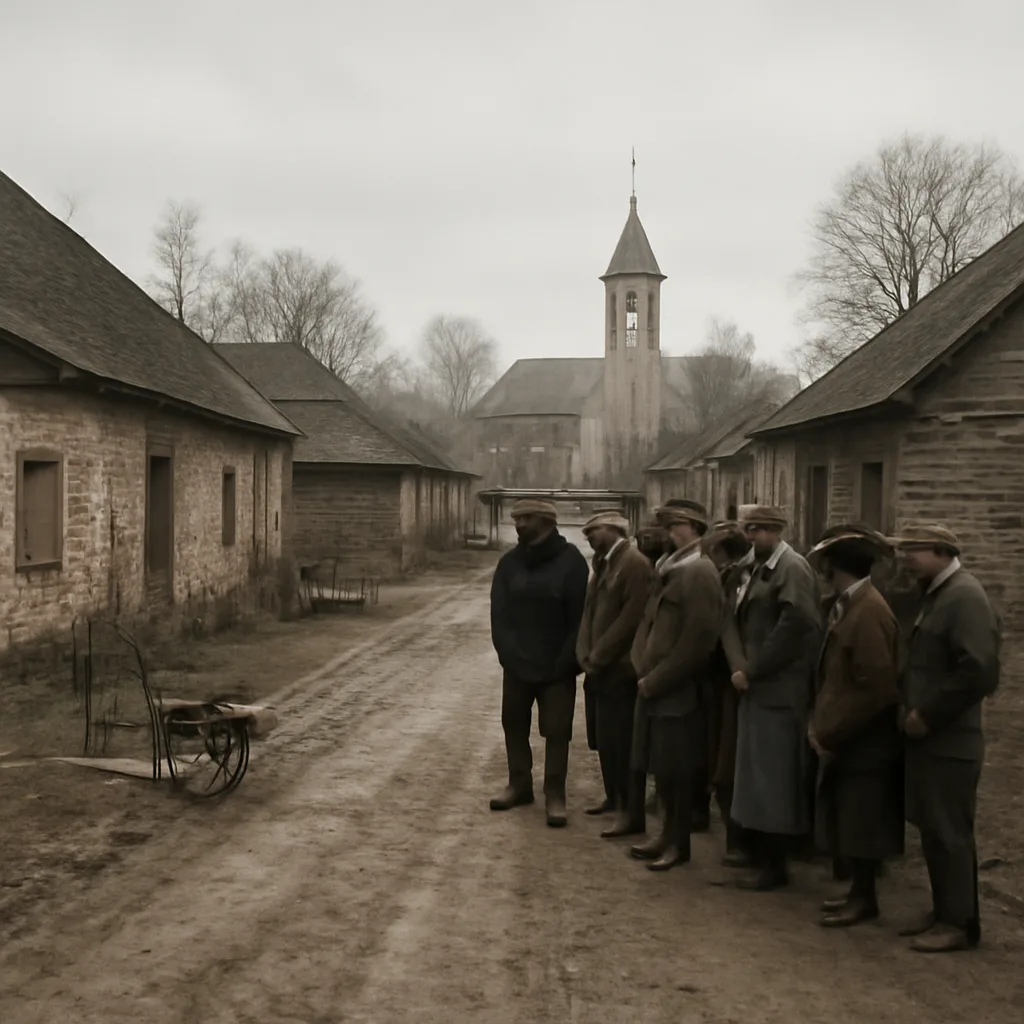
Early 20th-century rural village street with villagers gathered outside simple wooden houses and a parish church visible, showing a subdued, concerned crowd and farm tools left idle.

On March 5, 1912, reports emerged from a rural village that many residents experienced a temporary loss of memory lasting several days; contemporary accounts describe confusion and disruption but vary on causes and scope.


On March 5, 1912, reports circulated from a rural village that a number of inhabitants had begun experiencing a transient inability to recall recent events and, in some cases, parts of their own identities. Accounts from the period—local newspapers, parish records and later regional summaries—agree on several core facts: the phenomenon involved multiple people in the same community, it persisted for days rather than hours, and it caused notable social and administrative disruption (missed work, interrupted schooling, and difficulties in managing households and farm tasks).

Contemporary observers differed on how many people were affected, how the condition began and whether a single cause could be identified. Some local correspondents described an apparent clustering of cases within particular households or neighborhoods; others suggested the cases were more dispersed. Medical professionals of the era, where consulted, offered diagnoses framed by early 20th-century understandings of neurology and psychiatry—temporary hysteria, collective psychogenic illness, exhaustion, or reactions to environmental factors were commonly proposed. No single, verifiable medical consensus from 1912 survives that definitively explains all aspects of the episode.

Documentation is uneven. Local newspapers provide the most detailed contemporaneous narratives but can conflate rumors with verified facts. Parish registers and municipal logs note absences and requests for assistance, and a handful of later regional health reports reference the incident as an example of episodic memory loss outbreaks in rural settings. There is no preserved hospital record or autopsy report linking the village cases to a specific infectious agent, toxin, or structural brain injury. Likewise, no systematic epidemiological study was conducted at the time that meets modern standards.

Possible explanations discussed by contemporaries and by later historians fall into several broad categories, none conclusively proven for this incident:

- Mass psychogenic illness (mass hysteria): Historically, communities under social stress—economic hardship, bereavement, or anxiety—have manifested shared physical or neurological symptoms without an identifiable organic cause. The clustering of cases in social networks can support this interpretation.

- Environmental exposure: Contamination of food, water or exposure to gases (from poorly ventilated stoves, agricultural chemicals, or spoiled food) can produce temporary cognitive impairment. The 1912 record lacks the forensic evidence necessary to confirm this for the village in question.

- Infectious or neurological illness: Some infectious diseases and metabolic disorders can cause transient confusion or amnesia. In 1912 diagnostic capabilities were limited, and if testing or laboratory confirmation was not performed or was unavailable, such causes would remain unverified.

- Individual neurological events accentuated by local conditions: Fatigue, heat stroke, epileptic seizures or transient ischemic attacks (mini-strokes) can cause temporary memory disruption in individuals; if several vulnerable people were exposed to the same stressors (long hours of labor, poor nutrition, or extreme weather), multiple cases could appear in a short span.

Social consequences were immediate. Families struggled to maintain daily routines and farm work; schools recorded absences; local authorities were asked for aid. Clergy and community leaders often served as intermediaries between afflicted individuals and municipal or medical authorities. Newspaper coverage tended to emphasize the unusual nature of the event, and anecdotal reports spread to neighboring districts, shaping the incident’s reputation as a noteworthy local mystery.

For modern readers, the 1912 village episode illustrates both the limitations of early 20th-century medical investigation in rural settings and the variety of plausible mechanisms that can produce clustered cognitive symptoms. Without additional primary-source evidence—medical charts, toxicological analyses, or systematic interviews—any single definitive cause for the village’s days-long amnesia remains unproven. What is clear from surviving records is that several people experienced significant, short-term memory loss that disrupted community life and drew contemporary attention.

Researchers seeking to learn more should consult surviving local newspapers from March 1912, municipal and parish archives for attendance and assistance records, and any regional public-health bulletins from the period. Where direct evidence is lacking, careful contextual analysis of social, economic and environmental conditions at the time can help narrow plausible explanations while avoiding unwarranted certainty.

Share this

Email Share on X Facebook Reddit

Did this surprise you?