
← Back
03/05/1916 • 6 views

Europe's First Public Firing Squad of the 20th Century: March 5, 1916
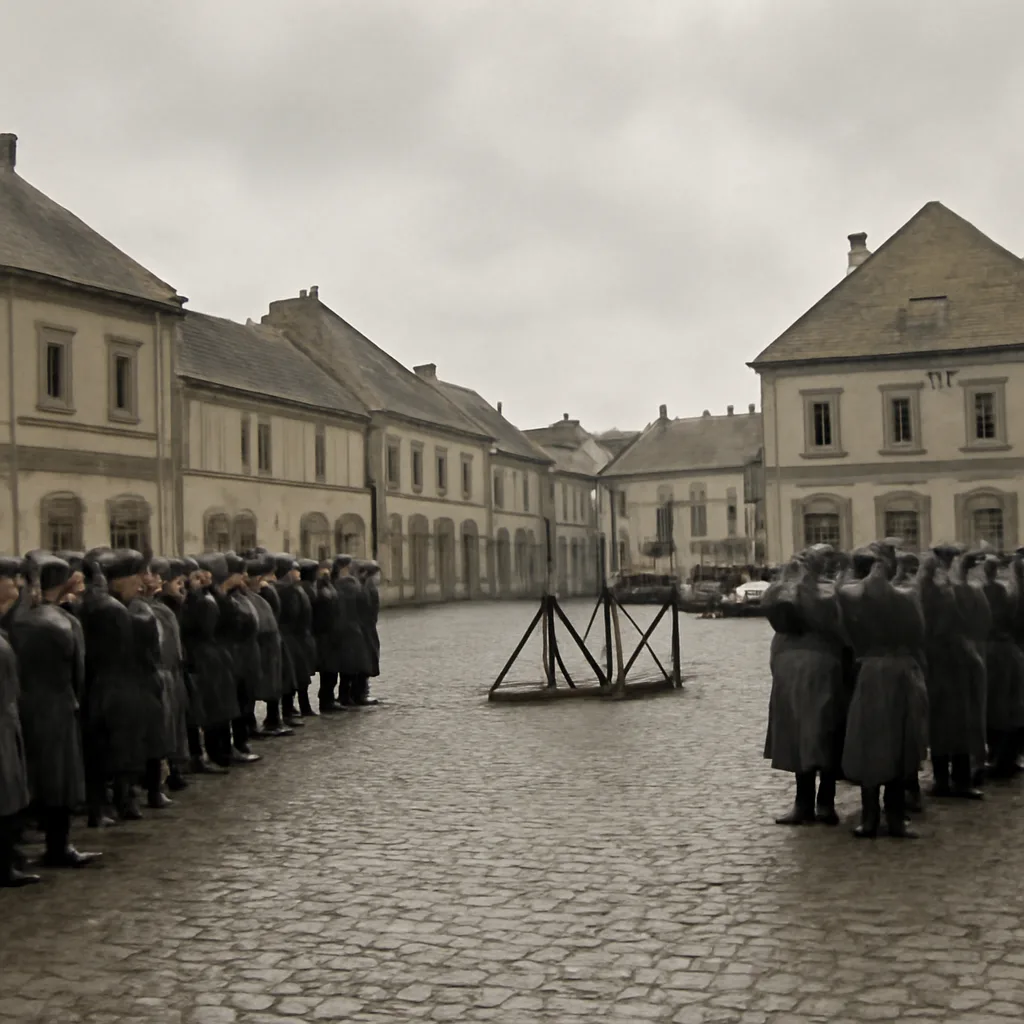
Early 20th-century town square with a small assembled crowd and soldiers in period uniform forming a firing line near a simple wooden platform; overcast sky, no identifiable faces.

On 5 March 1916, a rare public execution by firing squad took place in modern Europe—an event tied to wartime discipline and political tensions during World War I. Its public nature and timing made it notable in contemporary press and later histories.


On 5 March 1916 a man was executed by firing squad in a public setting in Europe—an occurrence that stands out in modern records because public military executions had become increasingly rare by the early 20th century. The date falls within World War I, when many countries imposed strict military discipline and, in some cases, carried out capital punishment for desertion, mutiny, espionage or other wartime offences. Public executions by military firing squad during this period were exceptional enough to attract attention in contemporary newspapers and subsequently in historical accounts.

The specifics of this particular case reflect broader wartime dynamics. During World War I, belligerent states faced intense pressures to maintain order among troops and civilian populations. Courts-martial were often expedited, and sentences could be carried out quickly. Where states chose to make executions public, the aim could be deterrence, demonstration of state authority, or placation of unsettled local populations. At the same time, public executions had become increasingly controversial in Europe, with growing humanitarian and legal objections to spectacles of death.

Historical records of public military executions in this era vary in detail and reliability. Contemporary press reports sometimes carried nationalistic or propagandistic slants; official military records can be terse; and some later accounts conflate separate incidents or misdate events. Because of these limitations, historians treat individual cases cautiously, situating them within documented military policies and broader social responses to wartime discipline.

The significance of the March 5, 1916 execution lies less in the singularity of the act than in what it reveals about wartime governance. Public reprisals and punishments were part of a repertoire used by states at moments of acute threat. They also prompted debates about military justice, humaneness, and the role of public spectacle in enforcing obedience. After the war, many European countries moved away from public executions entirely and reformed military justice systems, influenced by both moral critique and practical considerations about morale and international opinion.

When discussing this event, clarity about sources is essential. Some contemporary newspapers reported the incident with vivid detail; military archives may preserve court-martial records or orders relating to the execution; and later historians place such episodes in the context of wartime discipline. However, accounts differ on particulars—such as the precise charges, the identity of the executed individual, the size and makeup of any public audience, and whether the execution was intended primarily as spectacle or as a standard military procedure. Because of those divergences, any definitive narrative should be anchored to verifiable archival documents or reliable secondary scholarship.

In sum, the 5 March 1916 public firing-squad execution is historically notable as an example of how the stresses of World War I sometimes produced measures—like public military executions—that earlier 19th-century legal reforms and social sensibilities had made less common. The episode illustrates tensions between emergency measures and evolving norms of military justice, and it highlights why historians rely on multiple source types to reconstruct wartime events accurately.

Share this

Email Share on X Facebook Reddit

Did this surprise you?