The Beatles Arrive in America, Triggering a National Fervor
On February 7, 1964, The Beatles landed in New York City, beginning a U.S. visit that ignited widespread fan hysteria, reshaped popular music, and signaled the start of the 'British Invasion.'
On February 7, 1964, John Lennon, Paul McCartney, George Harrison and Ringo Starr arrived at New York’s John F. Kennedy International Airport on a chartered Pan Am flight. Their arrival—after an overnight flight from London and a short stop in Montreal—was the culmination of rapidly growing American interest following the U.S. release of their singles and the screening of their music on radio and television. The group’s arrival marked a turning point in 20th‑century popular culture, fueling intense public enthusiasm and accelerating significant changes in the music industry.
Airport reception and immediate impact
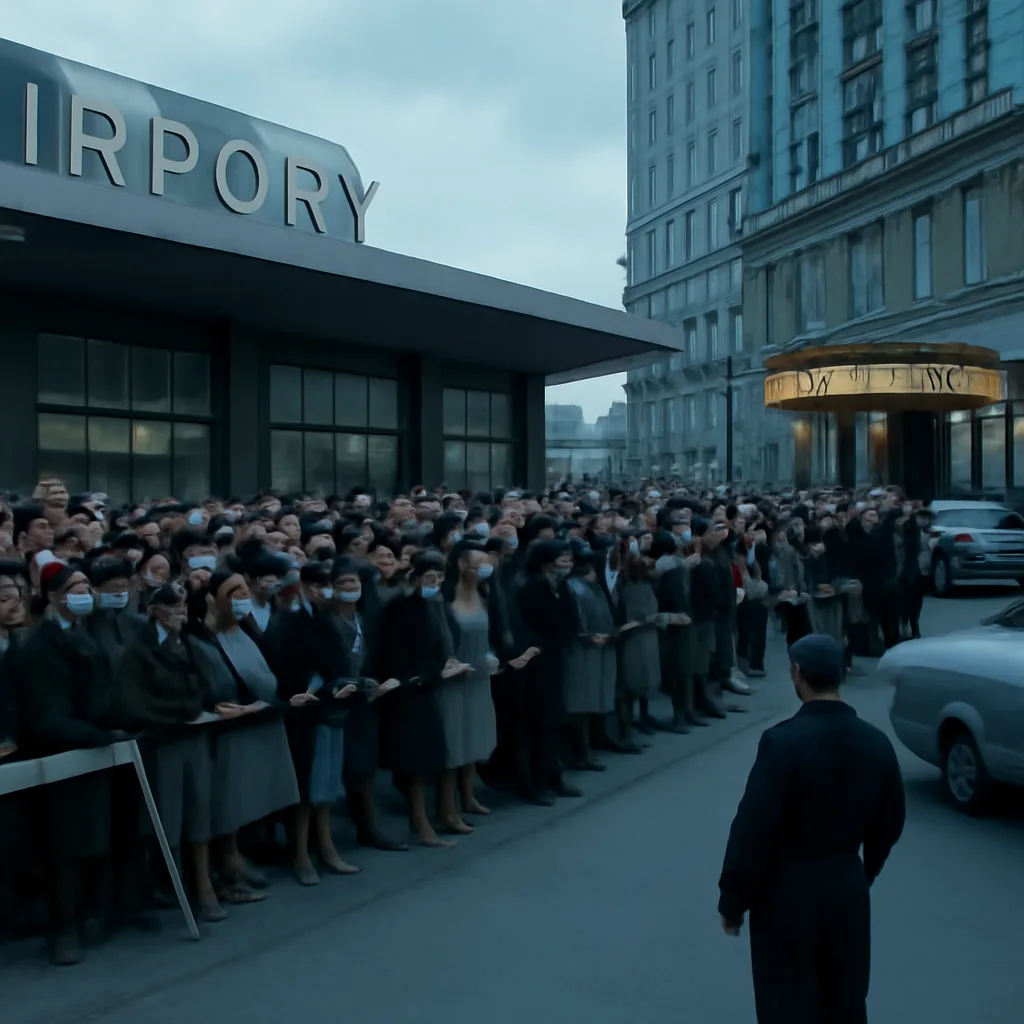
Coverage of The Beatles’ arrival emphasized the scale of public excitement. Thousands of fans and press—estimates vary by report—converged on the airport and later at the Plaza Hotel, where the band stayed. Crowds chanted and surged in ways that city officials and organizers struggled to control. While the most extreme descriptions use the term “hysteria,” contemporary reporting and later historical accounts describe a mixture of ecstatic fandom, large-scale crowding, and intense media scrutiny rather than a single uniform reaction.
Television, radio and the rise of Beatlemania in America
The group’s U.S. visit was closely tied to television exposure, most notably their appearance on The Ed Sullivan Show a few days later, which drew an estimated audience of about 73 million viewers—one of the largest TV audiences in U.S. history. That broadcast consolidated The Beatles’ popularity across the country. Radio stations quickly moved to play their records heavily, record sales surged, and American bands and record labels responded to the band’s sound and commercial model. Historians refer to the ensuing cultural shift as the start of the “British Invasion,” during which multiple British acts achieved major U.S. success.
Industry and cultural consequences
The Beatles’ U.S. arrival had immediate commercial effects: their singles and albums climbed American charts rapidly, and demand for concert tickets and merchandise grew. Beyond commerce, younger audiences found new expressive possibilities in rock music, fashion, and attitudes toward celebrity. The band’s songwriting—especially as they moved beyond early singles—helped shift popular music toward artist‑driven composition and studio experimentation in subsequent years.
Public order and media framing
Authorities in New York and elsewhere faced logistical challenges managing crowds at airports, hotels and concert venues. Media framing of the event amplified perceptions of nationwide frenzy; newspapers, radio and television often emphasized dramatic scenes of fans’ emotional outpouring. Later scholarship has examined how media amplification, corporate promotion, and cultural readiness combined to magnify public response.
Legacy and historical interpretation
Historians view the February 1964 arrival as a catalytic moment rather than a singular cause of cultural change. It accelerated trends already underway—youth-oriented consumption, cross‑Atlantic cultural exchange and mass media’s role in popularizing music—while symbolizing a shift in global popular culture. The Beatles continued to evolve artistically and had enduring influence on music, fashion and youth culture, with their U.S. arrival widely remembered as the moment they became a central presence in American cultural life.
Notes on sources and interpretation
This account synthesizes contemporaneous press coverage and subsequent historical studies of the period. Details such as crowd size and characterizations of behavior vary across sources; terms like “mass hysteria” reflect both contemporary sensational reporting and later shorthand rather than a single, uniformly documented clinical phenomenon.