
10/06/1973 • 4 views
Yom Kippur War begins as Egypt and Syria launch surprise attack on Israel
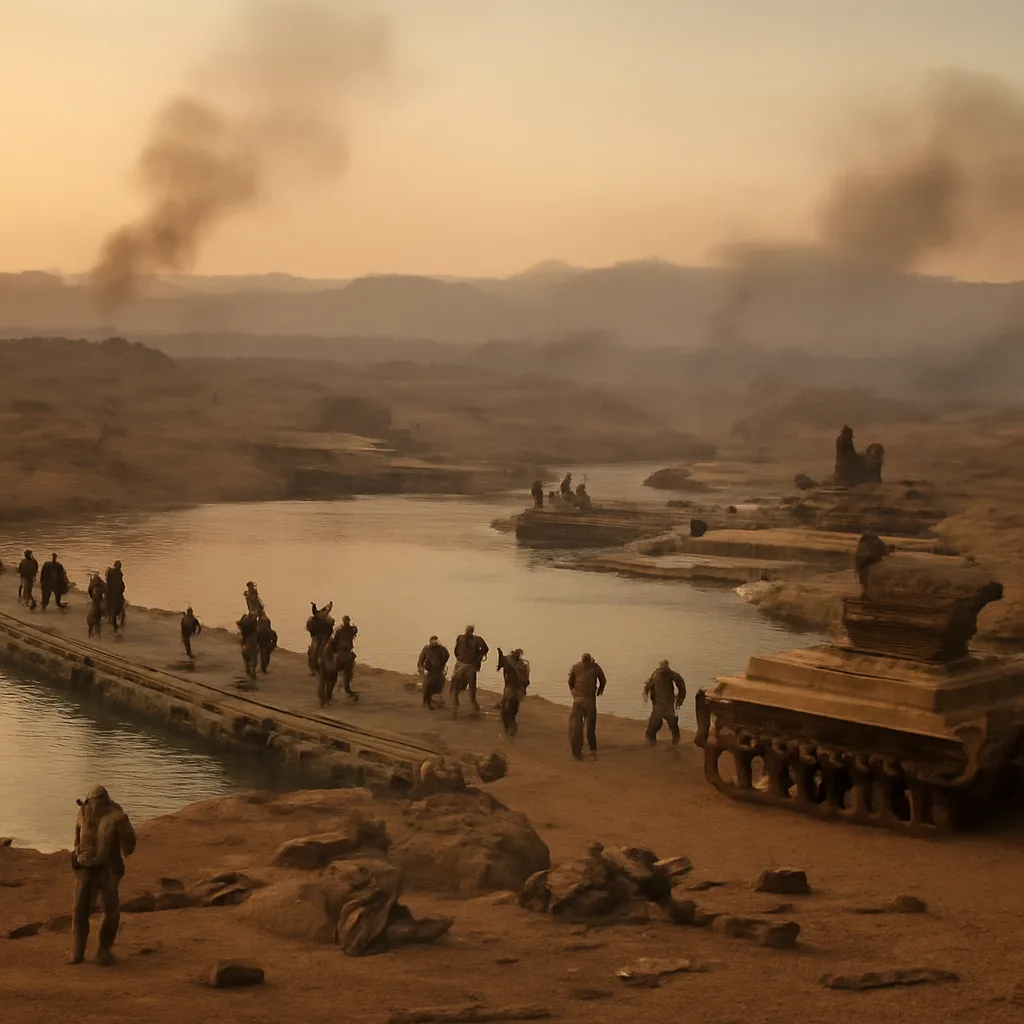
On October 6, 1973, Egyptian and Syrian forces launched a coordinated surprise assault against Israeli positions on the Yom Kippur holiday, initiating a wider conflict that drew in regional and global powers and reshaped Middle East diplomacy.
Background and objectives
By 1973 both Egypt and Syria sought to reverse territorial losses from the 1967 Six-Day War, when Israel captured the Sinai Peninsula from Egypt and the Golan Heights from Syria. Egyptian President Anwar Sadat aimed to recover the Sinai and break the diplomatic stalemate, believing a limited, coordinated attack could change the facts on the ground and compel international mediation. Syrian leaders shared the objective of regaining the Golan Heights. The decision to launch the offensive was preceded by months of planning and mobilization, and both capitals coordinated timing to exploit Israel’s expected reduced alertness on a religious holiday.
Course of the fighting
Egyptian forces crossed the Suez Canal and established bridgeheads in the Sinai, overcoming the Israeli Bar Lev Line fortifications in several sectors. In the north, Syrian forces attacked across the Golan Heights, initially making significant advances against Israeli defenses. The initial stages saw heavy armored and infantry engagements, extensive artillery fire, and significant casualties on both sides. Israel mobilized reservists and mounted counterattacks; after early setbacks, Israeli forces stabilized fronts and then pushed back. In the south, after breaching Egyptian defenses, Israeli forces later crossed the Suez Canal into Egyptian-held territory. In the north, Israeli counteroffensives regained much of the Golan and then advanced into Syrian territory near Damascus.
International involvement and diplomacy
The Yom Kippur War quickly drew in the United States and the Soviet Union, which provided resupplies and diplomatic backing to their respective regional allies. A U.S. airlift of military supplies to Israel and Soviet shipments to Egypt and Syria underscored the conflict’s Cold War dimension. The fighting prompted intense diplomatic activity, including UN-mediated ceasefire efforts. Under UN Security Council Resolution 338, ceasefire calls came into effect on October 22, though violations and negotiations continued after that date.
Consequences
The war inflicted heavy military and civilian casualties and produced significant material losses on all sides. Politically, the outcome altered regional dynamics: Egypt, having demonstrated it could challenge Israeli control of Sinai, gained leverage that eventually contributed to the 1978 Camp David Accords and the 1979 Egypt–Israel Peace Treaty. Israel undertook internal reassessments of its intelligence and preparedness after being caught by surprise, leading to political changes and military reforms. The conflict also exacerbated global tensions temporarily, culminating in an Arab oil embargo that affected world economies.
Historical assessment
Scholars and participants continue to debate aspects of the conflict, including intelligence failures, decision-making in Jerusalem, Cairo, and Damascus, and the war’s long-term diplomatic effects. While the immediate military outcomes were mixed, the war’s strategic and political repercussions reshaped Arab-Israeli relations and contributed to a reordering of alliances and negotiation dynamics in the region.
Sources and limits
This summary draws on established historical accounts of the October 1973 conflict. Specific tactical and operational details remain subjects of detailed military histories and archival research; where historians disagree, that scholarly debate continues in published works.