
← Back
11/17/1973 • 6 views

Senate Begins Public Watergate Impeachment Hearings
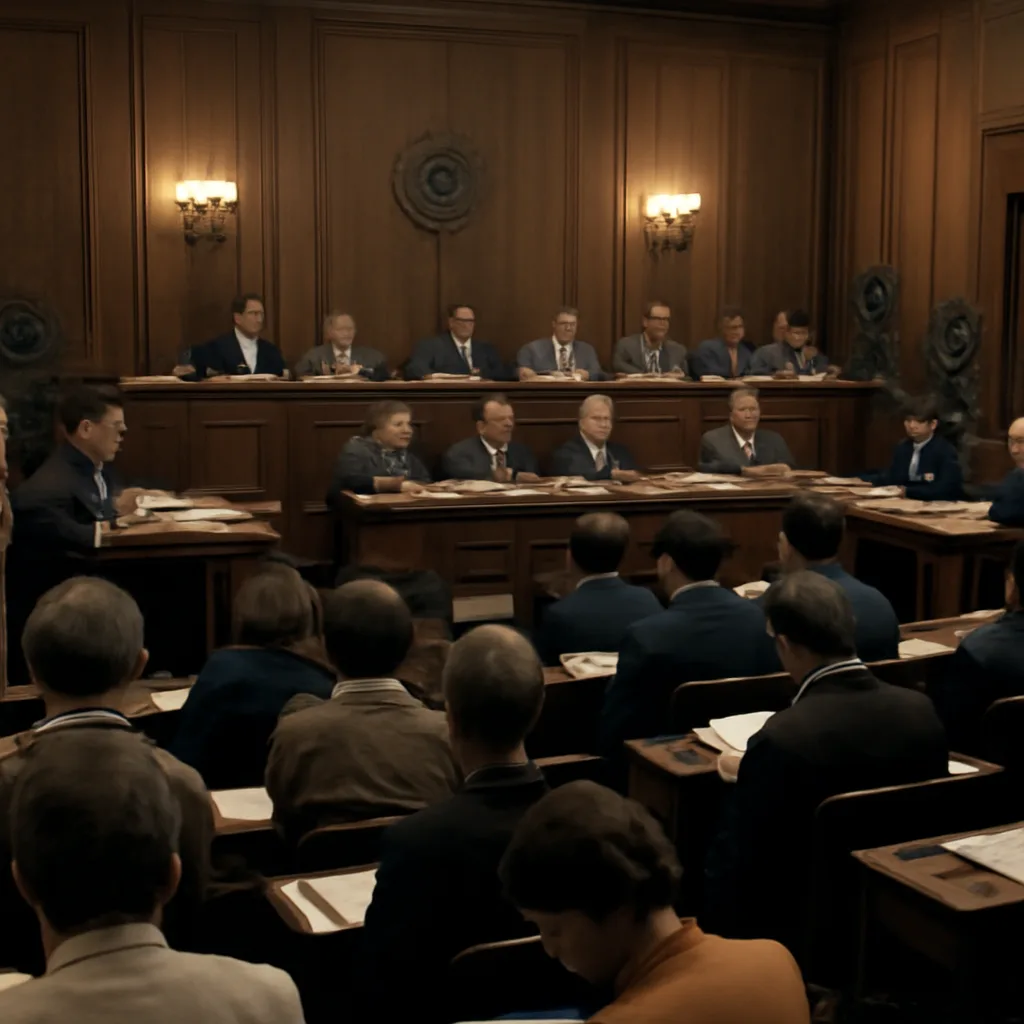
A wide courtroom-style hearing room with senators seated at a long wood dais, microphones and stacks of documents on the table, reporters and television cameras in the gallery, and a somber, formal atmosphere typical of 1970s congressional hearings.

On Nov. 17, 1973, the Senate's Select Committee on Presidential Campaign Activities opened televised hearings examining the Watergate scandal and the Nixon administration's conduct, marking a pivotal moment in public scrutiny of executive power.


On November 17, 1973, the Senate Select Committee on Presidential Campaign Activities (commonly called the Senate Watergate Committee) opened a series of public hearings that brought the Watergate scandal into living rooms across the United States. Chaired by Sen. Sam Ervin (D‑N.C.) with Sen. Howard Baker (R‑Tenn.) as a prominent member, the committee was investigating the break‑in at the Democratic National Committee headquarters at the Watergate complex and related abuses of power by members of the Nixon administration.

The hearings followed months of investigative reporting, criminal indictments, and legal battles. In the summer of 1973, key figures including former White House counsel John Dean and several administration officials faced criminal charges or were cooperating with investigators. The decision to hold public, televised hearings reflected both congressional intent to scrutinize executive conduct and public demand for transparency after successive revelations of illegal activity and attempted cover‑ups.

The public sessions were procedurally structured: opening statements, witness testimony under oath, questioning by committee members, and the admission of documents into the record. Televising the hearings amplified their reach and political impact; television coverage allowed citizens to observe testimony directly, shaping public opinion and increasing pressure on political actors.

Early witnesses and testimony in the hearings established key lines of inquiry. Committee attorneys and members sought to determine who ordered and financed the Watergate break‑in, how the White House responded once the break‑in became known, and whether officials engaged in obstruction of justice, misuse of federal agencies, or other abuses. The committee also examined evidence of campaign finance violations, political espionage, and efforts to sabotage perceived political opponents.

The hearings produced several consequential outcomes. Public testimony, including accounts from cooperating witnesses, helped corroborate reporting by journalists and fed into parallel criminal investigations by the Department of Justice and a special prosecutor. Over time, documentary evidence and witness statements contributed to a broader understanding of the administration's actions, including the role of senior White House aides and the existence of taped conversations in the Oval Office—a revelation that would become central to later proceedings.

Politically, the televised hearings altered the national conversation. They intensified scrutiny of President Richard Nixon and his associates, eroded public confidence in the administration, and set in motion events that ultimately led to the impeachment process against Nixon. While the Senate Committee itself did not impeach the president, its work helped produce the factual record and public pressure that made articles of impeachment by the House Judiciary Committee possible in 1974.

Historians view the hearings as a landmark in congressional oversight and media‑driven accountability. The combination of formal legislative inquiry, criminal investigation, and sustained television coverage created a precedent for how major political scandals would be investigated and consumed by the public. The hearings also raised enduring questions about executive privilege, separation of powers, and the mechanisms by which elected officials are held accountable for illegal or unethical conduct.

By making detailed testimony and documents public, the November 1973 hearings contributed to a cascade of legal and political consequences that reshaped American politics in the 1970s. They remain a defining episode in the exercise of congressional oversight and the interaction between the press, the public, and institutions of accountability.

Share this

Email Share on X Facebook Reddit

Did this surprise you?