
12/06/1969 • 5 views
Altamont Free Concert for Rolling Stones ends in deadly violence
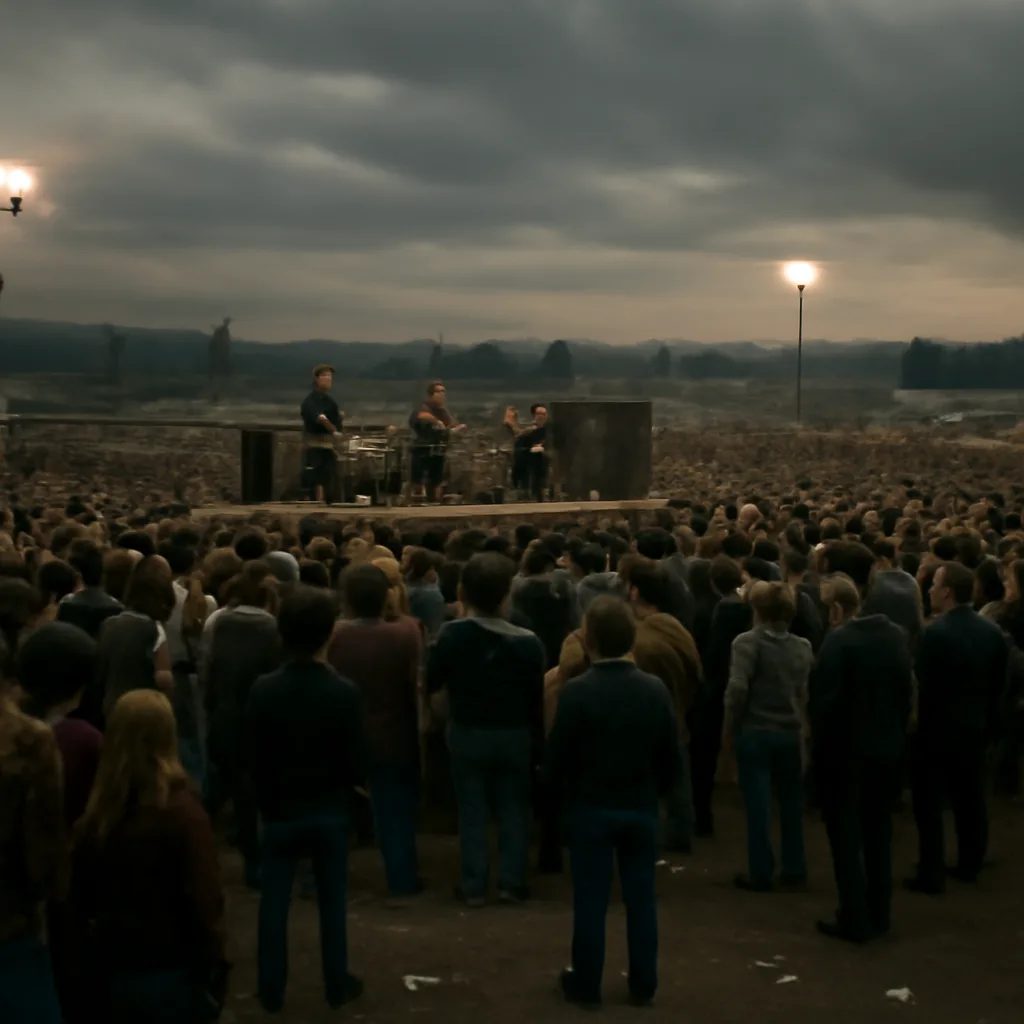
On December 6, 1969, a free Rolling Stones concert at Altamont Speedway in Northern California erupted in violence, culminating in the stabbing death of 18-year-old concertgoer Meredith Hunter and widely criticized security methods.
Planning and context
The Altamont concert was organized on short notice and marked by logistical shortcomings. Promoted as a free event, it lacked sufficient infrastructure for the large crowd: few toilets, inadequate medical facilities, and limited crowd-control measures. Organizers enlisted the Hells Angels motorcycle club to provide security, reportedly paying them with $500 worth of beer. The decision to use an informal, untrained motorcycle club for crowd control has been widely criticized by historians and journalists as a major factor in the breakdown of order.
Escalating tensions
Throughout the afternoon and evening, tensions escalated. Reports from attendees, journalists, and musicians describe a volatile atmosphere in which fights, harassment of performers, theft, and aggressive policing tactics occurred. The Hells Angels, tasked with keeping people off the stage, used physical force and improvised weapons. Several onstage confrontations and scuffles between Hells Angels and concertgoers were captured on film and in eyewitness accounts.
The killing of Meredith Hunter
During the Rolling Stones’ performance, a confrontation near the stage culminated in the stabbing death of 18-year-old Meredith Hunter. Accounts agree that Hunter, who was Black and carrying a Colt .38 caliber revolver in a holster, was chased and struck by Hells Angels members after a disturbance. At least one Hells Angel fatally stabbed Hunter; the precise sequence of events has been reconstructed from film footage and witness testimony but remains the subject of differing interpretations about who acted first in the immediate moments before the stabbing. Hunter was pronounced dead at the scene; the medical examiner listed the cause of death as a stab wound to the heart.
Aftermath and legal outcomes
A Hells Angel member, Alan Passaro (sometimes reported as Alan J. P. Passaro), was charged with murder. In a 1971 trial, he was acquitted on grounds of justifiable homicide after arguing he had been defending himself and others from an armed assailant. No other criminal convictions directly related to the killing were secured. The event prompted extensive media coverage, public debate, and later documentaries and books that examined the failures in planning, security choices, and social tensions that contributed to the tragedy.
Cultural impact
Altamont has been interpreted as a grim bookend to the optimistic countercultural moment epitomized by Woodstock earlier that year. For many observers and participants, the violence at Altamont symbolized a fracturing of the era’s utopian idealism and underscored the risks of inadequate planning for mass gatherings. The incident influenced how future large-scale concerts and festivals were organized, contributing to more professionalized security, crowd management, and emergency planning.
Historical sources and documentation
The Altamont concert is documented through contemporary news reports, court records, first-person accounts, and film footage, including portions in the documentary film Gimme Shelter (1970). Interpretations of the event vary, and specific details about moments during the killing are contested in some accounts; where accounts differ, scholars and journalists have noted ambiguities and relied on multiple sources to reconstruct sequences of events.
Legacy
Altamont remains a focal point in discussions of 1960s culture, concert safety, and the responsibilities of event organizers. The death of Meredith Hunter and the broader pattern of violence at the concert continue to be studied as a cautionary example of how poor planning and informal security arrangements can have tragic consequences.