
← Back
12/06/1976 • 5 views

Labour Government on Brink as 1976 Economic Crisis Deepens
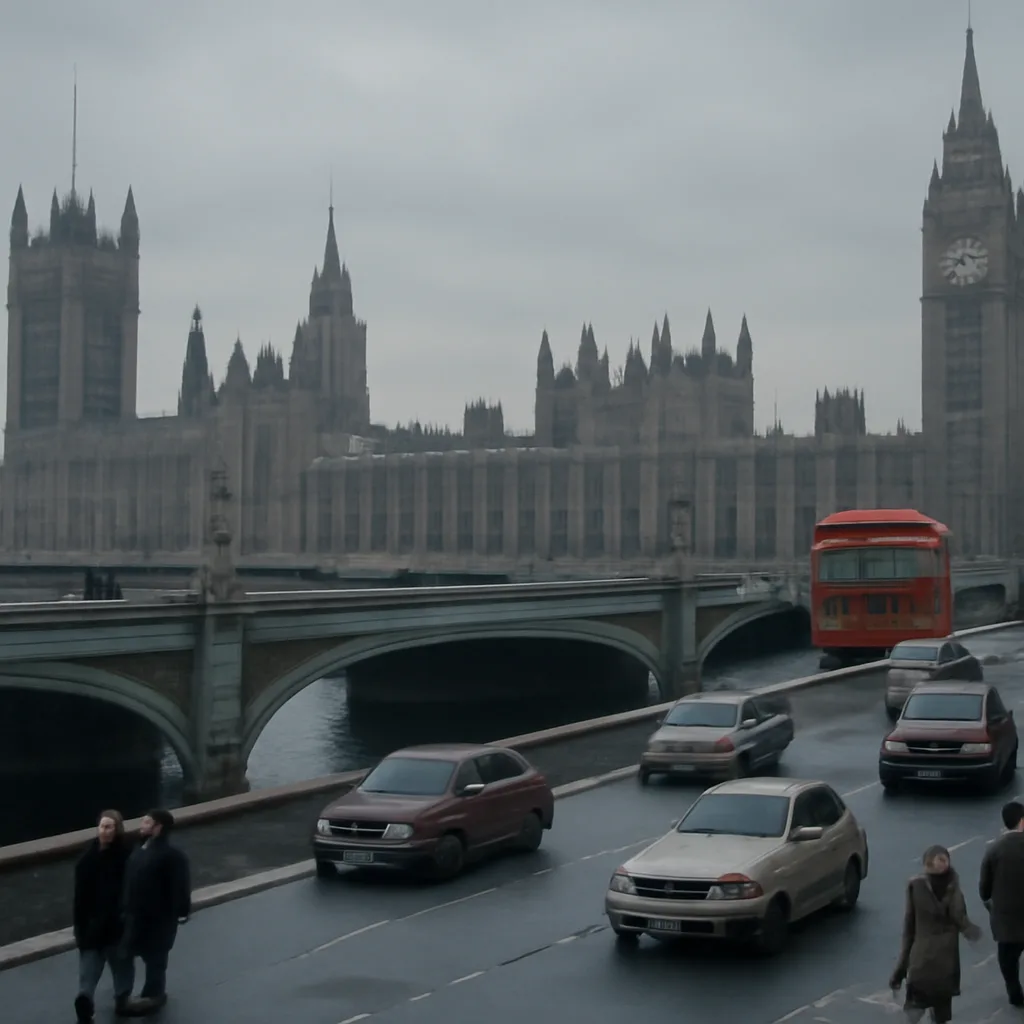
Early evening view of the Houses of Parliament from across the River Thames in the 1970s, with traffic and pedestrians in period dress and a grey winter sky.

In December 1976, Britain’s Labour government confronted a severe economic crisis—rising inflation, mounting public borrowing and sterling weakness—that brought questions about its survival and prompted urgent talks with international lenders.


Overview
In late 1976 the British government, led by Prime Minister James Callaghan (who succeeded Harold Wilson in 1976), faced one of the most acute economic challenges of the postwar era. A combination of high inflation, rising public expenditure, and a weakening pound sterling produced a crisis of confidence in markets and within Parliament. By 6 December 1976 media and political attention focused on the government’s ability to manage the economy and retain parliamentary support.
Economic context
Throughout the mid-1970s the United Kingdom experienced sustained inflation—driven by oil price shocks, pay settlements in a strong trade-union environment, and expansive public spending. Growth was sluggish and unemployment was rising. The government ran large budget deficits and the balance of payments deteriorated as imports outstripped exports. Sterling came under pressure in foreign-exchange markets, forcing the authorities to consider a range of emergency measures.
Political pressure
The economic deterioration translated rapidly into political strain. Opposition parties and some Conservative-leaning commentators accused the government of fiscal irresponsibility and mismanagement. Within Labour there were tensions between ministers prioritising wage restraint and those pushing to protect public services and benefits. Confidence in the cabinet’s economic strategy weakened, and concern grew that the government might lose votes on key measures in the Commons, risking a collapse of the administration or the triggering of a general election.
International dimension and IMF approach
The government explored international options to stabilise sterling and shore up reserves. In the months around 1976 the idea of seeking help from institutions such as the International Monetary Fund (IMF) moved from hypothetical to practical discussion. Although an IMF standby arrangement was not finalised in early December, the possibility of conditional financial assistance—likely to require fiscal tightening and public spending cuts—added to domestic political unease, since such measures were politically contentious for the Labour party and its trade-union allies.
Immediate consequences
In Parliament and the press, debate intensified about fiscal consolidation, public-sector pay, and the need for monetary discipline. Markets reacted to political uncertainty and to deteriorating economic indicators, contributing to further pressure on sterling. The government undertook urgent consultations with senior ministers, Treasury officials and external advisers to determine a course that could restore confidence without precipitating a break with party allies.
Longer-term significance
Events in late 1976 presaged a prolonged period of economic and political contestation in Britain. The crisis underlined structural weaknesses—high inflation, industrial unrest, and an eroding manufacturing base—that subsequent governments continued to grapple with. The difficulties of 1976 influenced policy debates on wage controls, public spending, and the role of international financial institutions in British economic management.
Uncertainties and limits
Contemporary accounts and later histories agree that the government faced severe strain in December 1976, but precise assessments of ministerial intentions, private meetings and the timing of specific decisions vary across sources. Some narratives emphasise the immediacy of a government collapse threat; others describe a more gradual erosion of authority. Where historians differ, this summary notes the contested nature of private deliberations and stresses the verified external pressures—high inflation, sterling weakness and fiscal deficits—that framed political choices.
Sources and verification
This account draws on broadly documented economic indicators and widely reported parliamentary and press reactions from 1976. It avoids attributing specific unrecorded private remarks to named individuals. For detailed archival records, official Treasury documents, Hansard debates and contemporary newspaper coverage provide primary-source material; established secondary histories of the 1970s offer further analysis.

Share this

Email Share on X Facebook Reddit

Did this surprise you?