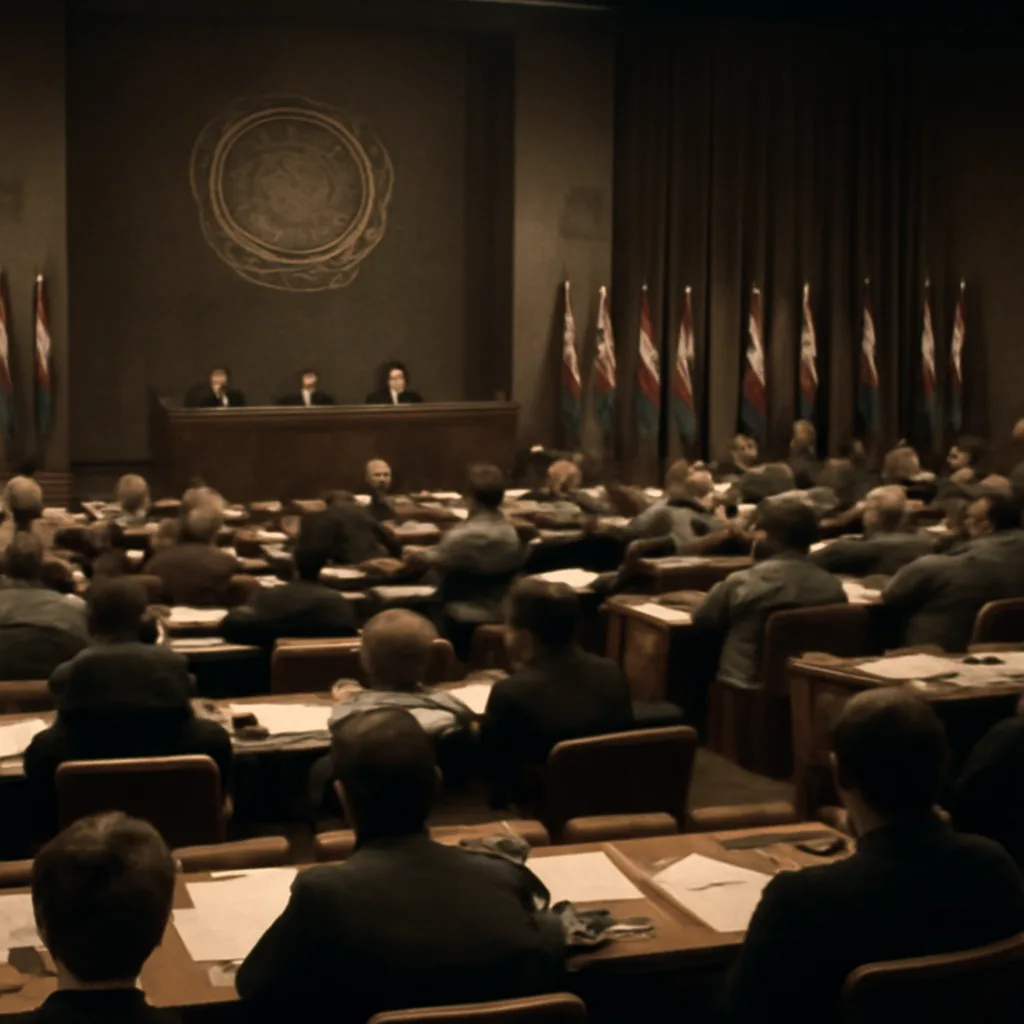
UN General Assembly Approves Partition Plan for Palestine
On November 29, 1947, the United Nations General Assembly adopted Resolution 181 recommending the partition of the British Mandate of Palestine into separate Jewish and Arab states with an international regime for Jerusalem, a decision that set the stage for competing claims and the 1948 Arab–Israeli war.
Background and proposal
After World War II and the Holocaust, pressure mounted to find a solution for Jewish refugees and competing national claims in the British Mandate of Palestine. Britain referred the question to the newly formed United Nations. A UN special committee (UNSCOP) proposed in 1947 a plan to partition the mandate into independent Arab and Jewish states with economic union and an internationally administered Jerusalem. The proposal aimed to reconcile irreconcilable nationalisms but reflected demographic realities, land ownership patterns, and political pressures rather than an equitable division by population.
The vote
On 29 November 1947, the UN General Assembly met in New York to consider Resolution 181 (II). The plan required a two-thirds majority for adoption. After debate and campaigning by representatives of Jewish and Arab communities and lobbying by foreign governments, the resolution passed 33 to 13 with 10 abstentions. The resolution recommended acceptance of the partition plan and specified boundaries for the proposed states, a transition plan, and an international regime for Jerusalem.
Immediate reactions
Jewish leaders generally accepted the plan as a basis for political independence, despite reservations about territorial compromises and demographic enclaves. Arab leaders and governments rejected partition as unjust and illegitimate, arguing it violated the principle of self-determination for the majority Arab population in Palestine. Violence between Jewish and Arab communities, which had already been increasing, intensified after the vote. The British, maintaining a policy of withdrawal, prepared to terminate the mandate on 15 May 1948 and did not implement the plan themselves.
Consequences
The UN vote did not produce a peaceful implementation. Instead, it precipitated intercommunal warfare that escalated into the 1948 Arab–Israeli War following Israel's declaration of independence on 14 May 1948. The war resulted in significant population displacement on both sides, altered territorial control beyond the lines proposed in the partition plan, and left Jerusalem divided. Many of the plan's specific provisions—most notably the recommended borders—were overtaken by military and political developments.
Legal and historical assessment
Resolution 181 was a recommendation by the UN General Assembly and not a binding enforcement by the international community. Historians and legal scholars debate the plan's motives, fairness, and feasibility: some view it as a pragmatic compromise responding to urgent humanitarian and geopolitical pressures; others see it as imposing an externally devised settlement that ignored local consent and practicalities. The vote remains a pivotal moment in modern Middle Eastern history, marking the international community's formal attempt to resolve competing national claims and the beginning of a conflict whose consequences continue to shape the region.
Legacy
The partition vote is commemorated and contested in different narratives: for many Israelis it symbolizes international recognition that led to statehood; for many Palestinians and Arab states it represents dispossession and the start of a prolonged struggle over rights, territory, and sovereignty. The issues left unresolved by the 1947 vote—refugees, borders, control of Jerusalem, and mutual recognition—have persisted through successive wars, negotiations, and generations of diplomacy.