
← Back
11/14/1998 • 6 views

Player Arrested Mid-Game During Timeout in 1998 College Basketball Contest
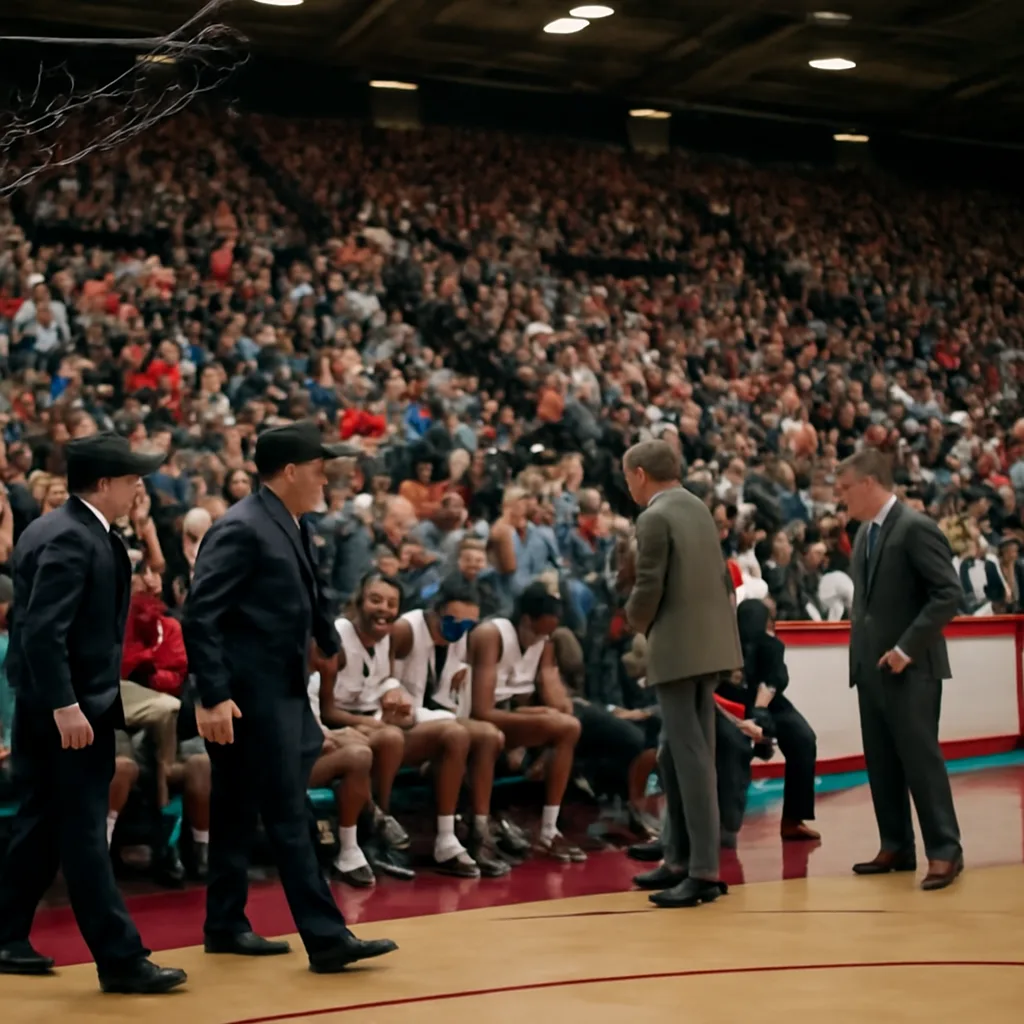
A crowded indoor college basketball arena during a timeout, team benches and officials visible, with security officers near the sideline and spectators looking on.

On November 14, 1998, a college basketball player was arrested during a timeout in a game after law enforcement arrived at the arena. The incident interrupted play and drew immediate media and public attention.


On November 14, 1998, during a college basketball game, play was interrupted when law enforcement officers entered the arena and arrested a player during a timeout. The arrest occurred in view of spectators and television cameras, prompting immediate reactions from the crowd, team staff and media covering the game. Details about the specific charges and the circumstances leading to law enforcement involvement were reported at the time but were subject to varying accounts and subsequent legal developments.

Accounts from contemporary news coverage indicate the arrest happened during an official stoppage in play. Coaches and team officials were reported to have been notified as officers approached the bench area. Game officials paused the contest while the situation was handled; depending on the outlet, the stoppage lasted only minutes before play resumed or the game was postponed or continued after the player was removed. Broad reports emphasized the unusual nature of an in-game arrest and its disruption to the event.

Immediate public responses ranged from surprise and concern to calls for due process and questions about the appropriateness of making an arrest in the public setting of a sporting contest. Media reports at the time noted both the logistical complexities—security, crowd control, and broadcasting—and the legal aspects, including whether the arrest should have been executed on-site or deferred to a later time.

Subsequent reporting and court records from the period provide the clearest information about charges and legal outcomes; contemporary news articles, local court dockets and official team statements are the primary sources for verifying specifics. Some later summaries and retellings of the incident vary in emphasis or omit legal resolutions, so researchers should consult archived newspaper coverage and court documents for confirmation of charges, whether formal charges were filed, and whether convictions, dismissals or plea agreements followed.

The incident highlighted tensions between law enforcement procedures and public events, and it prompted conversations about team and venue security protocols for handling arrests or criminal investigations during games. Policies at collegiate and professional venues were scrutinized for how to balance immediate public safety with respect for the legal process and the privacy and rights of those involved.

Because press coverage and legal documentation from the time provide the most reliable verification, historians and reporters relying on this incident should cite contemporaneous newspaper articles, official court records and team or university statements. Some secondary sources and later recollections may contain inaccuracies or omit key outcomes; where specifics are disputed or unclear, those uncertainties should be stated explicitly.

Share this

Email Share on X Facebook Reddit

Did this surprise you?