
11/14/2008 • 6 views
Skeleton Found Gripping Ancient Board Game Piece at Burial Site
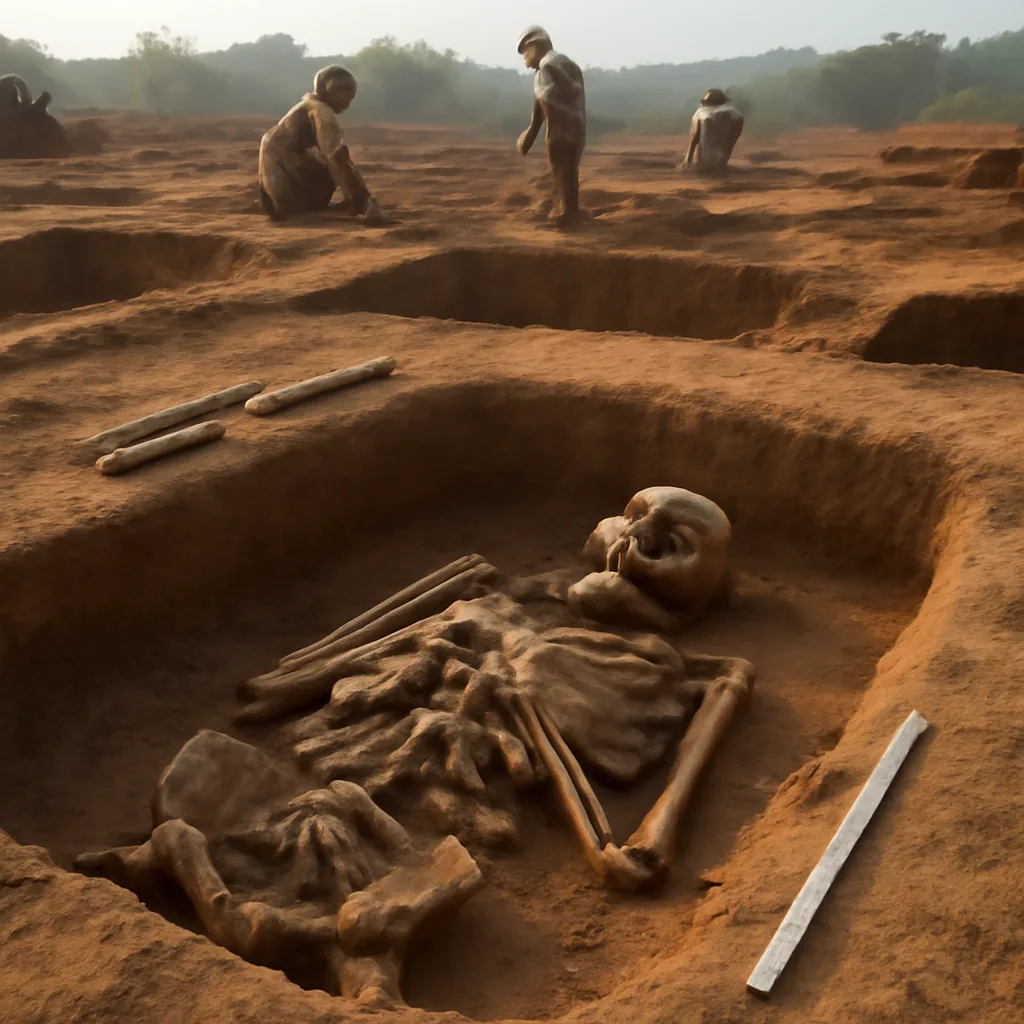
Archaeologists uncovered a skeleton dated to the Iron Age clutching pieces of a board game during a November 14, 2008 excavation. The find suggests gaming or ritual activity accompanied burial practices at the site, though the exact purpose remains uncertain.
Dating and context
Reports associated with the excavation place the burial in the Iron Age (broadly understood in many regions as roughly 1200–600 BCE to the early centuries CE), based on stratigraphy, associated artifacts, and typology of the tokens and any accompanying grave goods. Exact radiocarbon dates for this particular skeleton were not universally reported in all summaries, so the placement within the Iron Age derives from the published context rather than a single radiometric date. The burial context—grave type, orientation, and associated artifacts—helps situate the find within local funerary practices.
The game objects
The gaming pieces recovered were small, shaped tokens consistent with examples known from ancient board games in Europe and the Near East. Archaeologists noted sets of repeated shapes and groupings that suggest pieces used in turn-based play rather than random grave debris. A flat surface interpreted as part of a board, or markings on a portable game board, were reported in association with the tokens, though preservation of organic boards is often poor; surviving evidence can include incised patterns on bone, stone, or wooden boards, or spatial arrangement of tokens indicating a board layout.
Interpretations
Scholars consider several nonexclusive explanations for the inclusion of game pieces in a burial. First, the gaming set may have been a personal possession placed with the deceased as a reflection of their social identity or leisure practices. Second, the objects could have symbolic or ritual significance—games have been interpreted in some contexts as metaphors for fate, cosmology, or the journey to an afterlife. Third, the placement could reflect a funerary rite intended to accompany the deceased into the next world, whether pragmatically (to provide entertainment) or symbolically (as protection or status display).
Comparative evidence
Similar finds—burials containing gaming equipment—are known from multiple periods and regions. For example, the Royal Game of Ur boards and tokens from Mesopotamia, gaming sets in Egyptian burials, and various board game pieces in European Iron Age contexts provide comparative material. Each case requires careful contextual analysis: local burial customs, the social status of the individual, and the types of games attested in material culture all affect interpretation.
Limitations and caution
Published descriptions of the November 14, 2008 discovery emphasize the association of tokens with the hands and chest but do not universally report detailed scientific analyses in every summary. Where radiocarbon dates, residue analysis, or use-wear studies on the pieces are absent, certainty about the date, the precise nature of the game, and its function in the burial remains limited. Archaeologists therefore treat such finds cautiously, presenting several plausible readings rather than a single definitive explanation.
Significance
Whether interpreted as a personal belonging, a ritual object, or a symbolic accompaniment, the presence of game pieces in a burial enriches understanding of social life and belief systems in the past. It highlights how activities we consider recreational today—games, competition, and social interaction—could intersect with identity and mortuary practices in antiquity. Continued publication of detailed analyses, including context reports and scientific dating where available, will refine interpretations of this and similar discoveries.
Further research
Scholars recommending next steps typically call for thorough publication of the excavation context, secure radiocarbon dating of associated organic remains, and detailed typological and use-wear studies of the tokens and any board material. Comparative study with other gaming-related burials can clarify regional practices and the symbolic roles of games in past societies.