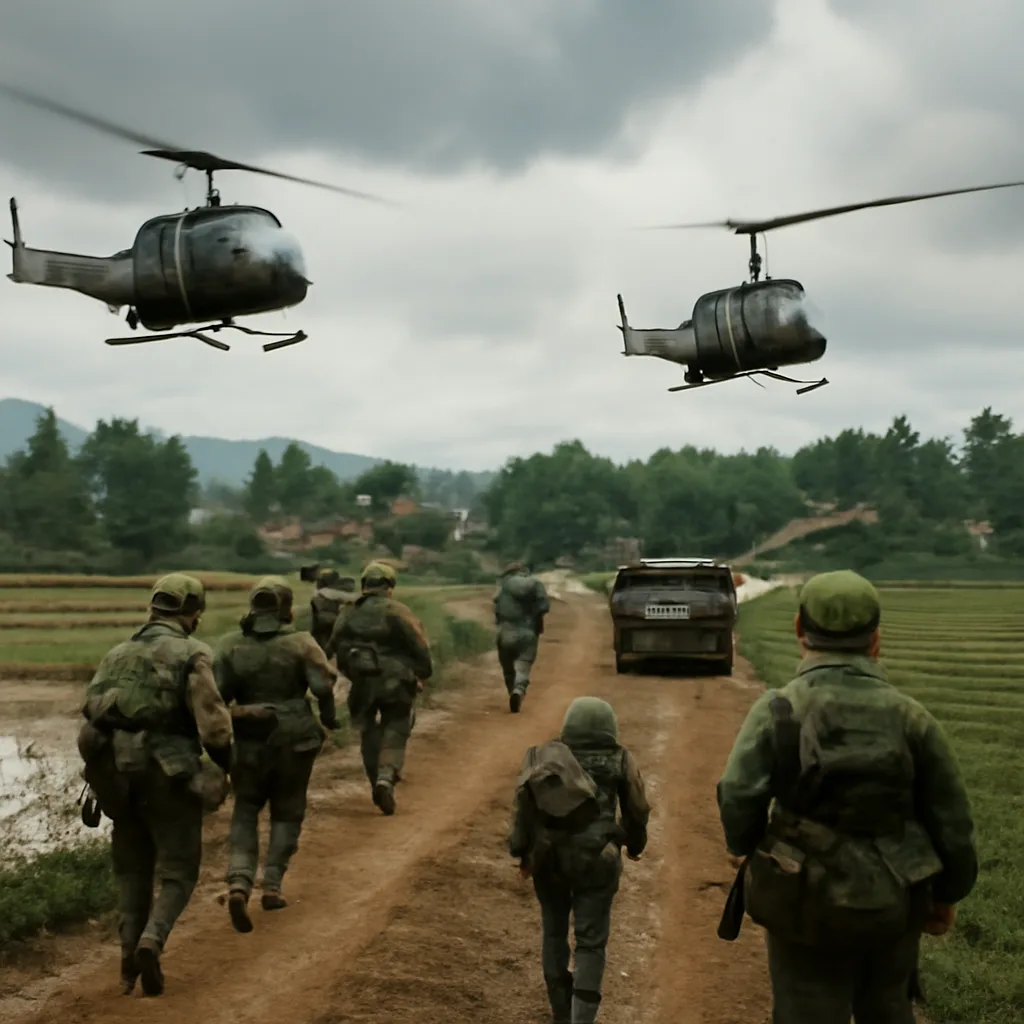
U.S. Launches Major November 1965 Assault in Vietnam
On November 14, 1965, U.S. forces conducted a significant offensive operation in South Vietnam as part of an expanding American combat role in the war, reflecting a shift toward large-scale search-and-destroy missions against Viet Cong and North Vietnamese units.
On November 14, 1965, United States military forces carried out a major combat operation in South Vietnam amid a year of rapid escalation in American involvement. By late 1965 the U.S. had transitioned from advisory and limited support roles to committing large numbers of ground combat troops, airpower, and logistics in search-and-destroy missions aimed at interdicting and engaging Viet Cong and North Vietnamese Army (NVA) units.
Context: 1965 marked a turning point in the Vietnam War. After the Gulf of Tonkin incidents in 1964 and growing concerns about the security of South Vietnam, the Johnson administration authorized significant troop increases and expanded aerial campaigns. U.S. Marines landed in Da Nang in March 1965, and by the fall of that year American ground strength and operational tempo had risen substantially. Commanders emphasized large-scale operations to locate enemy forces, disrupt supply lines, and clear areas thought to harbor insurgents.
Operation characteristics: Major assaults during this period typically combined U.S. infantry and armored units with helicopter-borne mobility, artillery, and close air support from tactical aircraft. Operations often sought to engage enemy regiments in the field, destroy their logistical bases, and capture or kill personnel and materiel. These missions frequently took place in provinces with active Viet Cong or NVA presence, including areas of central and northern South Vietnam.
Tactics and impact: Search-and-destroy doctrine prioritized locating enemy forces and inflicting casualties rather than holding terrain permanently. Helicopters (troop transports and gunships) enabled rapid insertion and extraction of units, while napalm and conventional bombs were used in close air support and interdiction efforts. The immediate tactical outcomes of specific November assaults varied: some resulted in heavy contact and reported enemy losses, others produced fewer engagements but significant disruption of local populations and hamlets suspected of supporting insurgents.
Civilian and political consequences: Large-scale U.S. assaults had important political and humanitarian repercussions. The destruction of villages, displacement of civilians, and collateral damage from artillery and air strikes contributed to mounting Vietnamese civilian suffering and fueled anti-war sentiment both within South Vietnam and internationally. Such operations also intensified debates in the United States about the effectiveness and morality of the search-and-destroy approach and about the goals of American intervention.
Military legacy: The November 1965 operations were part of a broader pattern of escalation that would define the mid-to-late 1960s: increasing U.S. troop levels, heavier firepower, and a strategy focused on attrition. While U.S. forces achieved tactical successes at times, critics argue the tactics failed to secure long-term strategic progress, in part because of difficulties distinguishing combatants from civilians, the resilience of Viet Cong and NVA forces, and political limits on U.S. conduct in populated areas.
Historical notes and sources: Specific unit names, casualty figures, and precise battlefield outcomes for operations on November 14, 1965, are recorded in U.S. Department of Defense after-action reports, unit histories, and contemporary press accounts; these records sometimes differ in detail. Where figures and claims conflict, historians cross-reference official documents, participant memoirs, and Vietnamese sources to construct balanced accounts.
Overall, the November 14, 1965 assault exemplifies the intensified U.S. combat posture in Vietnam that year—larger, more mobile operations combining air and ground power that produced immediate tactical engagements but also significant civilian displacement and contentious political consequences.