
← Back
07/05/1964 • 4 views

Rolling Stones Concert in London Breaks Into Violence
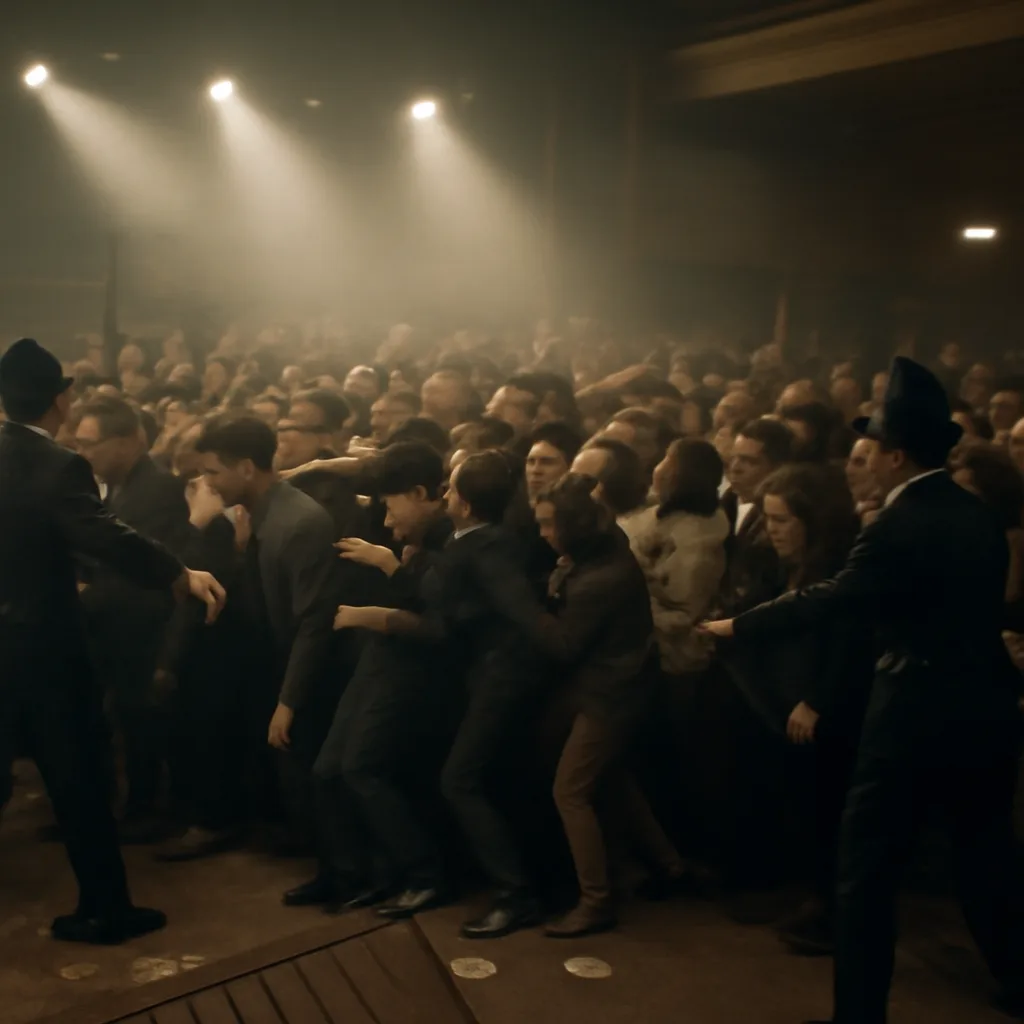
Crowded 1960s London concert venue interior with a dense audience, police officers in 1960s uniforms at the margins, stage lighting and a sense of pushing and movement among attendees.

On July 5, 1964, a Rolling Stones concert in London descended into disorder when crowd surges and clashes with police disrupted the show, reflecting rising youth fervor around the burgeoning British rock scene.


On July 5, 1964, a concert featuring the Rolling Stones in London was marred by violent disorder as audience behaviour escalated into clashes with police. The incident occurred during the early period of the band's rapid rise in Britain, when packed venues, intense fan enthusiasm and limited crowd-control practices sometimes combined to produce volatile situations.

Contemporary press reports and police statements described scenes of crowd surging, pushing and occasional scuffles in and around the venue. Accounts indicate that the performance was disrupted as officers attempted to control access and restore order. Several attendees were reported detained or escorted out; local newspapers reported injuries to a small number of concertgoers and at least one police officer, though major medical emergencies were not recorded in surviving summaries. Precise casualty figures vary between contemporary sources, and some later summaries note discrepancies in reporting.

The unrest at the show reflected broader social currents of the time. By mid-1964 the Rolling Stones had become a focal point for a segment of British youth drawn to a grittier, rebellious image than that offered by some of their contemporaries. High demand for live appearances frequently produced overcrowded venues, and policing methods for pop concerts were still evolving. Organisers and authorities were learning to balance public safety with the logistical challenges of mass popular music events.

Press coverage at the time tended to emphasize both the excitement of youth culture and anxieties about disorder. Some reports framed the incident as a symptom of inadequate crowd management and the difficulty of policing large gatherings of enthusiastic fans; others highlighted concerns about moral behaviour linked to rock ’n’ roll. Historians note that such episodes contributed to subsequent changes in event organisation and policing at popular music concerts.

No widely accepted evidence links the July 5 disturbances to any single, deliberate provocation by performers or organisers; rather, historians treat the episode as a convergent result of crowd density, high emotions, and evolving public-order responses. The Rolling Stones continued to perform frequently after the incident and became emblematic of a transformative period in British popular music. Over time, lessons from events like the July 1964 concert informed improved safety measures, ticketing practices and venue capacity planning.

Because contemporary accounts vary in detail and emphasis, specific aspects of the July 5 incident—such as the exact number of injuries or arrests—remain inconsistently reported. The broader significance of the event lies less in definitive figures and more in its illustration of mid-1960s tensions around youth culture, commercial pop concerts and public-order management in Britain.

Share this

Email Share on X Facebook Reddit

Did this surprise you?