
10/05/1972 • 4 views
Supreme Court Hears Landmark Abortion Case
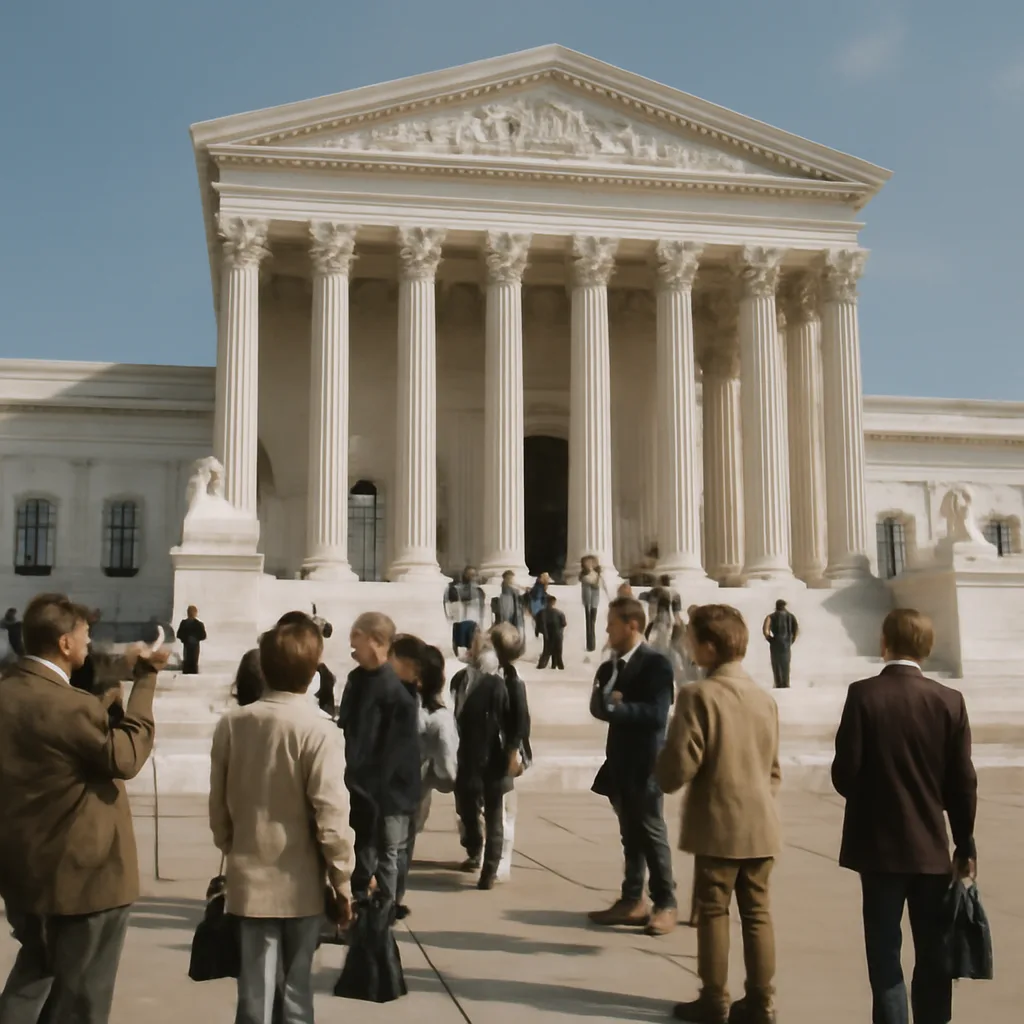
On Oct. 5, 1972, the U.S. Supreme Court heard arguments in a pivotal case challenging state restrictions on abortion, a legal battle that would shape national debate on reproductive rights for years to come.
Background
In the years before the Court’s 1973 decision in Roe v. Wade, various state legislatures had enacted statutes restricting abortion except to preserve a woman’s life, or had criminalized the practice entirely. Challengers argued such laws infringed on rights of privacy and liberty protected by the Constitution; supporters of the laws invoked states’ authority to regulate medical practice and protect prenatal life.
Legal questions
The central legal questions presented to the Court in October 1972 involved whether the Constitution recognized a right to privacy encompassing a woman’s decision to terminate a pregnancy, and, if so, how that right should be balanced against a state’s interests in protecting maternal health and potential life. The Court was asked to consider the scope of constitutional protections under the Due Process Clause of the Fourteenth Amendment and whether established precedent supported invalidating state statutes that restricted abortion.
Proceedings and context
Oral arguments before the justices allowed advocates on both sides to present constitutional, medical and policy arguments. Attorneys challenging state restrictions emphasized privacy and bodily autonomy, while state attorneys and their supporters emphasized the state’s role in regulating medicine and protecting potential human life. The case came against a broader backdrop of evolving legal doctrine on privacy and personal liberty that the Court had developed in the 1960s and early 1970s.
Outcome and significance
The Court issued its decision several months later. In a ruling that would become a landmark of constitutional law, the Court recognized that the Constitution protected a woman’s right to choose to have an abortion in certain circumstances, while also articulating a framework for state regulation tied to stages of pregnancy. That decision reshaped American law and politics, prompting ongoing debate, further litigation, and subsequent legislative and judicial actions that continued to define and contest the balance between individual rights and state interests in the decades that followed.
Historical note
While the October 1972 arguments were a key moment in the case’s trajectory, the litigation must be understood as part of a larger legal and social movement. The Court’s eventual ruling had immediate legal effect and long-term political consequences, influencing public discourse, electoral politics, and subsequent judicial review of reproductive-rights controversies. Historians and legal scholars continue to study the case’s factual record, legal reasoning and impact on American society.