
← Back
09/08/2019 • 5 views

Massive wildfire engulfs Australian bushland near Sydney
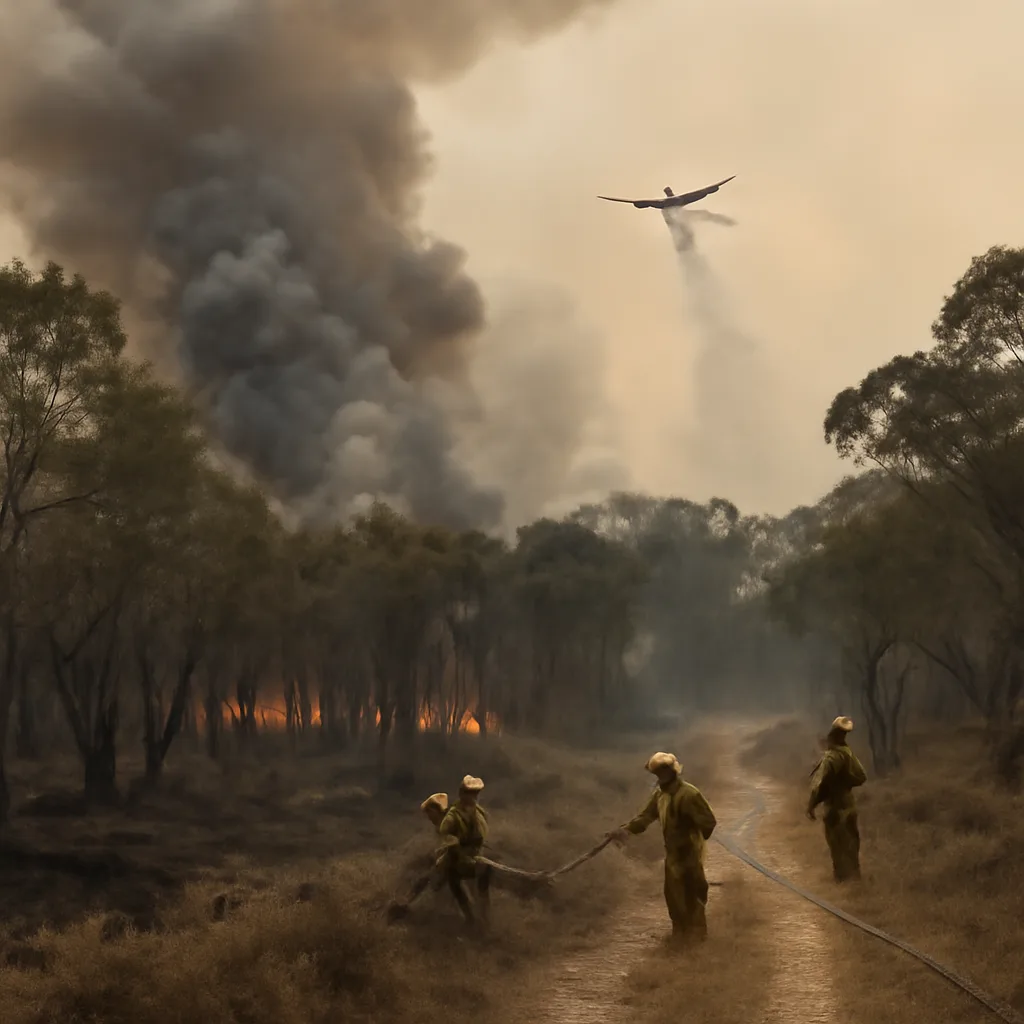
A wide view of scorched Australian bushland and active smoke plumes rising above eucalyptus trees, with firefighters and water-bombing aircraft operating at distance.

A large bushfire that began on 8 September 2019 spread rapidly across dry vegetation near Sydney, driven by hot, windy conditions and prompting widespread evacuations, property loss and intense firefighting efforts.


On 8 September 2019, a significant wildfire event intensified in dry, fuel-rich bushland in New South Wales near the greater Sydney region. The fire burned through areas of native eucalypt forest and grassland already stressed by a prolonged dry spell. Hot temperatures, low humidity and strong winds contributed to rapid fire spread and the development of aggressive fire behaviour, including spot fires and fast-moving flame fronts.

Emergency services issued multiple evacuation orders and warnings for residential communities at risk, and crews from Fire and Rescue NSW, the Rural Fire Service and supporting agencies were deployed to contain the blazes. Aircraft were used for water-bombing and to support ground crews where conditions allowed. Access to some roads was restricted and several local evacuation centres were activated to shelter residents who left threatened areas.

Infrastructure impacts included damage to homes and outbuildings in the path of the fires; exact damage totals varied by locality and were assessed in the days following the event. Power outages occurred where transmission and distribution lines were affected. Local authorities closed or restricted access to national parks and reserves while firefighting and assessment work continued.

Health advisories were issued because smoke from the fires reduced air quality across parts of Sydney and surrounding regions. Public health warnings encouraged people with respiratory conditions, older adults and young children to limit outdoor exposure and follow guidance from health authorities.

Investigations into the specific causes of individual fire starts were undertaken by the appropriate agencies; wildfire ignitions in the region can arise from a range of causes including lightning, accidental human causes, or deliberate ignition, and each incident requires formal investigation to determine cause. Weather and drought conditions that year were considered major contributing factors to the fires’ severity.

Community response included coordinated efforts by emergency services, local councils and volunteer organisations to support affected residents, provide emergency relief and assist with recovery planning. In the weeks after the immediate emergency, recovery work focused on damage assessment, restoring utilities, clearing roads, and providing financial and social support to homeowners and businesses impacted by the fires.

The September 2019 fires formed part of a broader and prolonged fire season in southeastern Australia that autumn and into the following summer. Authorities and researchers later pointed to the interplay of climatic conditions, long-term drought in parts of New South Wales and vegetation fuel loads as factors that increased the risk and potential severity of bushfires during this period.

This account summarizes the event's immediate impacts and response; precise casualty figures, property-loss tallies and official inquiries were reported by New South Wales emergency agencies and local governments in subsequent official statements and detailed post-incident reports.

Share this

Email Share on X Facebook Reddit

Did this surprise you?