
← Back
08/21/1968 • 5 views

Soviet and Warsaw Pact forces invade Prague, crushing the Prague Spring reforms
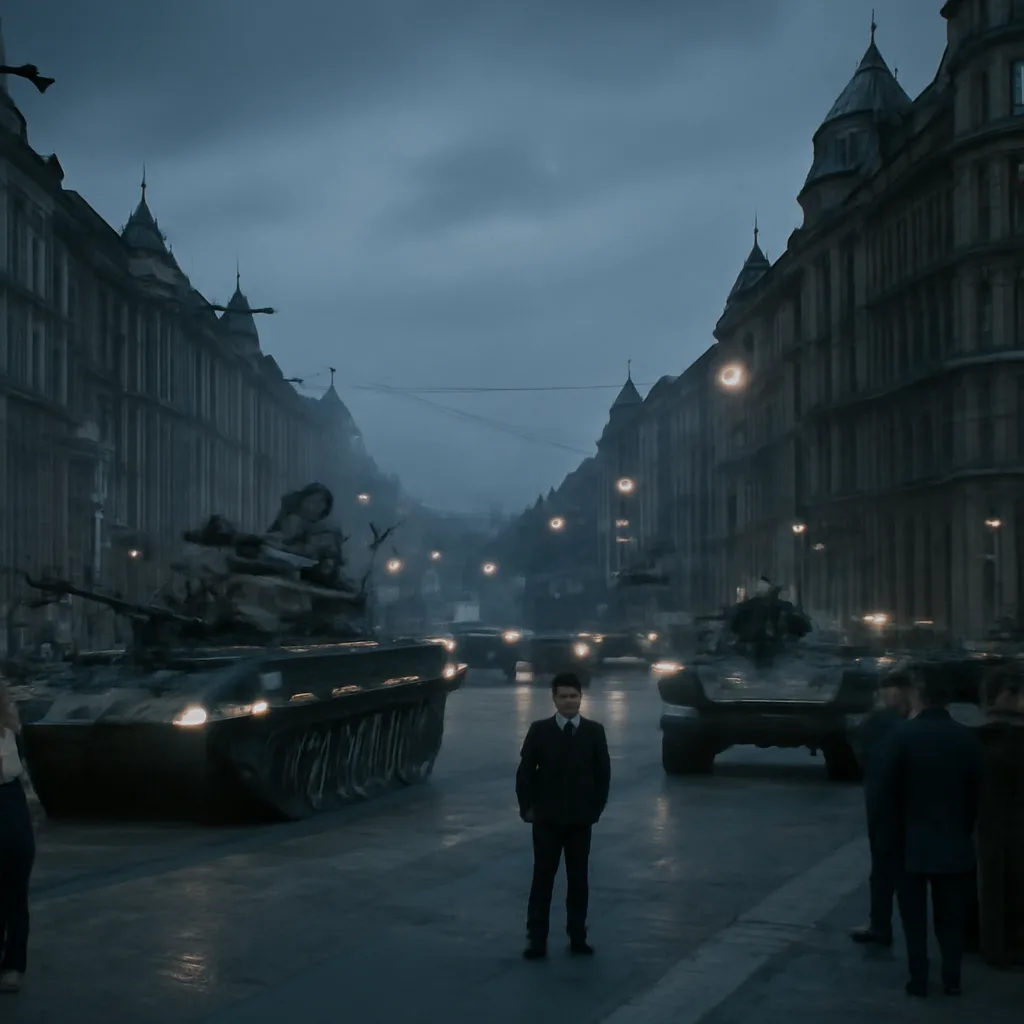
Soviet tanks and Warsaw Pact armored vehicles on a wide Prague avenue at night, with civilians and barricades visible, August 1968

On August 21–22, 1968, Soviet and allied Warsaw Pact troops and tanks entered Czechoslovakia, ending the Prague Spring — a period of political liberalization led by Alexander Dubček — and enforcing Moscow’s model of socialism.


On the night of August 20–21, 1968, tens of thousands of soldiers and hundreds of tanks from the Soviet Union and five other Warsaw Pact states crossed into Czechoslovakia. The operation, carried out without the Czechoslovak government’s consent, aimed to halt the liberalizing reforms of the Prague Spring, a period that had begun in January 1968 under First Secretary Alexander Dubček. The invasion quickly overwhelmed limited and largely symbolic resistance by local police, military units, and civilian demonstrators.

The Prague Spring reforms sought “socialism with a human face,” including greater freedom of the press, speech, and movement, partial decentralization of the economy, and steps toward political pluralism within the Communist Party. These changes alarmed hardliners in the Soviet leadership and elsewhere in the Eastern Bloc, who feared the reforms would weaken Communist control and encourage similar demands in other satellite states.

Soviet leaders framed the invasion as a necessary action to preserve socialist order and invoked what later became known as the Brezhnev Doctrine: the assertion that the Soviet Union had the right to intervene in any socialist country to protect socialism. The invading forces included troops from the Soviet Union, Poland, East Germany, Hungary, and Bulgaria. Yugoslavia did not participate; Romania and Albania opposed the intervention. The military operation was swift and largely aimed at key government buildings, communication centers, and transportation hubs. Czechoslovak leadership was arrested or isolated; Dubček and other officials were taken to Moscow in the days that followed for negotiations and pressure to reverse the reforms.

Civilian response in Prague and other cities combined passive resistance and protest. Many citizens attempted to block tanks, display national flags, and organize strikes or demonstrations. Such actions were met with force; dozens of civilians were killed during the invasion and its immediate aftermath, and hundreds were injured. Exact casualty figures remain disputed, but historians generally cite several dozen dead among Czechoslovak civilians and soldiers, plus foreign servicemen casualties.

In the months after the invasion, occupying forces remained in place and a process of political “normalization” began. Reformist leaders were gradually removed from power or sidelined; by April 1969, Dubček had been replaced as First Secretary by Gustáv Husák, who presided over a restoration of orthodox Communist rule and the rollback of many Prague Spring reforms. Thousands of Czechoslovaks were dismissed from jobs, expelled from the Communist Party, or otherwise persecuted for their support of the reforms.

International reaction ranged from protests and diplomatic condemnations in the West to cautious or supportive statements from other Communist states. The invasion deepened the division of Europe during the Cold War and damaged the Soviet Union’s reputation globally. It also prompted debates within Communist and leftist movements worldwide about Soviet hegemony and national sovereignty.

The 1968 invasion had enduring consequences for Czechoslovakia. Political liberalization was suppressed for two decades until the Velvet Revolution of 1989. The memory of the Prague Spring and its suppression has remained a potent symbol in Czech and Slovak political culture, representing both the possibility of reform within socialism and the limits imposed by external military power. Historians continue to study newly available archives and memoirs to refine understanding of decision-making in Moscow and the full scope of events in August 1968.

Share this

Email Share on X Facebook Reddit

Did this surprise you?