
← Back
05/14/1950 • 9 views

How the FBI’s Ten Most Wanted List Began, May 14, 1950
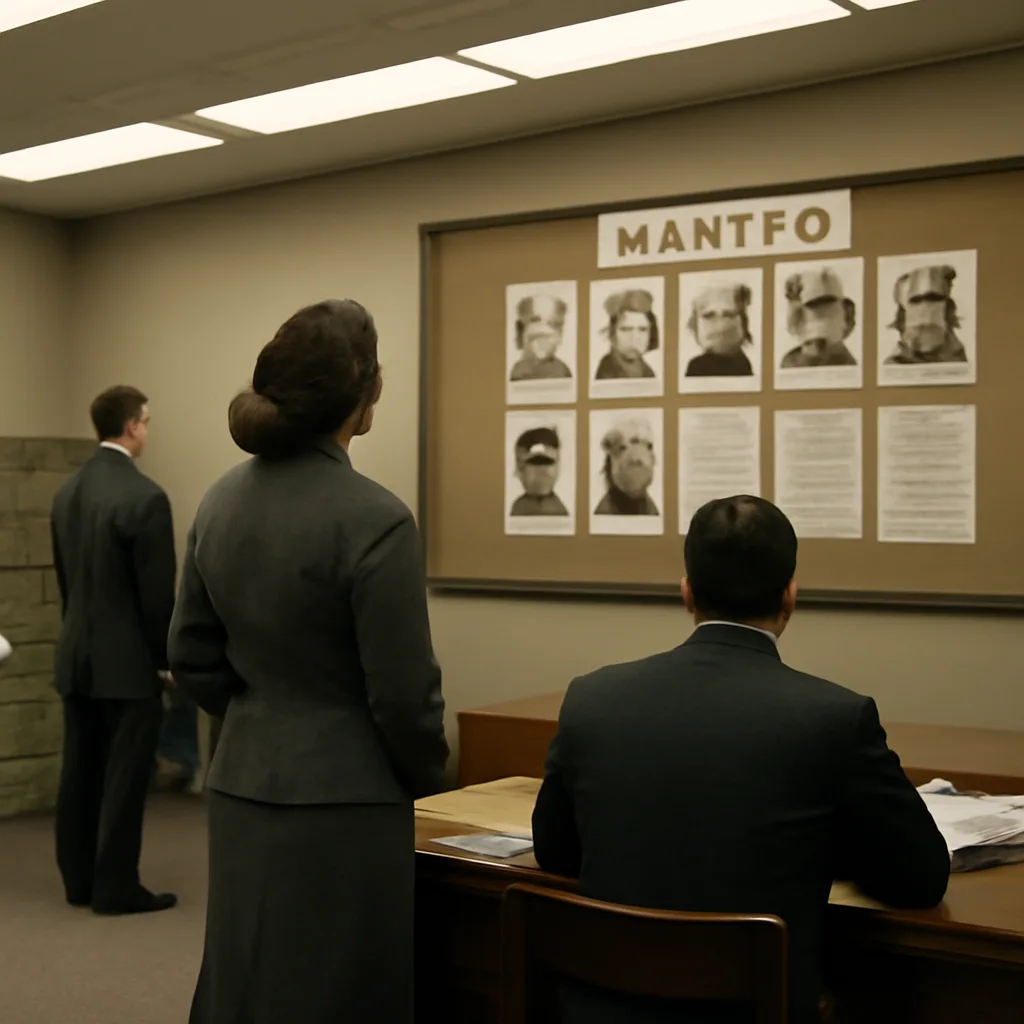
Black-and-white 1950s office scene showing an FBI bulletin board with 'Wanted' photographs and typed notices, mid-century office furnishings, and newspapers stacked on a desk.

On May 14, 1950, the FBI formally launched its Ten Most Wanted Fugitives list to enlist the public’s help in capturing dangerous fugitives; the list grew from a practical publicity effort sparked by a newspaper reporter’s suggestion and J. Edgar Hoover’s approval.


On May 14, 1950, the Federal Bureau of Investigation introduced the Ten Most Wanted Fugitives list, a compact but durable innovation in law enforcement publicity. Designed to concentrate public attention on a small number of dangerous fugitives, the list combined investigative priorities with mass-media outreach in a way that proved immediately effective.

Origins
The list grew out of an earlier practice of distributing “Wanted” circulars and photographs to law-enforcement agencies and newspapers. A specific catalyst was a 1949 suggestion by a reporter—recounted by later FBI accounts—that the Bureau publish a list of its “toughest guys” to generate public interest. J. Edgar Hoover, then director of the FBI, approved a pilot effort to provide the public with names and photographs of key fugitives the Bureau most wanted to apprehend.

Form and purpose
From the outset the list was deliberately short and numbered: only ten slots, which could be filled as arrests occurred. That constraint served several purposes. It focused media and public attention on a manageable set of cases, made it easier for citizens and local officers to remember names and faces, and created a recurring news hook as names were added and removed. The list’s stated purpose was utilitarian rather than symbolic: to use publicity to solicit tips that would lead to arrests and to reduce the number of dangerous fugitives at large.

Implementation and early reception
The FBI publicized the list through newspapers, radio, and printed circulars distributed to police departments. Photographs—often taken from arrest files—were an important component. Within months the list generated tips and led to arrests in several cases, validating the Bureau’s approach. The strategy of using media attention to aid investigations was consistent with contemporaneous trends in policing, in which public cooperation was increasingly seen as vital to solving crimes that crossed local jurisdictions.

Impact and evolution
Over the decades the Ten Most Wanted list became a durable institution of American law enforcement. It adapted to new media platforms (television, then the internet and social media) and to evolving legal and procedural norms governing fugitives, publicity, and privacy. The list has been credited with helping capture hundreds of fugitives, often after tips from members of the public who recognized names or photos. At the same time, it has generated debate about selective publicity, the potential for misidentification, and the ethics of publicizing suspects before trial.

Historical context
The list’s launch in 1950 reflected postwar developments: expanding federal law-enforcement capabilities, greater national media reach, and heightened public interest in crime news. It was also an expression of J. Edgar Hoover’s emphasis on centralized publicity and image management for the Bureau. While not the first instance of law enforcement using wanted posters or public appeals, the Ten Most Wanted list formalized and institutionalized a small-number, high-visibility approach that other agencies and countries later emulated.

Legacy
More than seven decades after its creation, the Ten Most Wanted list remains part of the FBI’s public-facing toolkit. Its continued use attests to the enduring practical value of focused publicity in fugitive investigations, even as the technologies and debates surrounding public identification of suspects have changed. Historians and criminal-justice scholars view the list as both a pragmatic investigative device and a barometer of changing relations between law enforcement, the media, and the public.

Notes on sources and certainty
The broad facts above—creation date, involvement of the FBI under J. Edgar Hoover, and the reporter-inspired publicity motive—are supported by FBI historical summaries and contemporaneous press accounts. Specific anecdotes about internal deliberations and motivations are drawn from later Bureau recollections and histories; as with many institutional origin stories, some details are recounted differently in different sources, and retrospective accounts can emphasize particular contributors differently.

Share this

Email Share on X Facebook Reddit

Did this surprise you?