
10/13/1973 • 4 views
U.S. Launches Large-Scale Airlift to Middle East During 1973 Crisis
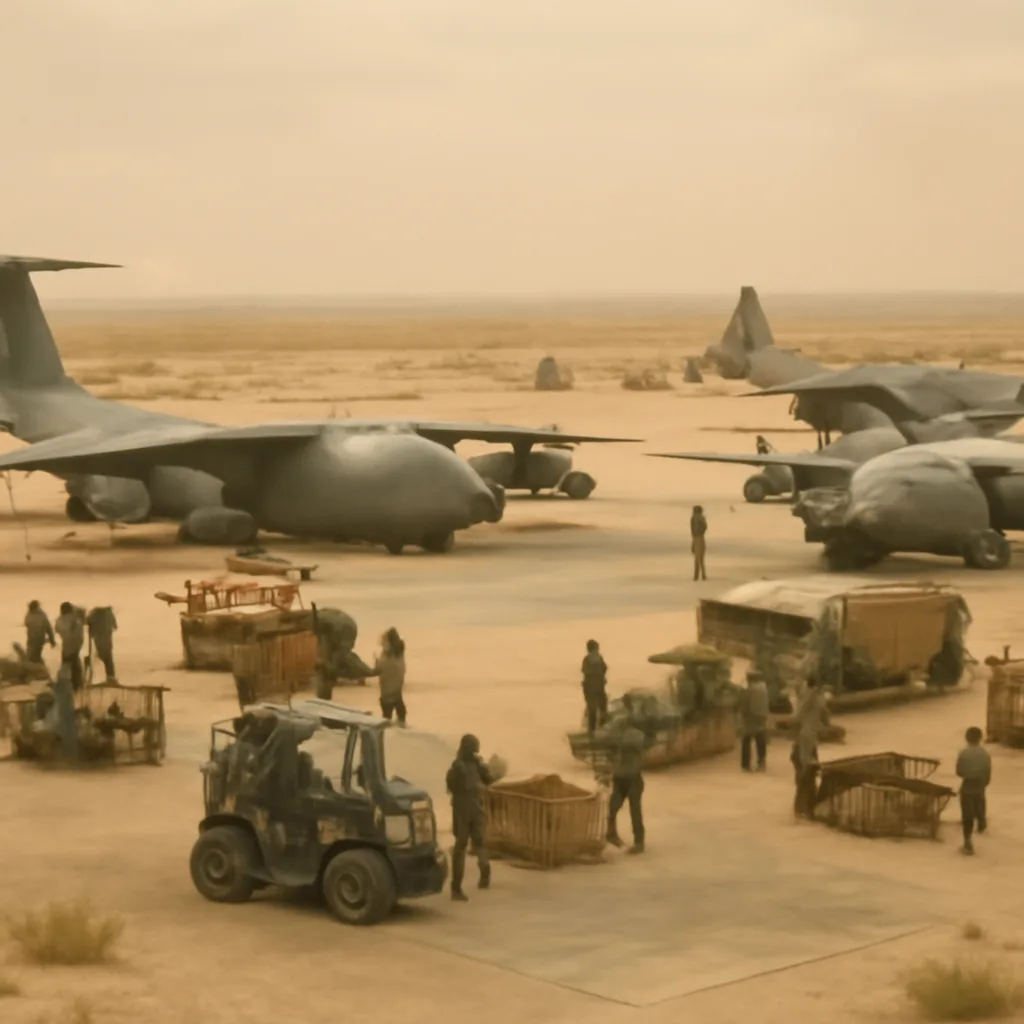
In October 1973, amid the Arab-Israeli Yom Kippur War and growing regional instability, the United States organized a major military and logistical airlift to supply allies and stabilize the situation—a rapid, sustained effort that helped shape Cold War diplomacy and the subsequent oil shock.
The airlift built on existing U.S. logistical capabilities and precedent for strategic air transport. Military cargo aircraft from the U.S. Air Force—including C-141 Starlifters and C-130 Hercules planes—were pressed into extended service to move ammunition, spare parts, weapons systems, medical supplies and other materiel. The flow of cargo increased in cadence over days, involving coordination among U.S. military commands, the State Department, and allied host bases. The effort complemented seaborne transfers but offered faster delivery during a time-sensitive crisis.
The U.S. decision to accelerate resupply reflected several calculations. Israeli forces on multiple fronts required urgent replenishment to sustain counteroffensives. Washington also sought to deter a wider Soviet escalation by demonstrating resolve and by maintaining Israel’s capacity to contend with the Arab states. At the same time, U.S. policymakers weighed risks of direct confrontation with the Soviet Union and the diplomatic implications for Arab states and global energy markets.
The airlift had immediate operational effects: it helped restore key munitions and equipment to Israeli units, contributing to their ability to stabilize and then reverse some battlefield losses. It also altered the diplomatic atmosphere—prompting Soviet resupply efforts for Egypt and Syria and intensifying superpower rivalry in the region. The visible U.S. logistical commitment became a factor in subsequent negotiations and ceasefire dynamics, including United Nations-mediated efforts in late October and November 1973.
Beyond military and diplomatic consequences, the airlift intersected with economic and energy geopolitics. In response to U.S. support for Israel, several Arab oil-exporting states initiated oil embargoes and production cutbacks in late October 1973, actions that precipitated the 1973–74 oil crisis. Those steps had long-term effects on Western energy policy, inflation, and international relations.
Historians and contemporary analysts have debated aspects of the airlift’s scale, timing and political impact. While archival records, military logs and diplomatic cables document large and rapid shipments, precise totals and some operational details vary among sources. The basic sequence—urgent U.S. air resupply to allies in mid-October 1973, followed by a broader Cold War and economic fallout—is well established.
The October 1973 airlift exemplifies how logistical capacity can influence battlefield outcomes and geopolitical alignments. It demonstrated U.S. willingness to project power and sustain allies far from home bases, while also underscoring how military actions can produce wide-reaching diplomatic and economic reverberations. The episode remains a studied case in crisis logistics, alliance management and the interconnectedness of military and economic statecraft during the Cold War.