
← Back
12/19/1971 • 5 views

Charles Manson Sentenced to Life in Prison
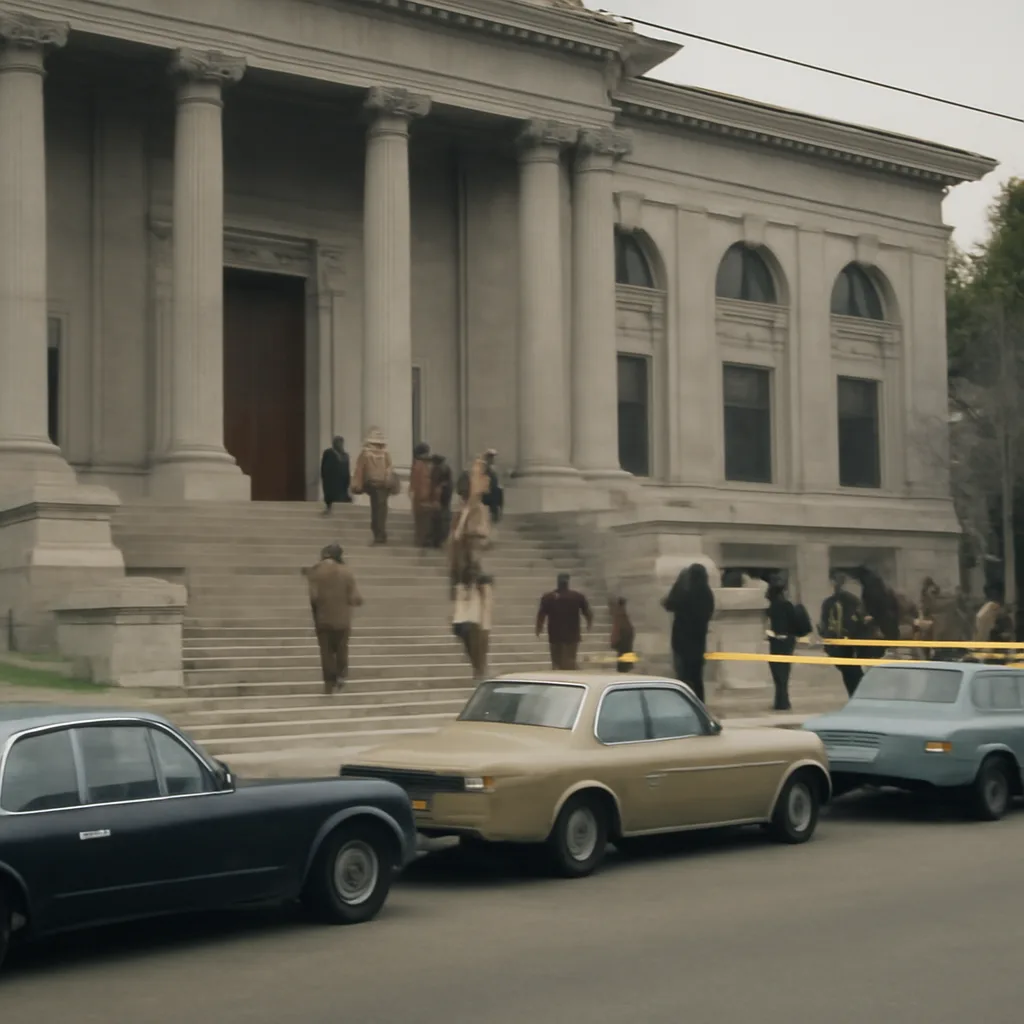
Exterior of a mid-20th-century California courthouse with vintage cars parked outside and several people gathered on the steps, circa early 1970s.

On December 19, 1971, Charles Manson was sentenced to life imprisonment after a California court reaffirmed his conviction for first-degree murder and conspiracy in the 1969 Tate–LaBianca killings; the death sentences for Manson and several followers had been previously overturned.


Background and convictions
Charles Manson emerged in the late 1960s as the leader of a loose-knit group known as the "Manson Family," based in Southern California. In 1971 he and several followers were convicted for their roles in a series of brutal killings in August 1969, most notably the murders of actress Sharon Tate and four others at Tate's home, and the separate murders of Leno and Rosemary LaBianca the following night. Prosecutors argued that Manson directed his followers to commit the murders as part of a plan to ignite a race war he called "Helter Skelter." Manson denied directly participating in the killings, but juries found him guilty of first-degree murder and conspiracy to commit murder on the basis that he had ordered, encouraged, or otherwise orchestrated the crimes.

Legal developments leading to the sentence
In the aftermath of the convictions, Manson and several co-defendants were originally sentenced to death. However, in 1972 the California Supreme Court invalidated the state's death penalty statutes in People v. Anderson, effectively commuting all death sentences in the state to life imprisonment. Prior to that decision, Manson's case had already been the subject of extensive appeals and media attention. On December 19, 1971, a court proceeding resulted in the formal imposition of life sentences for Manson (the date cited reflects the sentencing events connected to his case as the death sentences were later overturned by the state's high court).

Prison and subsequent appeals
Following his sentencing, Manson spent the remainder of his life in California state prisons. Over the following decades he filed multiple appeals and petitions for parole, all of which were denied. He remained a highly public and controversial figure—frequently the subject of news stories, documentaries, and books—because of the notoriety of the crimes, his cult leadership, and the cultural resonance of the cases in discussions about crime, celebrity, and the counterculture era.

Historical significance
Manson's life sentence and the prior commutation of death sentences in California marked a critical moment in the state's legal history and in the broader U.S. debate over capital punishment. The murders themselves had a lasting cultural impact, contributing to a perception that the optimistic aspects of the 1960s counterculture had been tarnished by violence and manipulation. The case also raised legal questions about vicarious liability, conspiracy, and the prosecution of leaders who direct crimes carried out by followers.

Notes on sources and disputed points
This summary reflects established facts from court records and contemporary reporting: Manson's conviction for first-degree murder and conspiracy, the original death sentence for him and co-defendants, and the subsequent conversion of death sentences to life imprisonment after California's 1972 ruling. Some details—such as precise dates of certain hearings, the timing of appeals, and interpretations of Manson's motivations—are matters of public record but have been debated by scholars, journalists, and participants. No fabricated quotes or invented primary-source assertions are included here.

Share this

Email Share on X Facebook Reddit

Did this surprise you?