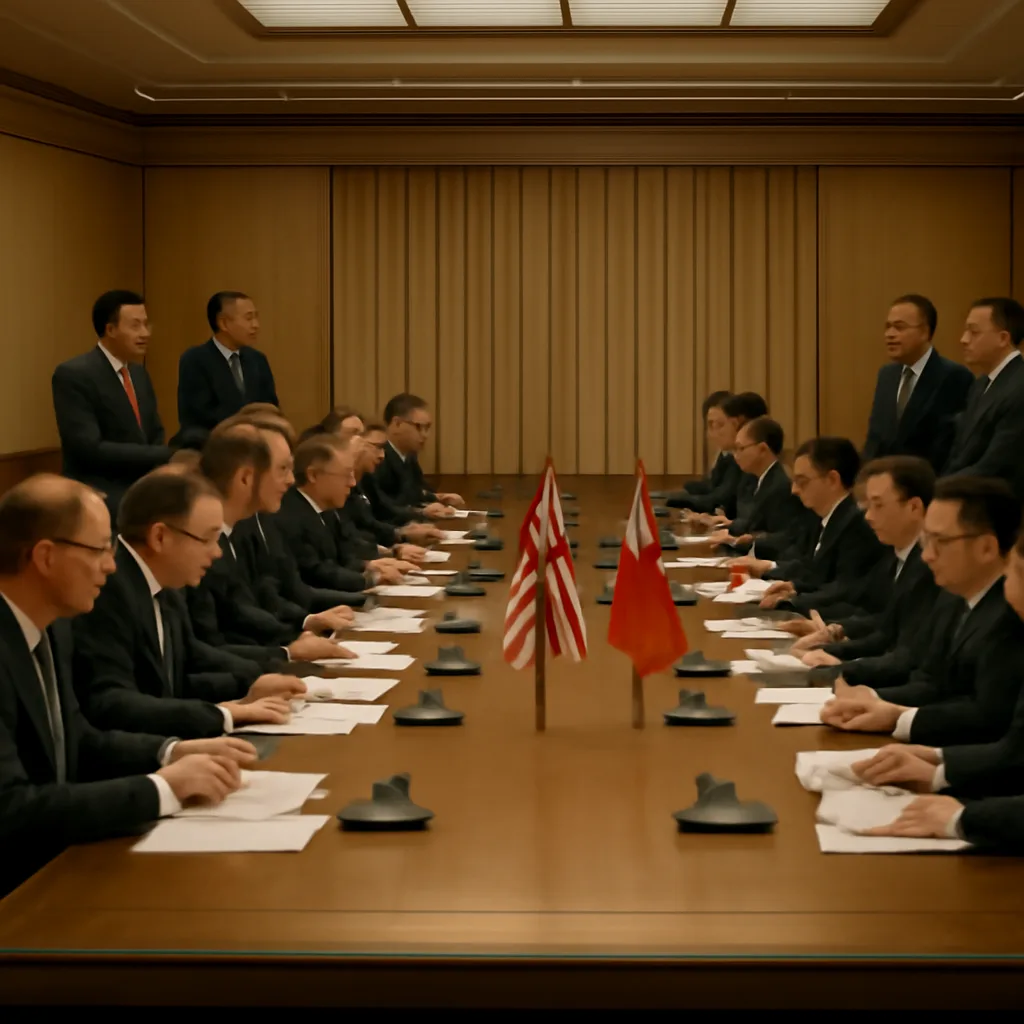
China and Britain Sign Joint Declaration Setting Hong Kong Handover for 1997
On December 19, 1984, China and Britain signed the Sino-British Joint Declaration, agreeing that sovereignty over Hong Kong would transfer from the United Kingdom to the People’s Republic of China on July 1, 1997, under a “one country, two systems” framework preserving Hong Kong’s capitalist system and way of life for 50 years.
On 19 December 1984 the United Kingdom and the People’s Republic of China signed the Sino‑British Joint Declaration in Beijing, a bilateral treaty that set the terms for the transfer of sovereignty over the Hong Kong Special Administrative Region on 1 July 1997. The agreement emerged from years of negotiations over the future of Hong Kong following the 1898 Convention for the Extension of Hong Kong Territory, which had leased the New Territories to Britain for 99 years and which was due to expire in 1997.
Key provisions
- Sovereignty: The Declaration stipulated that China would resume sovereignty over the whole of Hong Kong — the island of Hong Kong, Kowloon and the New Territories — on 1 July 1997. Britain agreed to transfer sovereignty; China agreed to assume it.
- One country, two systems: The agreement enshrined the principle that Hong Kong would become a Special Administrative Region of China, retaining its capitalist economic system and way of life for 50 years after the handover (i.e., until 2047). This approach aimed to preserve Hong Kong’s existing legal, economic and social systems distinct from those of mainland China.
- Autonomy and rights: The Declaration committed China to maintaining Hong Kong’s executive, legislative and independent judicial powers, including the final adjudication of disputes by its Court of Final Appeal, and to protect the rights and freedoms of its people. It also referenced the continuation of existing international agreements to which Hong Kong was a party, within the limits of sovereignty.
- Defence and foreign affairs: China would be responsible for the defence and foreign affairs of Hong Kong, while the territory would retain a high degree of autonomy in internal matters.
Negotiations and context
Negotiations began in the late 1970s and continued through the early 1980s as both sides sought a practical arrangement for the post‑1997 period. British Prime Minister Margaret Thatcher and Chinese paramount leader Deng Xiaoping were prominent political figures associated with the process, though the Joint Declaration resulted from teams of negotiators and diplomats. China emphasized that sovereignty over Hong Kong had never been ceded and was inalienable; Britain argued for protections for Hong Kong’s existing systems and for continuity until 1997.
Domestic and international reactions
The announcement produced mixed reactions in Hong Kong, the United Kingdom and abroad. Some in Hong Kong welcomed the clarity and the guarantees of economic and legal continuity; others feared loss of freedoms and prompted emigration by some residents. British and international observers debated whether the Declaration’s guarantees would be fully honoured in practice, and how the principle of “one country, two systems” would be implemented.
Legal status and implementation
The Joint Declaration was registered with the United Nations and is a binding international treaty between China and the United Kingdom. Its provisions were implemented through domestic measures in both jurisdictions: Britain amended local ordinances and preparations for transfer continued, while China promulgated the Basic Law of the Hong Kong Special Administrative Region — adopted by China’s National People’s Congress in 1990 — which served as Hong Kong’s mini‑constitution after 1997 and incorporated many of the Declaration’s commitments.
Longer‑term significance
The Joint Declaration defined the framework for Hong Kong’s governance and international position after 1997 and influenced political, legal and economic developments in the years that followed. Debates over the extent and durability of the guarantees provided by the Declaration and the Basic Law have continued in subsequent decades, shaping Hong Kong’s relations with Beijing, the United Kingdom and the international community.
Notes on sources and contested points
This summary reflects the treaty text and widely documented historical context. Some interpretations of the Declaration’s scope and the adequacy of its protections have been contested by government officials, legal scholars and activists; those disagreements are noted in public records and analyses. No direct quotations are fabricated here; readers seeking the primary document are advised to consult the full text of the Sino‑British Joint Declaration and the Basic Law for exact wording and legal details.