America’s First Public Zoo Opens in Philadelphia, 1874
On March 27, 1874, the Philadelphia Zoo opened to the public—the first true public zoological garden in the United States—marking a shift in urban recreation, education, and the display of animals for scientific study and popular leisure.
On March 27, 1874, the Philadelphia Zoo opened its gates on leased land in West Philadelphia, becoming widely recognized as the first public zoo in the United States. The institution grew out of the Zoological Society of Philadelphia, founded in 1859 by naturalists and civic leaders who sought to create a place for the study and display of living animals. The opening in 1874 followed years of planning delayed by the Civil War and financial challenges.
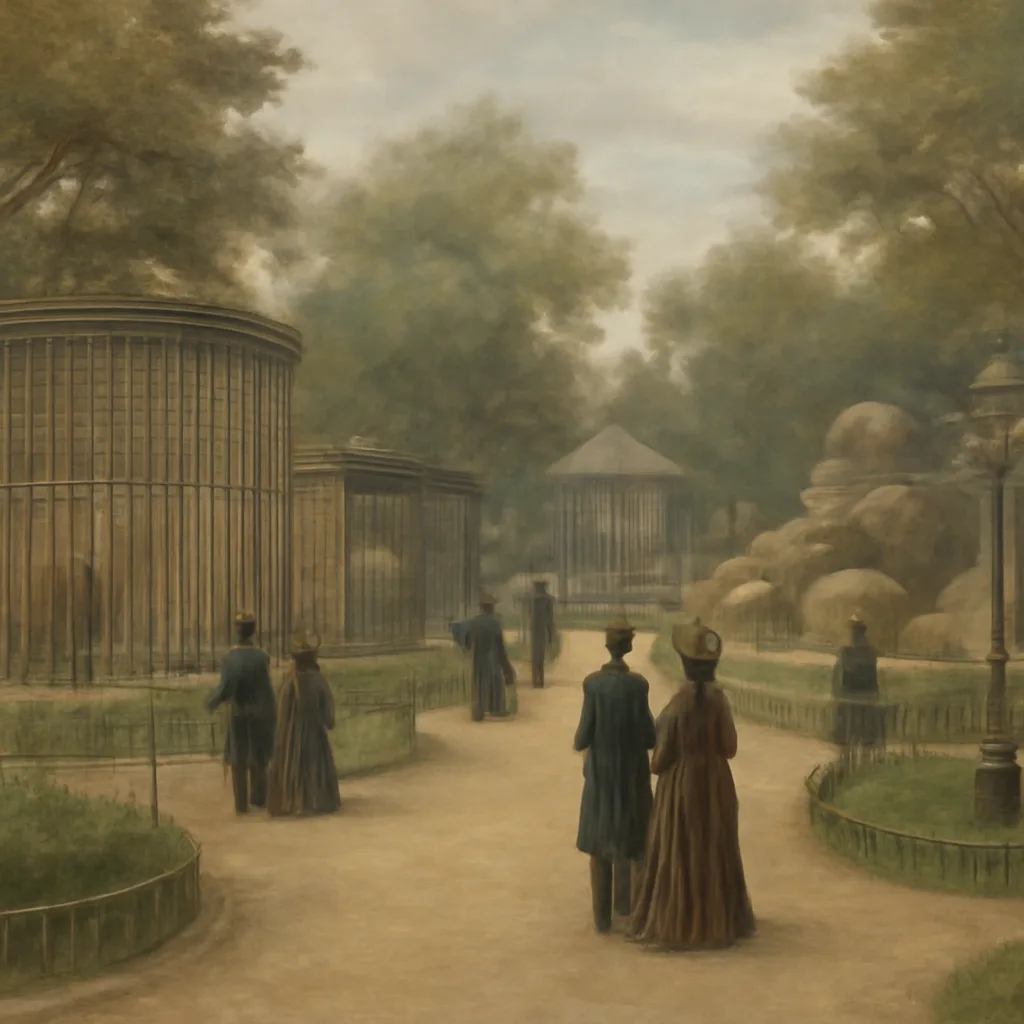
The early Philadelphia Zoo reflected 19th-century attitudes toward nature, science and urban improvement. Its founders combined goals of public education, scientific research and civic enhancement. Exhibits were arranged to showcase exotic species—lions, tigers, and monkeys alongside North American fauna—intended both to instruct and to entertain a city audience increasingly interested in natural history. The zoo’s early displays also embodied the period’s display conventions: barred cages and naturalistic rockwork were mixed with Victorian landscaping, reflecting contemporary beliefs about how animals should be presented and viewed.
Admission was deliberately structured to attract a broad public. The zoo offered daily opening hours and charged modest fees, allowing middle-class families and curious urban residents to visit. Printed guides, specimen lists and occasional public lectures helped frame visits as educational experiences rather than purely spectacle. Photographs and newspaper reports from the era emphasized the novelty of seeing live exotic animals in the United States—a novelty previously encountered only in traveling menageries or in European zoos.
Scientific and conservation aims accompanied public display. The Zoological Society emphasized opportunities for zoological study, veterinary care and collection management. Early record-keeping, specimen exchanges with other institutions, and the maintenance of living collections contributed to the development of American zoo practice. However, nineteenth-century zoos including Philadelphia’s also reflected colonial-era practices of acquiring animals, often through trade networks and collectors, practices that later became ethically and legally constrained.
Physical development at the Philadelphia Zoo advanced in stages. Initial structures were modest enclosures and iron cages; over decades these gave way to more elaborate architectural works and purpose-built houses for particular species. As zoological science and public expectations evolved, the zoo adapted by reconfiguring exhibits, improving animal care, and participating in breeding programs. The institution’s long history includes both celebrated successes—public education programs, scientific contributions and species husbandry—and critiques typical of modern reassessments, including concerns about enclosure design and the origins of early collections.
The opening of the Philadelphia Zoo also influenced the broader American landscape. It provided a model for other cities considering zoological gardens and helped establish standards for professional zoo administration. Subsequent zoos in New York, Cincinnati, and elsewhere drew inspiration from earlier institutions while developing their own approaches to display and conservation. Over the 20th century, American zoos increasingly emphasized naturalistic exhibits, species conservation, and formalized animal welfare practices—shifts that altered visitor experience and institutional missions compared with the 1874 model.
Historians note that describing the Philadelphia institution as the first public zoo in the United States rests on particular definitions. Earlier menageries and private collections existed, and other institutions claimed precedents under varying criteria; nonetheless, Philadelphia’s 1874 opening is commonly cited because it resulted from a formal zoological society, operated as an enduring public garden, and established practices and infrastructure that persisted and expanded. The zoo’s founding captures key themes of the era: the expansion of urban leisure, the professionalization of natural history, and changing public relationships to the natural world.