
03/27/1944 • 6 views
Gloster Meteor Makes Maiden Flight, First Allied Jet in Service
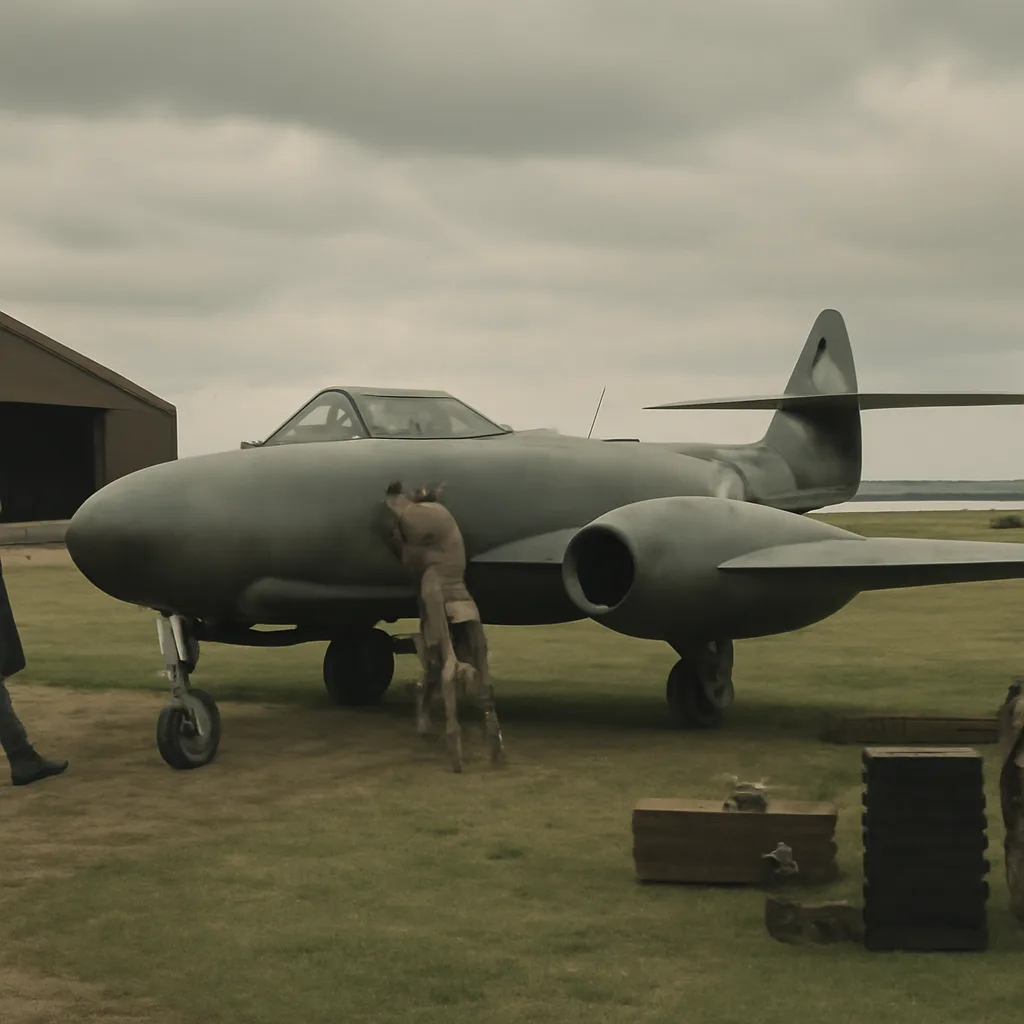
On March 27, 1944, an early Gloster Meteor prototype undertook its first flight, marking the debut of Britain's first operational jet fighter and a pivotal moment in the transition from piston-engined to jet-powered military aviation.
Background
Jet propulsion concepts had been explored in several countries before and during World War II. In Britain, Frank Whittle had patented a turbojet concept in the 1930s; parallel work in airframe design led Gloster to propose an aircraft to use these new engines. The Meteor project combined the new jet engine technology with conventional aircraft design practices of the era, producing a twin-engine, straight-wing fighter suited to the early jet engines’ characteristics.
Design and development
The Meteor’s airframe was conservative compared with later jet designs: a straight-wing monoplane with twin-engine nacelles mounted in the wing roots, a single-seat cockpit, and conventional tail surfaces. Early Meteors used Power Jets W.2 engines and later versions were fitted with more powerful Rolls-Royce Derwent engines as those became available. The combination of incremental airframe design and evolving engine power allowed rapid progression from prototype to operational service.
First flights and testing
The Meteor’s initial prototype flights occurred amid intensive flight-testing and iterative changes. While various prototype dates and experimental flights preceded full evaluations, the March 1944 event is associated with early public and service trials that demonstrated the jet’s capabilities. Flight testing focused on handling differences from piston-powered fighters, throttle response, engine reliability, and suitability for operational roles such as interception and ground attack.
Operational impact
The Meteor entered squadron service later in 1944 and was used primarily to counter the V-1 flying bomb campaign and to replace piston-engined fighters in some roles. Its operational debut did not immediately render propeller fighters obsolete, but it established the jet fighter as a viable combat aircraft and accelerated postwar developments worldwide. The Meteor remained in RAF service for years after the war and was exported to several countries, influencing early jet tactics, maintenance practices, and pilot training.
Historical context and significance
The Meteor’s development was part of a broader wartime push by multiple nations to harness jet propulsion. While Germany achieved earlier jet-powered combat operations with aircraft such as the Messerschmitt Me 262, the Meteor was the first Allied jet fighter to reach operational status and the first British jet to enter service. Its arrival marked a technological turning point in military aviation, setting the stage for the rapid jet advancement of the late 1940s and 1950s.
Sources and reliability
Details about specific prototype flight dates, pilots, and incremental testing steps are documented in contemporary RAF records, Gloster company archives, and later aviation histories. Some early flight reports and attributions can vary between secondary sources; where disagreement exists, historians rely on primary documentation from Gloster, Power Jets, and RAF test units to establish the sequence of development and operational deployment.
Legacy
The Gloster Meteor is remembered as a transitional aircraft: not the fastest or most advanced jet by postwar standards, but pivotal in proving the practicality of turbojet fighters in operational service. Surviving examples are displayed in museums, preserving evidence of the technological shift from piston propulsion to jets that reshaped military and civil aviation in the mid-20th century.