
← Back
01/08/1962 • 5 views

U.S. Declassifies Manhattan Project Documents
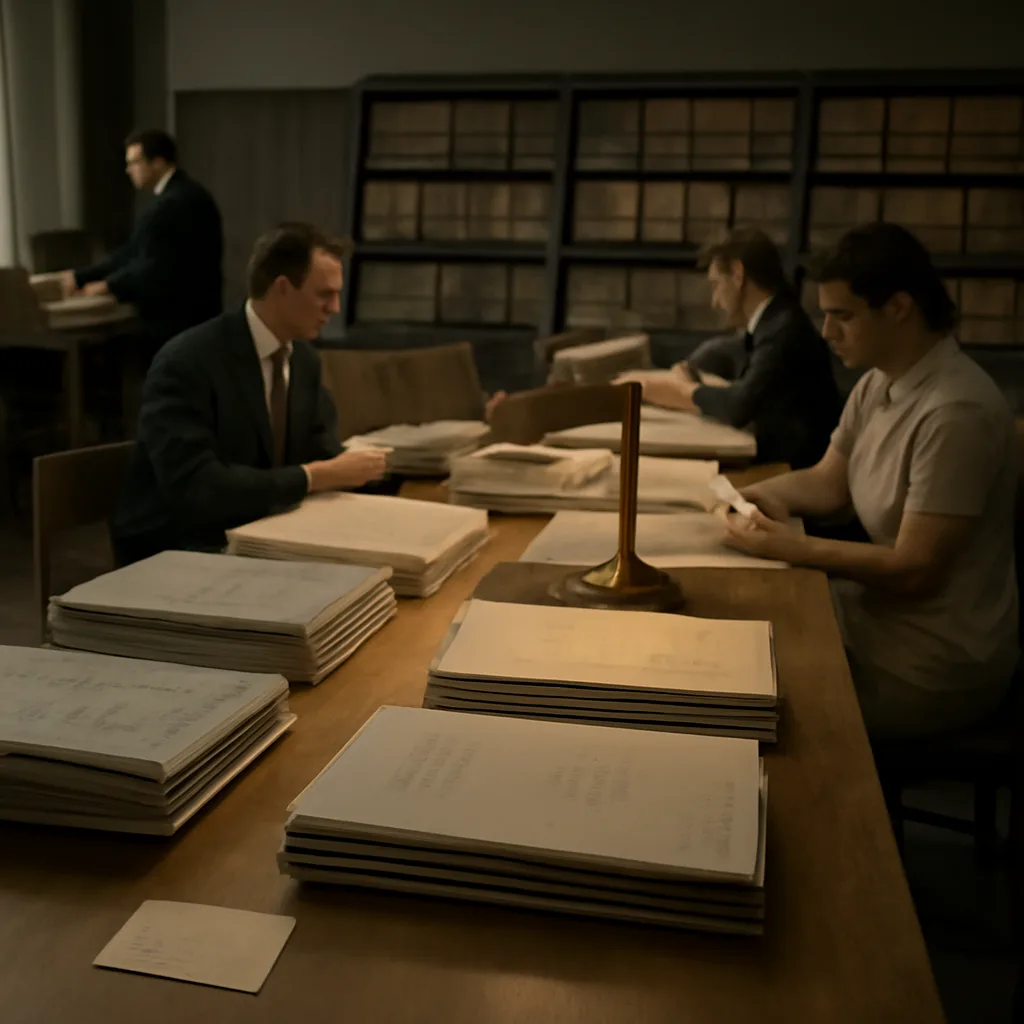
Archivists at a table with stacks of mid-20th-century government papers and bound reports, labeled Manhattan Engineer District and Atomic Energy Commission, in a reading room setting.

On January 8, 1962, the U.S. government declassified portions of the Manhattan Project record, making previously secret wartime research, planning and administrative documents available to historians and the public.


On January 8, 1962, the U.S. Atomic Energy Commission (AEC) and other agencies released a tranche of documents from the Manhattan Project — the World War II-era U.S. program to develop atomic weapons. The release marked a shift from immediate postwar secrecy toward a controlled opening of the project’s historical record, enabling historians to examine primary-source material about scientific work, industrial production, logistics, and wartime governance.

Background
The Manhattan Project had been run during 1942–45 by the U.S. Army Corps of Engineers (known as the Manhattan Engineer District) with scientists from universities, national laboratories and industry. After the war, many project files remained classified for reasons that included long-term national-security concerns, protection of sensitive technical details, and the personal privacy of individuals associated with the program. Over the 1950s and into the early 1960s, as the Cold War environment and public attitudes evolved, government officials began reviewing which records could be safely released.

Scope of the 1962 Declassification
The January 8, 1962 release did not open every Manhattan Project file; rather, it comprised selected records that agencies judged no longer critical to national security. Released material typically included administrative records, engineering reports on construction and operations of sites such as Oak Ridge (Tennessee), Hanford (Washington) and Los Alamos (New Mexico), procurement and logistics papers, and non-sensitive scientific reports. Highly detailed weapons-design documents, certain technical drawings, and intelligence-related files largely remained restricted.

Impact on Scholarship and Public Understanding
The declassification allowed historians, journalists and former participants to corroborate timelines, personnel lists, and institutional arrangements that had previously been understood only through memoirs or partial accounts. Scholars used the records to produce more accurate narratives about decision-making, the scale and complexity of the industrial effort, and the interactions among military authorities, civilian scientists and contractors. For the public, the release contributed to a gradual reappraisal of the project’s wartime role and its ethical and political consequences.

Limitations and Continued Classification
It is important to note that the 1962 release was selective. Technical details deemed directly applicable to weapon design or to ongoing national-security concerns remained classified. Moreover, some materials were sanitized before release to remove names or sensitive passages. Subsequent declassification efforts in later decades would open additional records, but debates about how much to disclose persisted, reflecting tensions between historical transparency and perceived security needs.

Legacy
The 1962 declassification represented an early, cautious step toward preserving and interpreting the historical record of the Manhattan Project. By enabling research based on primary sources, the release helped establish a more grounded historical literature on the project’s institutional history, industrial mobilization and wartime administration, while leaving unresolved questions tied to still-classified technical and intelligence material.

Share this

Email Share on X Facebook Reddit

Did this surprise you?