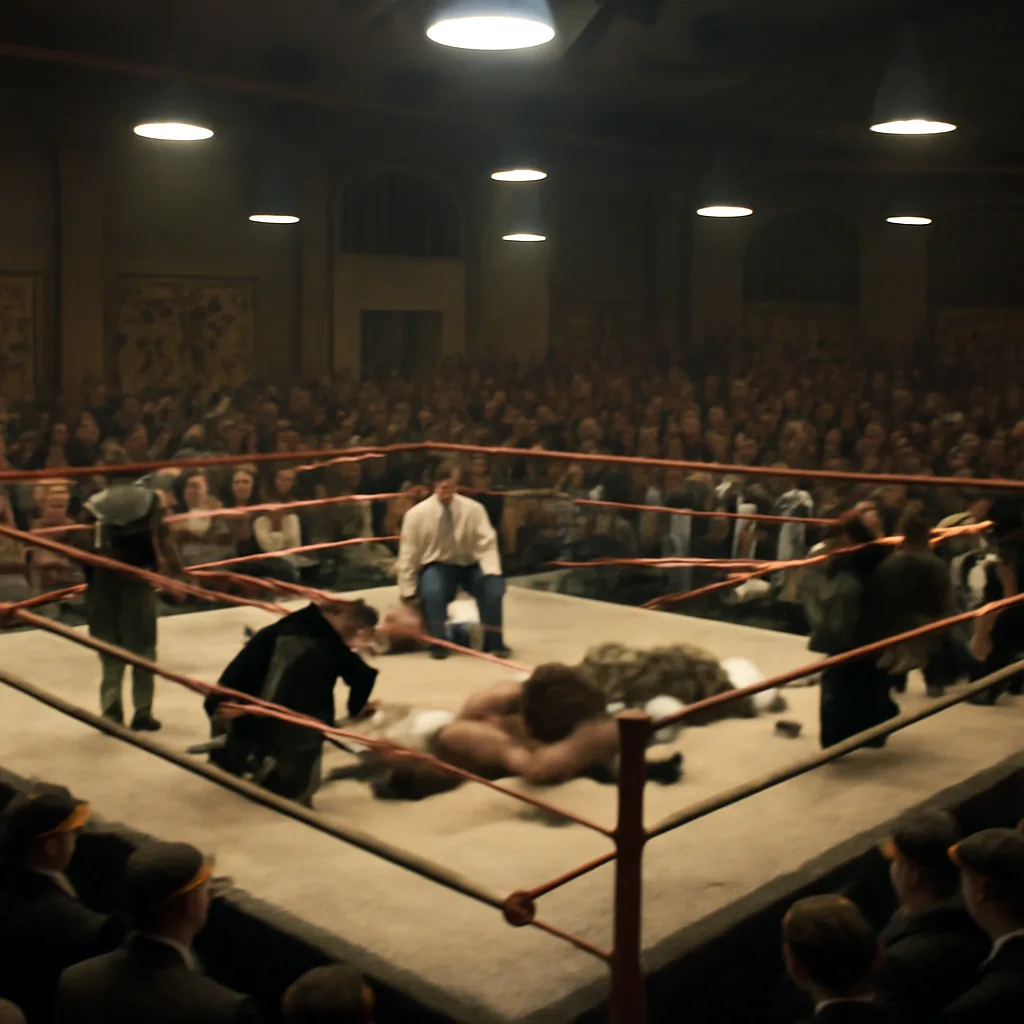
Both Boxers Collapse; June 2, 1947 Match Declared Draw
On June 2, 1947, a professional boxing bout ended in an extraordinary draw after both fighters collapsed late in the contest, leaving officials unable to continue. The unusual stoppage drew immediate attention in the sporting press and among medical observers of the era.
On June 2, 1947, a professional boxing match concluded with an uncommon result: a draw declared after both combatants collapsed and could not continue. Contemporary reports described an intense bout that, in its later rounds, left both men physically incapacitated and officials without a clear, safe path to restart or award a victory. The match has persisted in historical accounts as a notable example of the era’s risks inside the ring and the limits of mid-20th-century sports medicine.
Background and context
Boxing in the 1940s occupied a prominent place in global and American popular culture. Rounds were often scheduled for longer durations than in many modern undercard matches, corner medical knowledge and ringside emergency care were less advanced, and the sport’s regulatory environment varied by jurisdiction. Matches could be stopped, declared no-contest, or ruled draws for a range of reasons: referee discretion, crowd interference, or a competitor’s inability to continue. A bout ending because both fighters collapsed was rare and thus drew notice when it occurred in 1947.
The event
Accounts from contemporary newspapers and boxing summaries describe a heated contest that progressed through multiple rounds with high exchanges and visible fatigue. As the fight wore on, both boxers reportedly showed increasingly heavy breathing, slowed movement, and signs of exhaustion. Late in the match—reports vary on the exact round—both men went down and were unable to rise and continue in a reasonable time. With no single fighter able to answer the bell or otherwise demonstrate capacity to resume fighting, the referee and ringside officials declared the contest a draw.
Medical and regulatory considerations
In 1947, standards for ringside medical care and concussion recognition were not as developed as today’s protocols. Collapses could result from cumulative trauma, severe exhaustion, heat-related illness, or underlying medical conditions; contemporary reports did not always or reliably distinguish among these causes. The decision to declare a draw reflected an immediate concern for the fighters’ safety and an absence of clear rules that would award a victory to one side in such circumstances. Different commissions and jurisdictions would later refine rules about stoppages, technical knockouts, and medical examinations to reduce ambiguity.
Contemporary reaction and aftermath
The incident was covered in sports pages and by boxing writers of the time as an unusual occurrence that highlighted both the sport’s brutality and its unresolved questions about athlete welfare. Follow-up reporting focused on the fighters’ recoveries and on calls—among some observers—for clearer guidelines and improved medical oversight at ringside. Historians of boxing cite such episodes when tracing gradual improvements in safety practices, including mandatory medical examinations, ring-side physicians, and more consistent protocols for stopping bouts.
Uncertainties and sources
Details such as the fighters’ names, exact venue, and precise medical diagnoses vary among surviving contemporaneous reports and later summaries. Where primary sources conflict or are incomplete, historians note the limits of the record rather than asserting specifics. The broad facts—that a June 2, 1947 boxing match ended in a draw after both fighters collapsed and could not continue—are consistently attested in period coverage, even as some particulars remain disputed or sparsely documented.
Legacy
The match is remembered as an instructive episode in the history of boxing safety. It underscored the need for clearer rules and better medical provisions—changes that would be implemented gradually in subsequent decades. For students of the sport, such events illustrate how high-profile incidents help drive reforms and how evolving medical knowledge reshapes competitive practices.