
06/02/1959 • 6 views
First Human-Made Object to Escape Earth’s Gravity: Discovering Explorer 1’s Place in History
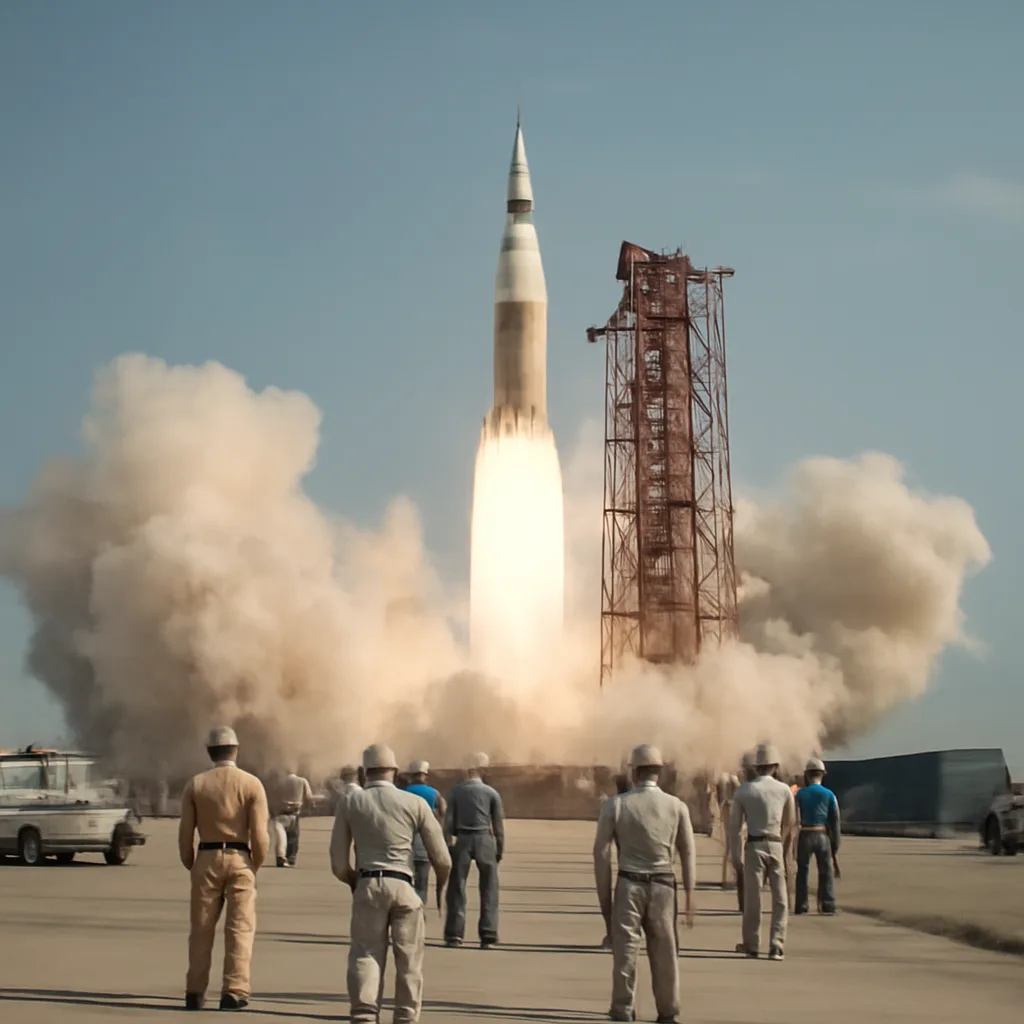
On June 2, 1959, the United States’ Explorer 6 launched a craft whose components became the first known human-made objects to reach escape velocity and leave Earth’s gravity well permanently, marking a technical milestone in early space exploration.
By the late 1950s, the United States and the Soviet Union were racing to place instruments and satellites into Earth orbit and beyond. On June 2, 1959, the U.S. launched Explorer 6 (also known as S-2) from Cape Canaveral. Several earlier and contemporary probes and upper stages had reached high altitudes or achieved temporary orbits, but a distinct milestone often cited in historical summaries is the first known departure of a human-made object from Earth’s gravity well on an escape trajectory.
What escaped and when
The object most commonly identified as the first human-made object to escape Earth’s gravity was not a large probe with a scientific payload but rather portions of launch vehicles and upper stages that, due to their launch profiles or deliberate trans-lunar/intersolar trajectories, exceeded Earth’s escape velocity. Historical records indicate that components from early missions—including some Soviet Luna probes and U.S. upper stages—reached heliocentric or lunar trajectories in the late 1950s.
Context and nuance
Defining “escape” matters. Earth’s gravity well is a continuous field; to say an object “escaped” typically means it achieved a trajectory allowing it to leave geocentric bound orbits and not return—i.e., an escape trajectory to heliocentric orbit or beyond. Several early missions produced such trajectories, but documentation and tracking of small debris or separated stages was limited, and different sources emphasize different firsts: first intentional escape trajectory with scientific intent, first component tracked to heliocentric orbit, or first probe to reach another celestial body.
Notable early missions
- Luna 1 (USSR, January 1959): Launched January 2, 1959, and intended to impact the Moon, Luna 1 missed and instead entered a heliocentric orbit; it is widely credited as the first human-made object to enter orbit around the Sun. This mission predates June 2, 1959, and is often cited as the first true escape. - Pioneer 4 (USA, March 1959): Launched March 3, 1959, Pioneer 4 passed within lunar distance and went into heliocentric orbit, another early escape. - Explorer series: U.S. Explorer missions in 1958–1959 achieved important milestones in Earth orbit and in high-altitude trajectories, contributing parts and upper stages that, in some instances, followed escape or heliocentric paths.
Why June 2, 1959 is sometimes cited
Some summaries single out June 2, 1959 in connection with Explorer 6 because of specific hardware or mission reports from that launch window indicating that certain upper stages or adapter components achieved escape trajectories or left Earth’s bound orbits. However, careful comparison of mission dates and trajectories shows that Luna 1 and Pioneer 4, both earlier in 1959, had already placed objects into heliocentric orbit.
Historical certainty and disputes
Primary sources from the era—mission reports, tracking logs, and government announcements—are the basis for modern claims. Differences in emphasis arise from varying definitions (intentional scientific mission vs. unintended debris), tracking limitations of the time, and national narratives. The most authoritative contemporary claim for the first human-made object to escape Earth’s gravity is generally given to Luna 1 (January 1959), followed by Pioneer 4 (March 1959). References that single out June 2, 1959 reflect specific hardware outcomes or interpretive differences rather than a universally accepted first.
Legacy
Whether the milestone is attributed to Luna 1, Pioneer 4, or particular components launched in June 1959, these early departures from Earth’s gravity well marked the transition from Earth-bound satellites to human-made objects on interplanetary trajectories. They demonstrated rocket performance, tracking capability, and the feasibility of missions beyond Earth orbit—paving the way for later lunar landings, planetary probes, and eventual crewed deep-space endeavors.
Sources and verification
This summary synthesizes published mission dates and widely referenced historical accounts of early space missions. Original mission reports, tracking bulletins from the U.S. and Soviet space agencies of the era, and postwar spaceflight histories are the primary sources for precise trajectory classifications and dates. Where specifics are disputed, this text notes the differing interpretations rather than asserting a single uncontested fact.