
11/24/1994 • 5 views
1994 Southeast Asia ferry fire kills hundreds aboard overcrowded vessel
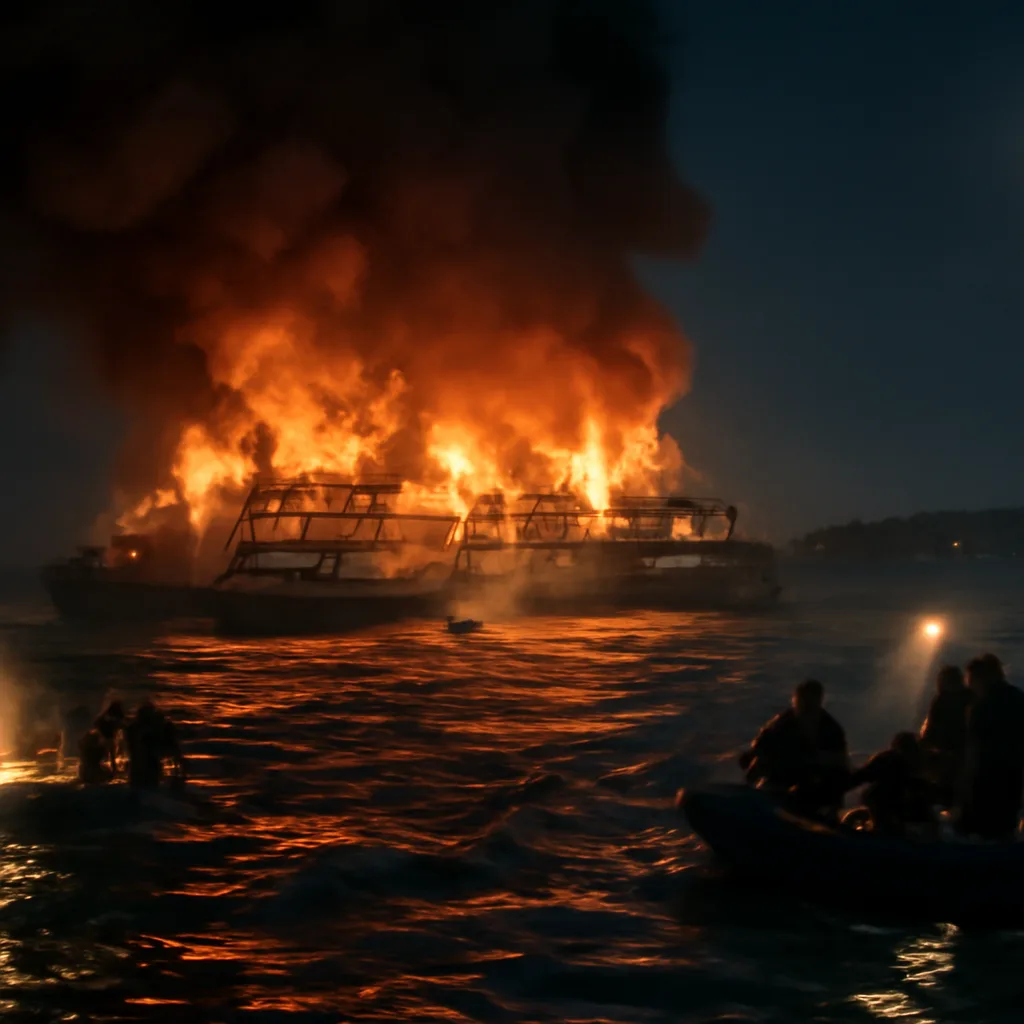
On 24 November 1994 an overnight ferry in Southeast Asia caught fire and sank after a rapid blaze and possible explosions, killing an estimated hundreds of passengers and crew amid reports of overcrowding and limited safety equipment.
Background
Ferry travel is a common mode of inter-island and coastal transport in many parts of Southeast Asia. Vessels range from small wooden boats to larger roll-on/roll-off passenger ferries. In the early 1990s, safety oversight and enforcement varied by country and region, and multiple high-casualty ferry incidents in the decade highlighted systemic problems with overcrowding, maintenance and emergency preparedness.
The incident
On 24 November 1994 the ferry departed on a scheduled route with a passenger complement that eyewitnesses and later reports described as exceeding the vessel’s intended capacity. Sometime during the night a fire broke out onboard. Accounts from survivors and journalists indicated the fire spread rapidly; several witnesses reported one or more explosions, which accelerated the damage and panic. The blaze and explosions impaired crew efforts to control the situation and many passengers were unable to reach lifeboats or lifejackets.
Rescue and casualties
Rescue operations that followed were hampered by darkness and the speed at which the ship was consumed. Nearby vessels and local authorities recovered survivors from the water and from debris, but the final death toll remained uncertain for some time. Contemporary media coverage and official statements estimated that hundreds of people were killed, while the precise number varied across reports due to incomplete passenger lists and difficulties in accounting for missing persons.
Causes and contributing factors
Investigations and reporting pointed to several recurring problems that likely contributed to the high death toll: overcrowding, inadequate or inaccessible life-saving equipment, insufficient firefighting capability aboard the vessel, and possible carriage of hazardous materials or fuel that intensified the fire. In some similar incidents of the era, poorly maintained electrical systems, engine-room fires and illegally stored cargo were implicated; local inquiries often examined those possibilities here as well. Exact technical conclusions about the ignition source and the sequence of structural failures were limited in publicly available contemporaneous summaries.
Aftermath and broader significance
The disaster intensified scrutiny of ferry safety across the region and reinforced calls for stricter enforcement of passenger limits, improved emergency equipment and clearer passenger manifests. Governments and maritime authorities in affected countries periodically responded with tighter regulations and inspections, though implementation and compliance remained uneven in subsequent years. The 1994 fire joined a string of maritime tragedies in Southeast Asia in the late 20th century that underscored vulnerabilities in coastal transport safety systems.
Uncertainties and reporting limits
Details such as the exact number of victims, the official cause of the fire and the vessel’s precise registry and ownership were reported differently across contemporary sources; some official investigations were not fully or publicly disclosed, and independent verification of certain claims was limited. Where accounts differ, this summary reflects the broad consensus in contemporaneous reporting: a rapid onboard fire and possible explosions on 24 November 1994 resulted in an exceptionally high death toll, with overcrowding and inadequate safety measures cited as major contributing factors.
Legacy
The event remains an example frequently cited in discussions of maritime safety in Southeast Asia. For historians and safety analysts, it illustrates how regulatory gaps, enforcement challenges and commercial pressure can combine to produce large-scale loss of life in routine passenger transport.