
03/19/1692 • 5 views
Death warrants signed in the Salem witch trials
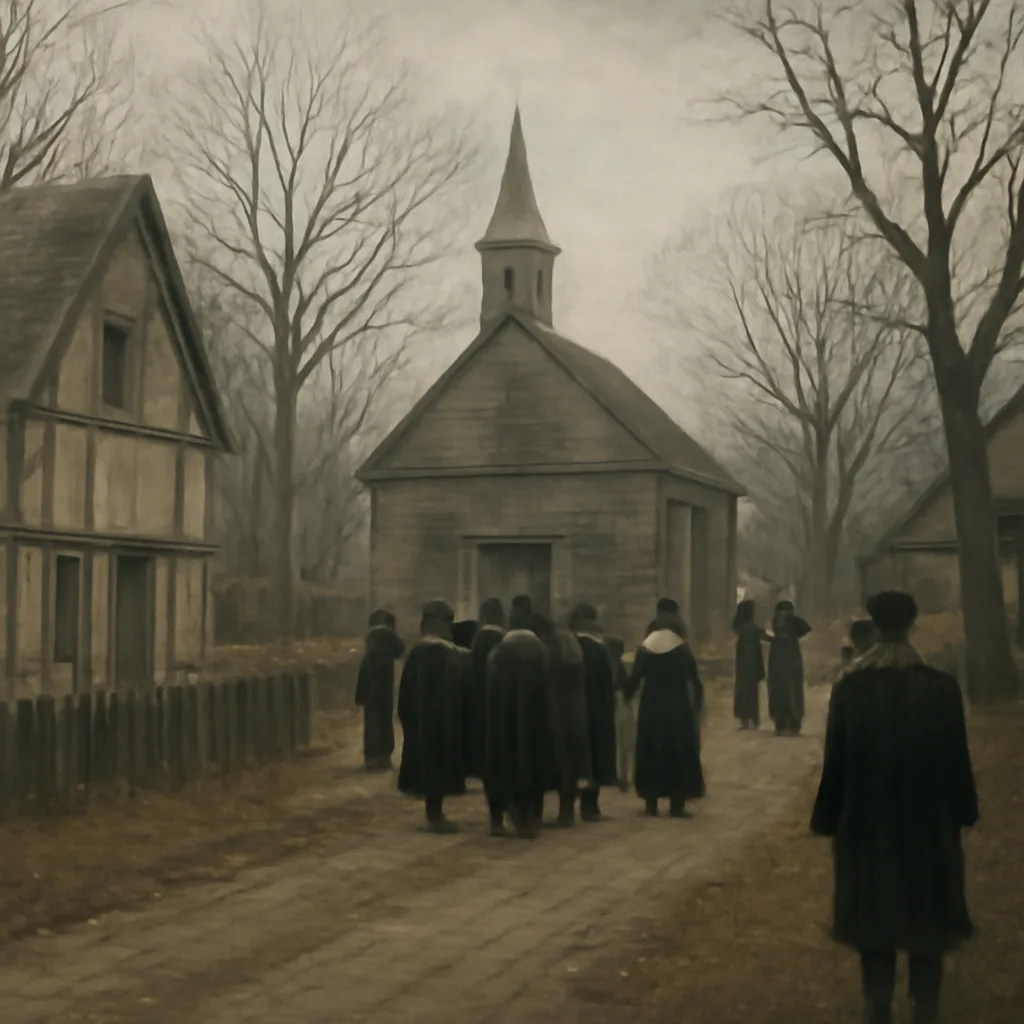
On March 19, 1692, authorities in colonial Massachusetts signed death warrants for five accused witches, marking a grim escalation in the Salem witch trials that led to executions later that year.
The trials began in February 1692, when a circle of young women in Salem Village (present-day Danvers, Massachusetts) exhibited fits and accused several neighbors of witchcraft. The local magistrates, including Jonathan Corwin and John Hathorne, examined the accused and sent several cases to the Suffolk County court in Salem. The provincial governor, Sir William Phips, established a special Court of Oyer and Terminer in May 1692 to hear the mounting cases. The March warrants were part of a sequence of legal actions taken as accusations spread through Salem Village and nearby communities.
Evidence used against the accused relied heavily on spectral testimony (claims that the victim’s specter or spirit tormented the afflicted), the fitful behavior of the accusers, and contested physical evidence such as the so-called “witch marks.” Contemporary legal standards and evidentiary rules differed from later practice: spectral evidence was admitted in many hearings, and community fear of diabolic influence shaped magistrates’ decisions. Those opposed to the trials would later criticize these standards as unreliable and unjust.
The immediate result of signing death warrants was to set execution dates and to maintain custody of the accused. Several of the condemned—most notably Rebecca Nurse and later Bridget Bishop—were tried, convicted, and executed by hanging in June 1692. The public and political reaction evolved over the following year as skepticism grew about the validity of the accusations and methods used. By 1693, Governor Phips had halted further prosecutions and eventually pardoned several condemned individuals; in subsequent years the colony took steps to restore the reputations of some victims and to compensate families.
Historical records from 1692 include court minutes, warrant books, and contemporary accounts that document the sequence of arrests, indictments, and executions. Historians continue to debate aspects of the trials—such as the precise influence of local rivalries, gender dynamics, religious culture, and environmental or medical explanations for the accusers’ behavior—but the central fact that death warrants were signed and led to executions in 1692 is well documented. The Salem events remain a focal point for discussions about legal protections, mass hysteria, and the dangers of allowing fear to override due process.
Today the Salem witch trials are commemorated and studied as a cautionary episode in American legal and social history. Monuments, memorials, and scholarly work seek to remember the lives lost and to draw lessons about evidence, authority, and the protection of civil rights.