
03/25/1692 • 6 views
Public Doubt Grows After Salem Witch Trial Executions
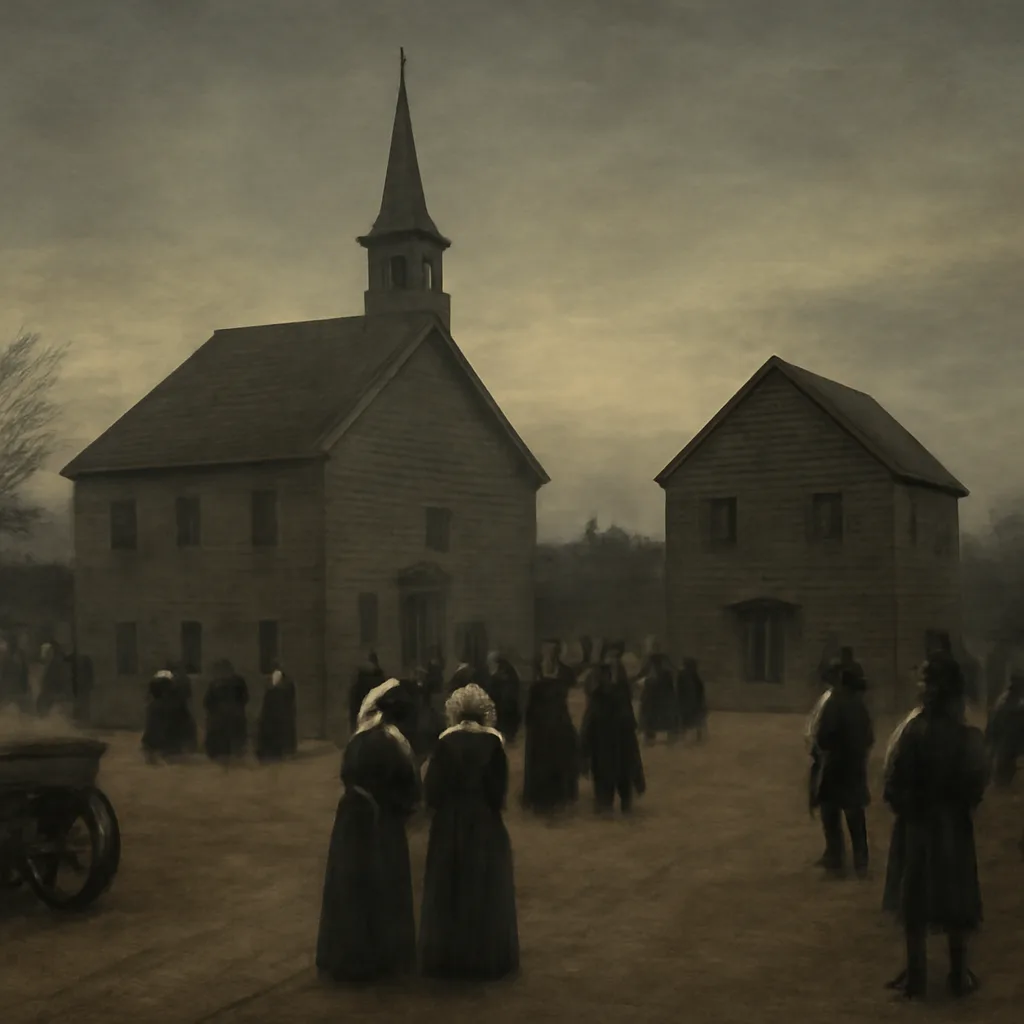
The executions of accused witches in Salem on March 25, 1692, intensified public unease as neighbors, clergy, and some officials began questioning the validity of the trials and the spectral-evidence used to convict the accused.
The legal proceedings in Salem were shaped by a mix of local rivalries, religious anxieties, and emerging colonial legal practices. Puritan pastors and magistrates occupied prominent roles in interpreting signs of diabolism; at the same time, the formal legal system of the Massachusetts Bay Colony had limited procedures for such cases. Accusations often began with fits and complaints by young women and children, whose behaviors were read as evidence of supernatural affliction. Accusers identified neighbors and community members as witches, and magistrates and juries sometimes accepted these identifications even without physical proof.
Spectral evidence was especially contentious. Some judges and clergy accepted the notion that the devil could use a person’s specter while the person’s body remained elsewhere; others argued that such evidence was inherently unreliable because Satan could impersonate innocent people. The acceptance of spectral evidence in Salem courts allowed testimony about invisible harms and visions to carry legal weight, increasing the risk of wrongful convictions.
By late March 1692, the visibility of executions and the community impact of imprisonments began to shift public sentiment. Neighboring towns and some influential ministers expressed unease about the methods used and the pace of prosecutions. Practical concerns also arose: families of the accused faced imprisonment and financial hardship, and the sheer number of prosecutions strained local resources. Reports of irregular procedures, coerced confessions, and contradictory testimonies further undermined confidence in the fairness of the trials.
Historical records indicate a gradual movement among some clergy and civic leaders toward skepticism. Notably, prominent figures such as Increase Mather later argued against reliance on spectral evidence, cautioning that it could not be relied upon in courts of law. This shift in opinion did not happen all at once, and contemporary opinions were divided. Some ministers and magistrates continued to endorse the prosecutions, while others urged restraint and reform of evidentiary standards.
The events of 1692 catalyzed subsequent legal and cultural consequences. By 1693 the colonial government had begun to halt prosecutions, and in the years that followed several of the convicted were exonerated or had their reputations formally restored by the legislature. The Salem episode left a lasting imprint on American legal thought, reinforcing the importance of evidentiary standards and protections against miscarriages of justice.
Historians interpreting the Salem trials emphasize complexity: local politics, personal animosities, gender dynamics, socioeconomic tensions, religious belief, and genuine fear of the supernatural all played parts. While some contemporaries quickly shifted toward doubt after executions and public fallout, others remained convinced of the reality of witchcraft for some time. The legacy of March 25, 1692, and the broader Salem crisis is therefore both a cautionary tale about the dangers of unreliable evidence in court and a reminder of how social pressures can produce tragic outcomes.