
← Back
03/25/1911 • 7 views

Triangle Shirtwaist Factory Fire Kills 146 Workers in New York City, 1911
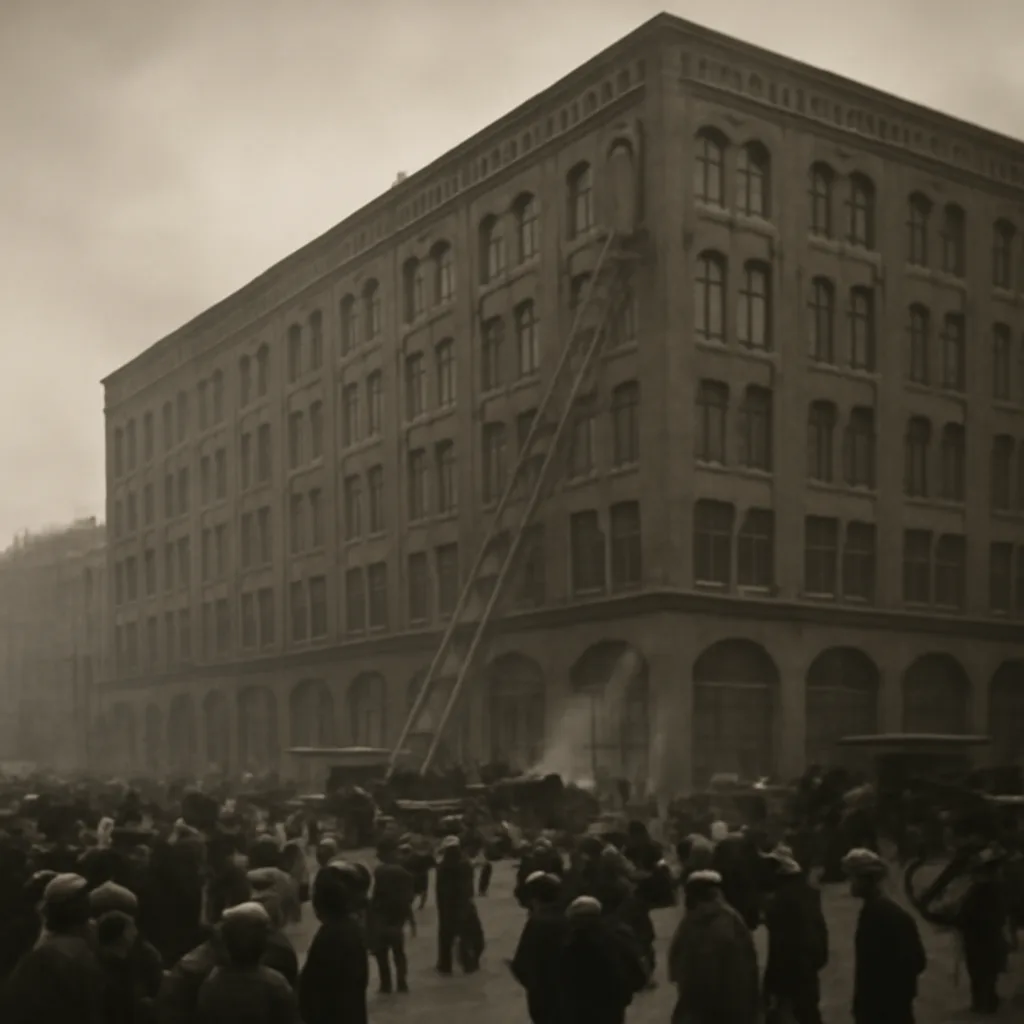
Exterior view of the Asch/Brown Building in Manhattan, early 20th century industrial brick structure with windows; crowds gathered below after the Triangle Shirtwaist Factory fire.

On March 25, 1911, a deadly fire at the Triangle Waist Company in Manhattan killed 146 garment workers—mostly young immigrant women—highlighting hazardous factory conditions and prompting major labor and safety reforms.


On the afternoon of March 25, 1911, a fire broke out on the eighth, ninth and tenth floors of the Asch Building in New York City, where the Triangle Waist Company operated a garment factory. The blaze rapidly consumed the crowded workrooms filled with fabric, paper patterns and flammable materials. Exits were inadequate: some doors were locked or opened inward, a single fire escape was unable to bear the weight of fleeing workers, and the building’s sprinkler system was limited or ineffective. Rescue equipment of the period could not reach the upper floors.

As a result, 146 people died; most were young immigrant women from Italian and Jewish communities. Many victims perished from smoke inhalation or burns, while others jumped from windows to escape the flames. The chaotic scene drew widespread public attention, with crowds and journalists gathering outside the Asch Building (now the Brown Building) in Manhattan’s Greenwich Village.

Investigations after the fire documented unsafe working conditions, locked exits, overcrowding and inadequate fire protections. Criminal charges were brought against the factory owners for manslaughter, but they were acquitted in criminal court; civil suits produced some compensation for families. The tragedy became a catalyst for change: it spurred public outrage that helped drive passage and enforcement of stricter building and fire codes, improved factory safety regulations, and advances in labor rights, including stronger union organizing in the garment industry.

The fire also had cultural and political effects. It galvanized support for labor reformers and progressive politicians who advocated workplace safety and the regulation of industrial conditions. Organizations such as the International Ladies’ Garment Workers’ Union gained visibility and membership as the industry’s workers pressed for better hours, safer conditions and recognition. Memorials and commemorations of the victims have been held over the decades, and the site remains a reference point in U.S. labor history.

Historical scholarship emphasizes the interplay of immigrant labor, industrial practices, municipal oversight, and legal outcomes in explaining both the causes and consequences of the disaster. While the immediate legal accountability was limited, the longer-term regulatory and social responses significantly changed urban labor standards in the United States.

Sources for this account include contemporary newspaper reporting, official inquest records, court transcripts, and later historical studies of labor history and urban reform. Where details vary among contemporaneous reports—such as the precise performance of particular safety devices—the central facts about the date, location, death toll and the fire’s role in prompting reforms are well established.

Share this

Email Share on X Facebook Reddit

Did this surprise you?