
03/25/1872 • 9 views
The First Recorded Calm-Sea Disappearance: The Wreckless Loss of the American Brigantine Ellen in 1872
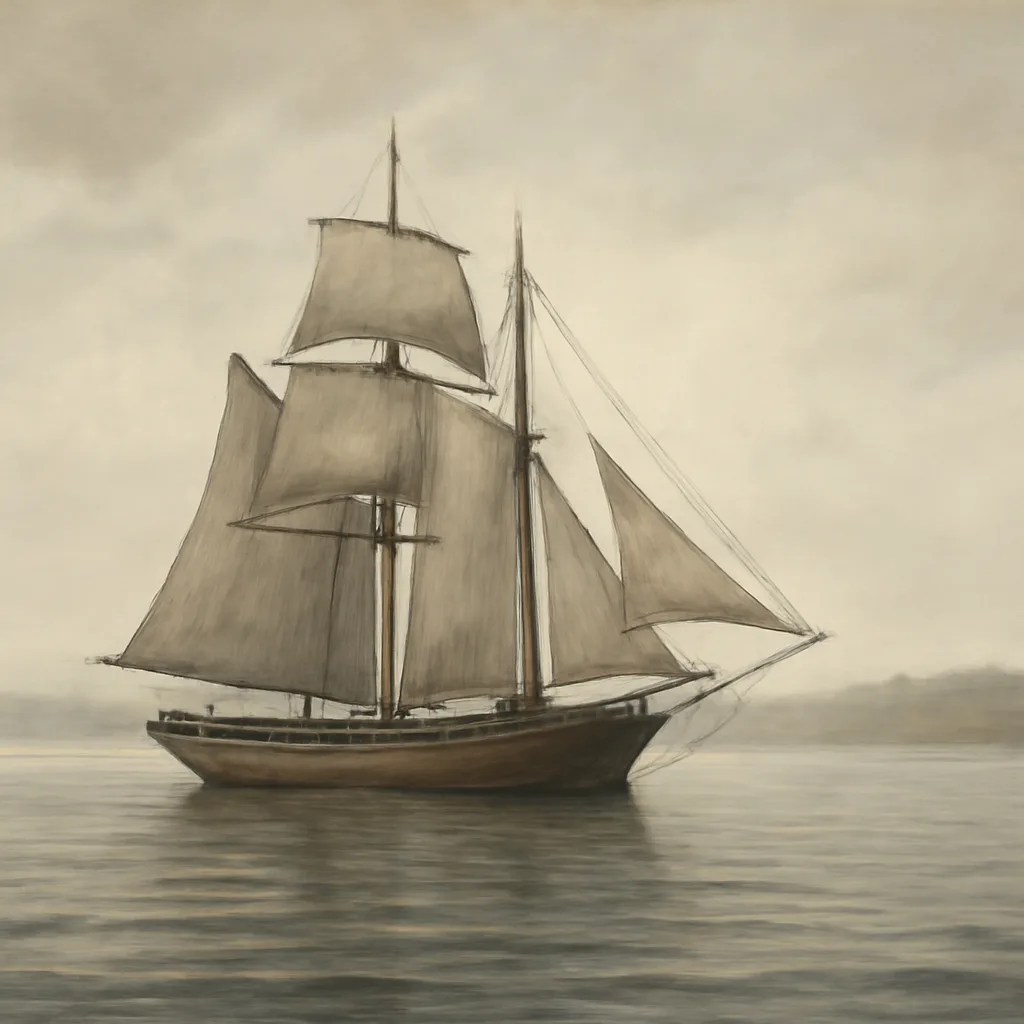
On 25 March 1872 the American brigantine Ellen vanished from sight in calm seas off Cape Hatteras; no wreckage or survivors were ever recovered, making it one of the earliest well-documented cases of a vessel disappearing without distress in tranquil conditions.
The Ellen was a two-masted brigantine typical of mid-19th-century American coastal trade: wooden-hulled, rigged for both cargo and passenger service on short runs along the Atlantic seaboard. Records from port ledgers and shipping lists show she carried a modest manifest and crew appropriate to her size. After her departure, the next expected point of arrival was Norfolk; when she failed to appear, concerned authorities and insurers began inquiries. Local newspapers from late March and April 1872 published reports of the missing brigantine and appeals for information, but searches turned up no wreckage, floating debris, or survivors.
At the time, explanations proposed by contemporaries ranged from sudden foundering due to structural failure, an unreported onboard accident (such as an explosion of flammable cargo or a galley fire), to collisions with derelict objects or submerged hazards. Some readers and commentators also speculated about piracy or foul play, though there is no recorded evidence supporting such theories in the surviving documentary record. Meteorological observations and shipping registers indicate weather at the immediate time and area of her last sighting was calm; that does not, however, exclude the possibility of a rapidly developing squall or localized hazard that escaped broader observation.
Maritime investigators of the era lacked many of the forensic tools available to modern investigators: there were no radio distress calls, no standardized black-box records, and communication between ports relied on sporadic telegraph reports and newspaper dispatches. Consequently, disappearances like that of the Ellen frequently remained unresolved. The absence of debris or a welldefined last known position complicated any search. Insurance underwriters noted such cases in loss registers, and the mystery contributed to ongoing debates about vessel maintenance, cargo stowage, and the safety of wooden hulls nearing the limits of their service life.
Historians treating the Ellen’s disappearance caution against drawing definitive conclusions. The sources—primarily period newspapers, port registers, and insurance listings—provide a consistent core fact pattern (departure date, reported good weather, non-arrival) but little direct evidence about the vessel’s final moments. That pattern is why the case is often cited as an early example of a calm-sea disappearance rather than proof of any single cause. Modern scholarship uses such incidents to illustrate the limits of 19th-century maritime safety and communication rather than to advance a particular hypothesis about what befell the Ellen.
The incident’s legacy is twofold. Practically, it reinforced calls in the late 19th century for improved standards in ship maintenance, clearer documentation of cargoes, and better coastal signaling—measures that developed incrementally in the ensuing decades. Culturally, the disappearance entered local maritime memory as an unresolved loss, listed among coastwise mysteries that underline how much of ocean travel then remained at the mercy of chance and limited technology. Decades later, such cases would be reframed with new investigative techniques, but for the Ellen, no further archival discoveries have overturned the basic record: she left Wilmington on 25 March 1872 and was never subsequently accounted for.
Because the documentary evidence is limited and no physical remains have been identified, any account of the Ellen’s fate remains necessarily tentative. The facts that are verifiable—departure date, route, weather descriptions in contemporary reports, and the absence of survivors or debris—are the basis for historians’ cautious treatment of the loss as a notable early example of a vessel disappearing in calm seas.