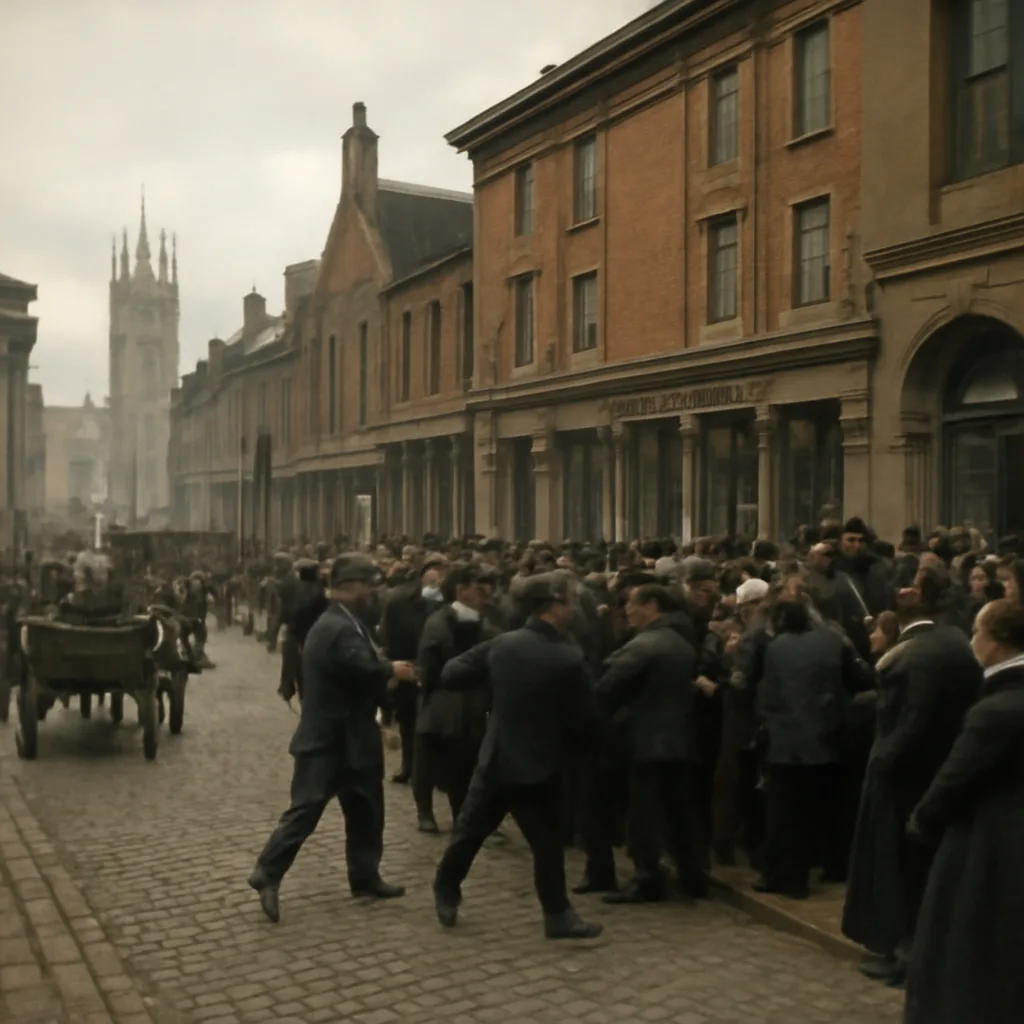
The First Recorded Panic over Ritual Murder: Gloucester, England, March 6, 1891
On March 6, 1891, a moral panic in Gloucester, England, erupted when allegations circulated that a local child had been abducted and murdered for ritualistic purposes—an early documented instance of the 'ritual murder' charge that would later fuel antisemitic and other conspiratorial campaigns across Europe.
On March 6, 1891, newspapers and local authorities in Gloucester, England, reported an episode that historians identify as one of the earliest documented modern panics accusing a community of 'ritual murder.' The case involved claims that a child had been abducted and killed for ritual purposes; reports spread rapidly through press accounts and word of mouth, generating fear, speculation and heightened suspicion of minority groups in the area.
Primary contemporary coverage framed the story in sensational terms, and subsequent historians have traced how such allegations fit into a longer European pattern of 'blood libel' and ritual-murder accusations—charges that frequently targeted Jews but could implicate other marginalized communities as well. By the late 19th century, these kinds of allegations were no longer limited to medieval folklore; they could be shaped and amplified by fast-moving local newspapers, social anxieties about changing urban life, and existing prejudices.
The Gloucester incident occurred in a period marked by economic dislocation, urban growth and heightened attention to crime and public order in Britain. Local reporting of the alleged abduction and murder stirred crowds and pressured police and civic leaders to respond quickly. Contemporary sources differ on the factual details and on whether the initial claim derived from eyewitness testimony, rumor, or misinterpretation of unrelated events—making some elements of the episode disputed among researchers. What is clear from surviving press coverage and municipal records is the speed with which fear spread and the role of the media in shaping public perception.
Scholars who study ritual-murder panics emphasize several recurring features visible in the Gloucester case: a sudden allegation of a violently abnormal crime; the identification or insinuation of an 'other' as responsible; rapid dissemination through local networks; and often an absence of reliable evidence linking accused groups to the purported act. In many instances across Europe, such accusations led to social ostracism, violence, legal harassment or long-term reputational harm—even when formal investigations failed to substantiate the claims.
It is important to note that modern historians treat terms like 'ritual murder' and 'blood libel' with caution. These labels denote specific kinds of moral panic rooted in conspiracy and prejudice rather than verified patterns of criminal behavior. For the Gloucester episode, surviving documentation does not support definitive conclusions about an organized ritual killing; instead, the case is studied primarily as an example of how rumor and prejudice could coalesce into a public crisis.
The 1891 Gloucester panic also illustrates how late-19th-century policing, journalism and community dynamics interacted. Police records show efforts to investigate and calm the public, while local newspapers balanced reporting on the alleged crime with editorials calling for order. Over time, scholars have used the episode to explore broader themes: the vulnerabilities of minority communities to accusation, the interplay of media and moral panic, and the historical persistence of rumor-driven violence.
Today, historians place the Gloucester incident within a longer chronology of ritual-murder accusations—events that range from medieval blood libels to modern conspiracy theories—highlighting continuity in the mechanisms of scapegoating even as the political and technological contexts changed. The case is significant less for establishing that ritual murder occurred than for demonstrating how a specific allegation could spark communal fear and leave a lasting imprint on local memory and historiography.