United States launches invasion of Panama (December 20, 1989)
On December 20, 1989, U.S. forces invaded Panama in Operation Just Cause to remove military ruler Manuel Noriega, protect U.S. personnel, and secure the Panama Canal's surrounding interests; the intervention sparked intense fighting in Panama City and international controversy.
On 20 December 1989, the United States launched a large-scale military operation in Panama, commonly called Operation Just Cause. The operation’s stated U.S. objectives included safeguarding U.S. citizens in Panama, protecting the integrity of the Torrijos–Carter Treaties governing the Panama Canal, defending U.S. military installations and personnel, and removing General Manuel Antonio Noriega from power, who had been indicted in the United States on drug-trafficking charges and was accused by U.S. authorities of undermining democratic institutions.
Background
Since the 1968 military coup in Panama, the country was dominated by military leaders; Manuel Noriega became the de facto strongman in the 1980s while also maintaining ties to U.S. intelligence agencies in earlier years. By the late 1980s, relations between Noriega and the U.S. had deteriorated sharply amid allegations of corruption, repression, and involvement in international drug trafficking. Tensions escalated through 1989 after disputed Panamanian elections in May and incidents involving U.S. service members and diplomats.
Build-up and legal rationale
In the months before the invasion, the United States increased military pressure in the region with troop deployments and exercises. The U.S. government cited a combination of justifications for military action: protection of U.S. citizens, defense of treaty obligations related to the Panama Canal, restoration of democratic governance, and enforcement of U.S. law against Noriega’s alleged criminal activities. The legality and necessity of the intervention were widely debated internationally and within the United States; critics argued the invasion breached Panamanian sovereignty and international law, while supporters pointed to violent incidents and threats to U.S. personnel.
The operation
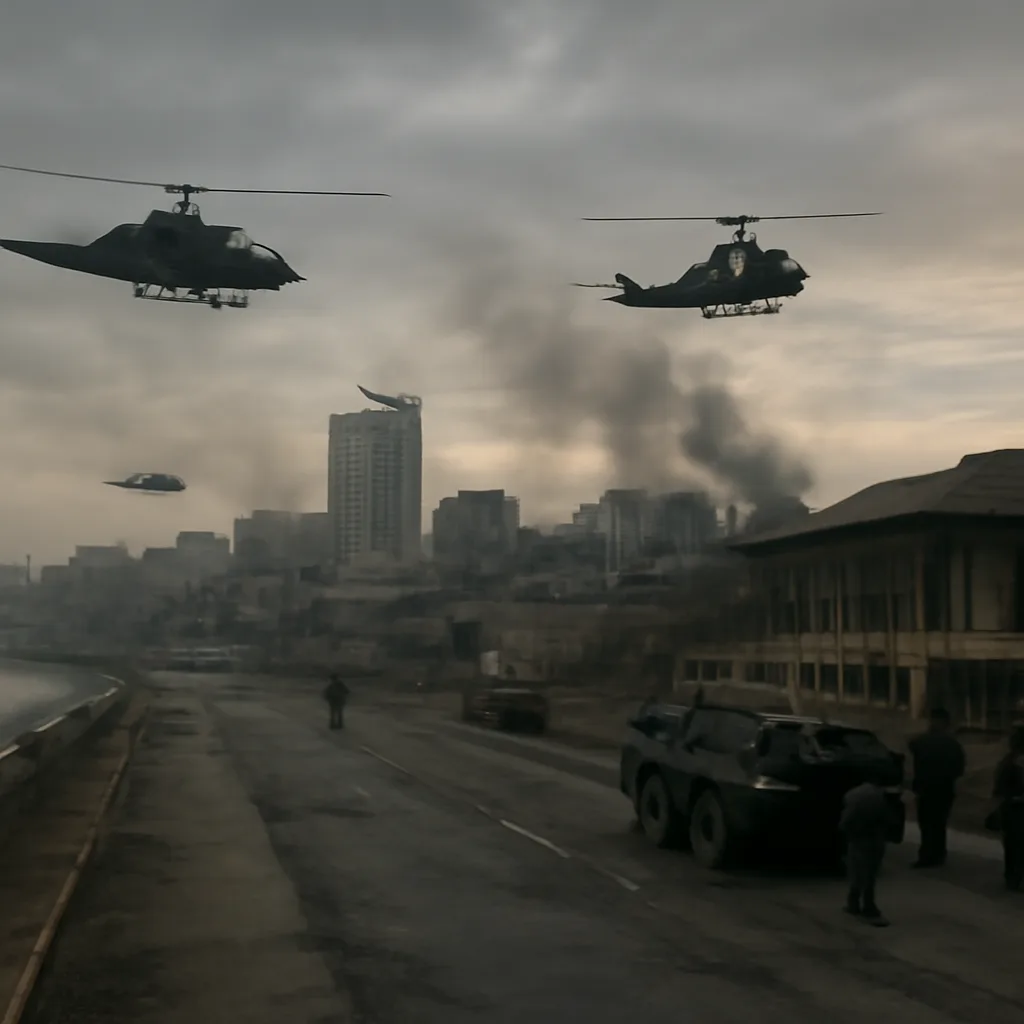
In the early hours of 20 December, U.S. forces carried out coordinated air, land, and sea assaults against Panamanian Defense Forces (PDF) positions and identified targets associated with Noriega’s regime. The campaign involved elements of the U.S. Army, Navy, Air Force, Marine Corps, and special operations units. Key actions included air strikes, airborne and amphibious assaults, and raids on military installations and Noriega-associated compounds. U.S. forces also secured the Tocumen international airport, key bridges, and the Panama Canal’s access points.
Urban combat occurred in parts of Panama City, notably in the El Chorrillo neighborhood and around military barracks, producing significant destruction and civilian casualties. The intensity of the fighting and the use of heavy weapons in populated areas drew international concern. Noriega initially sought refuge in diplomatic buildings and later took shelter in the Apostolic Nunciature (the Vatican’s diplomatic mission) before surrendering to U.S. authorities in January 1990 after negotiations and Vatican involvement.
Casualties and aftermath
Estimates of casualties vary. U.S. military deaths numbered in the low dozens; reported Panamanian military casualties and civilian deaths have broader and more disputed ranges depending on sources. The invasion resulted in the collapse of Noriega’s military control, the installation of an interim government, and eventual elections in 1990 that brought Guillermo Endara to the presidency. Noriega was later captured, transported to the United States, tried, and convicted on drug-trafficking charges.
Politically and diplomatically, the invasion provoked wide international criticism, including from the Organization of American States and the United Nations General Assembly, which called for respect for Panamanian sovereignty. Supporters argued the operation removed a repressive leader and safeguarded U.S. citizens; critics emphasized civilian harm and the precedent of unilateral military intervention.
Legacy
Operation Just Cause remains a contentious episode in U.S.-Latin American relations. It had lasting impacts on Panama’s urban landscape, political trajectory, civil-military relations, and public memory. Debates over the legality, necessity, and humanitarian cost of the invasion continue among historians, legal scholars, and policymakers.