Death of Francisco Franco Ends Four-Decade Rule in Spain
General Francisco Franco, Spain’s authoritarian leader since the end of the civil war, died on December 20, 1975, closing a 36-year regime and opening an uncertain transition toward a post-Franco Spain.
Francisco Franco Bahamonde, the military leader who ruled Spain as head of state since his victory in the Spanish Civil War (1936–1939), died on December 20, 1975, at the age of 82. Franco’s death marked the end of a dictatorship that had reshaped Spanish politics, society, and international relations since the late 1930s and set in motion the country’s transition to a constitutional monarchy and later democratic government.
Franco rose to prominence as a senior army officer and became the principal leader of the Nationalist forces during the civil war against the Second Spanish Republic. After his forces triumphed in 1939, Franco established a centralized, authoritarian regime characterized by suppression of political opposition, censorship, economic intervention, and promotion of conservative Catholic social policies. His rule combined elements of military authoritarianism, single-party structures under the Falange movement, and personalist control exercised through state institutions.
Domestically, the regime repressed regional autonomy movements, notably in Catalonia and the Basque Country, and enforced a unified Spanish identity. Political parties other than the state-sanctioned Movimiento Nacional were banned for decades, and millions experienced exile, imprisonment, or other reprisals in the years immediately following the civil war. Over time, especially from the 1950s onward, Spain’s economy moved from postwar autarky toward stabilization and growth through limited liberalization and closer relations with Western economies; by the 1960s and early 1970s Spain experienced significant economic expansion, often called the “Spanish miracle,” which altered social structures and increased urbanization and industrialization.
Internationally, Franco’s Spain was initially isolated after World War II owing to its authoritarian nature and associations with Axis-aligned elements during the war. However, Cold War geopolitics and anti-communist alignment led to rapprochement with Western powers: Spain signed defense and economic agreements with the United States in the 1950s and joined international organizations, gaining gradually greater diplomatic acceptance.
Franco’s governance was marked by his concentration of power, including a system that designated a single successor and combined multiple state roles in his person. In his final years Franco’s health declined; he designated Prince Juan Carlos de Borbón as his successor, restoring the monarchy in form and naming Juan Carlos as king upon his death. Franco’s death thus immediately reinstated the monarchy and set the scene for political change. Over the subsequent months and years, Spain moved toward a negotiated transition known as the Spanish transition to democracy (La Transición), which included legal reforms, legalization of political parties, elections, and the drafting of a new constitution ratified in 1978.
Franco’s legacy remains deeply contested in Spain. Supporters credited his rule with maintaining order after the civil war and with promoting economic modernization in later decades; critics emphasize the regime’s repression, human rights abuses, and the lasting impact of censorship and political exclusion. Debates over memory, historical responsibility, and the visibility of Franco-era symbols have persisted into the 21st century, including disputes over monuments, place names, cemetery exhumations, and official recognition of victims.
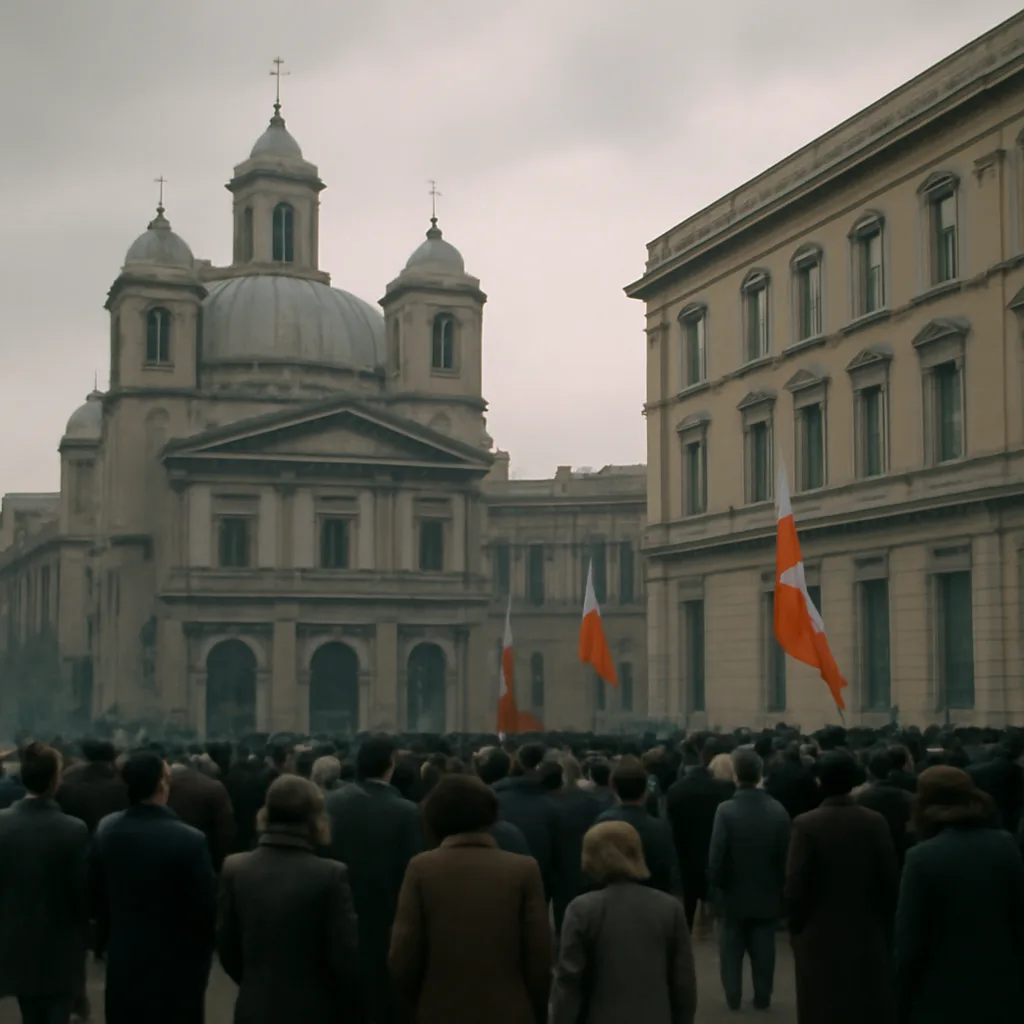
The immediate aftermath of Franco’s death saw state-directed ceremonial mourning but also cautious political maneuvering by reformers, monarchists, and figures from across the political spectrum who would shape Spain’s path away from authoritarian rule. The transition that followed combined legal reforms from within state institutions and negotiated compromises among divergent political forces, producing a model of democratization that has been widely studied and remains central to contemporary Spanish political identity.
This account summarizes broadly accepted historical facts; specific assessments of causes, responsibility, and the moral evaluation of Franco’s rule are subjects of ongoing scholarly debate and public discussion.