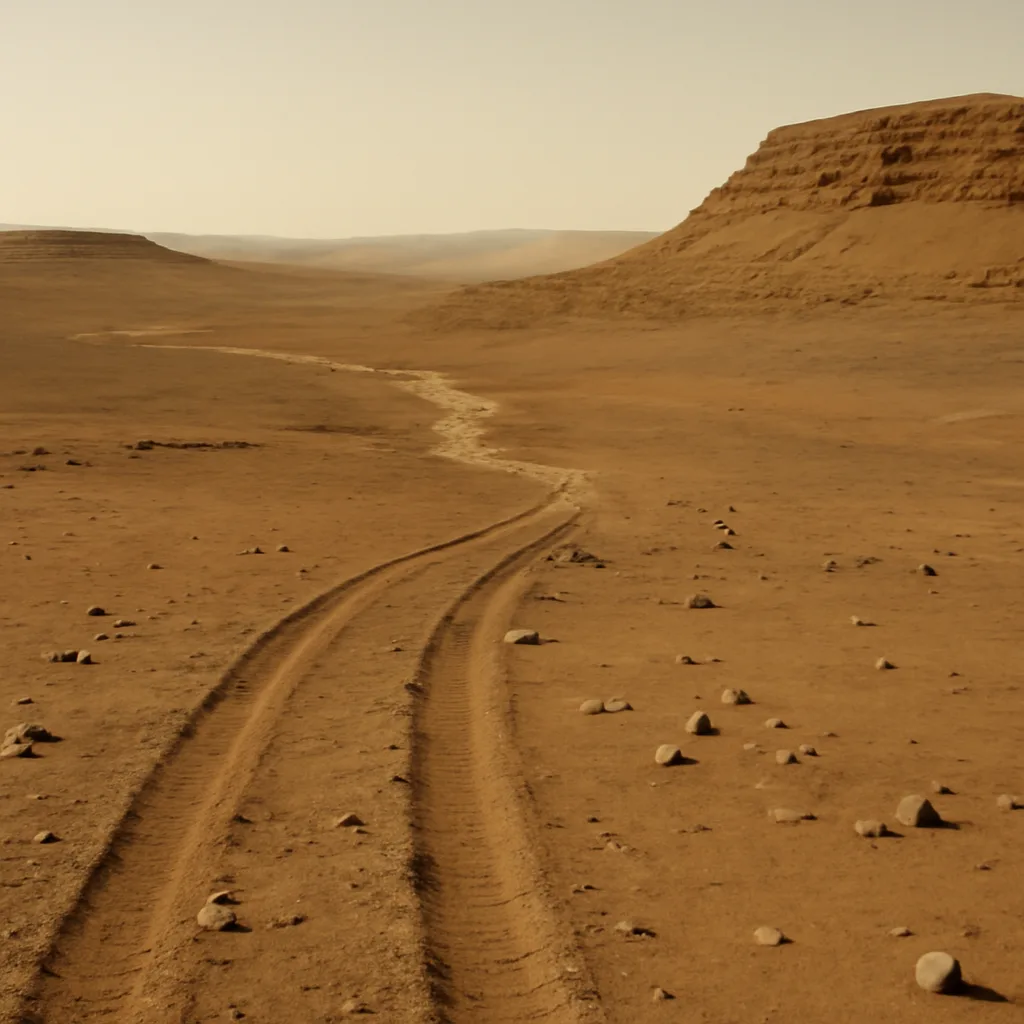
On January 6, 2004, NASA announced evidence that liquid water once flowed on Mars, based on data from orbiters and the Mars Exploration Rovers indicating ancient river channels, mineral deposits formed in water, and features shaped by erosion.
On January 6, 2004, NASA publicly confirmed that multiple lines of evidence indicate liquid water once existed on Mars. The announcement synthesized findings from orbiting spacecraft and the twin Mars Exploration Rovers, Spirit and Opportunity, which had been analyzing the planet’s surface and rocks since their January 2004 landings. Scientists reported geomorphic features—such as branching valley networks, outflow channels and layered sediments—that closely resemble terrestrial formations carved or deposited by flowing water.
Spectroscopic data from orbiters identified minerals on the Martian surface that typically form in the presence of water, including sulfates and clays (phyllosilicates). These hydrated minerals preserve chemical signatures of interaction with water and imply that past Martian environments were at least episodically wet and chemically active. On the ground, Opportunity examined sedimentary rocks and outcrops at Meridiani Planum containing hematite-rich “blueberries” (spherical concretions) and sulfate-bearing layers interpreted as precipitates from acidic, aqueous solutions. Spirit explored ancient volcanic terrains and found silica-rich deposits suggestive of past hydrothermal activity or prolonged alteration by water.
The combined orbital and rover observations supported a view of early Mars that was more dynamic and wetter than the present cold, dry planet. Scientists concluded that water was available on or near the surface for periods long enough to alter rocks and form sedimentary deposits, though the extent, duration and chemistry of those watery conditions varied across time and location. Evidence pointed toward a range of watery environments, from standing bodies or shallow lakes to transient flows and groundwater-driven alteration.
NASA’s 2004 conclusions did not assert that Mars was continuously warm and wet like Earth; instead, researchers emphasized that wet conditions occurred in episodes and that the planet underwent substantial climatic change. Some depositional features suggested sustained interaction with water, while others were consistent with short-lived floods or groundwater upwelling. Determining whether those environments were ever habitable for microbial life remains an ongoing research question. The preserved minerals provide targets for later missions seeking chemical and organic signatures that could bear on Mars’ habitability.
The 2004 findings shaped subsequent exploration priorities: characterizing past aqueous environments, mapping hydrated minerals, and sampling diverse sedimentary deposits. Later missions—including Mars Reconnaissance Orbiter, the Phoenix lander, and the Curiosity and Perseverance rovers—built on this foundation by searching for more direct evidence of past habitable conditions and by collecting context for potential biosignatures. While the discovery that water once existed on Mars is now well established, many details about the timing, scale and habitability of those watery episodes remain active topics of scientific investigation and debate.