
← Back
01/06/1972 • 5 views

Brawl Breaks Out as St. Louis Blues Players and Coach Enter Stands in 1972 Incident
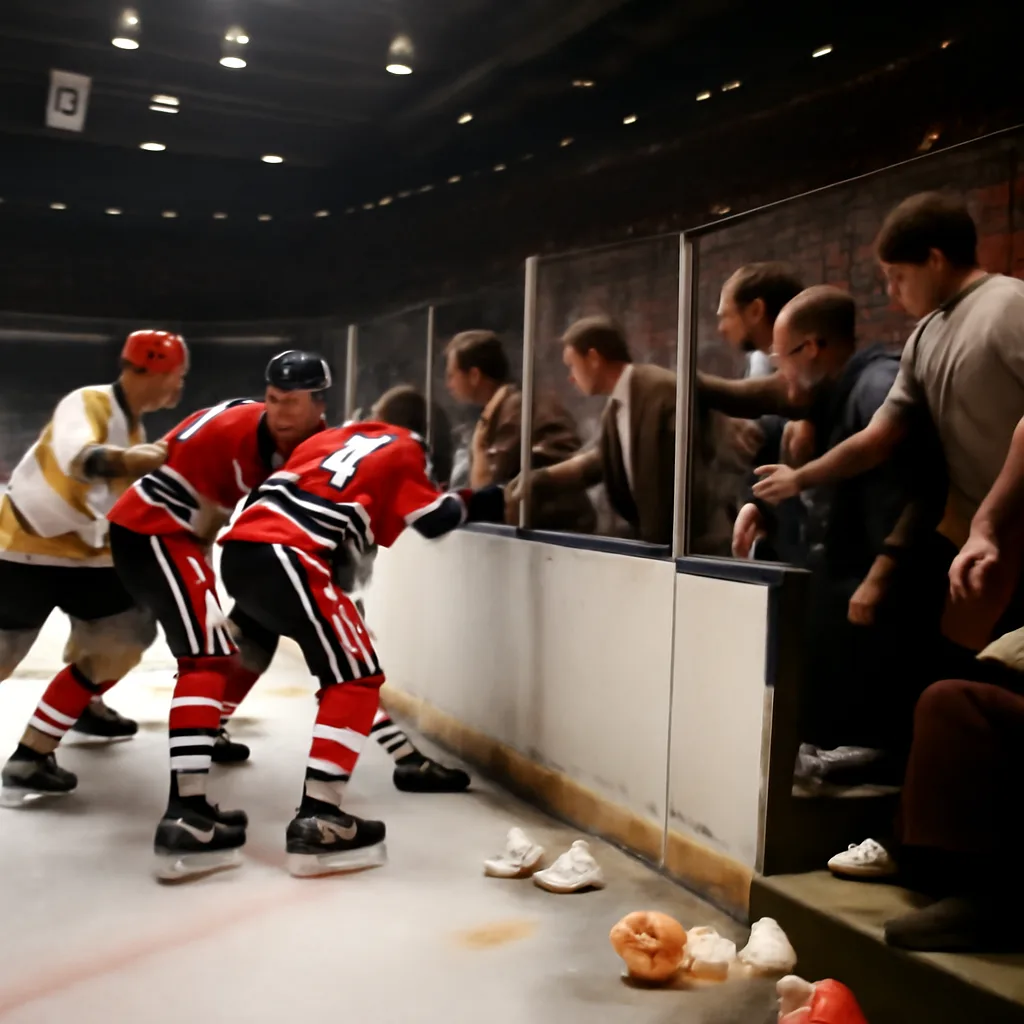
A crowded indoor hockey arena in the early 1970s showing players and team staff near the glass with fans in the front row; scene conveys confrontation and disorder without identifying individuals.

On January 6, 1972, a bench-clearing brawl at a Blues home game escalated when St. Louis Blues coach and several players went into the spectator stands to confront fans, resulting in injuries and suspensions and prompting debate over player-spectator boundaries in professional hockey.


On January 6, 1972, during a National Hockey League game at St. Louis, Missouri, a violent incident occurred in which members of the St. Louis Blues organization — including players and reports indicate the head coach — entered the spectator stands to confront and fight fans. The altercation followed on-ice tensions that spilled over the boards, producing a chaotic scene that drew wide attention from the media and the hockey community.

Contemporary accounts describe a sequence in which an on-ice scrap or rough play led to verbal exchanges between players and nearby spectators. At least one Blues player climbed or was pushed over the glass into the seating area; other players and, according to several reports from the period, the coach followed into the stands. The melee involved punches, shoving, and objects reportedly thrown from the crowd. Several people — players and fans — were injured to varying degrees and required medical attention. Local law enforcement and arena security eventually intervened to restore order.

The incident prompted the NHL to review the events and hand down disciplinary measures. Players involved received suspensions and fines; the exact lengths varied by participant and were reported in contemporary newspapers and league statements. The event also generated criticism of arena security practices and discussions about the duty of teams to de-escalate situations rather than engage with spectators. Some commentators argued that players and coaches risked professional consequences and fan safety by entering the stands, while others emphasized provocation from sections of the crowd.

Historical records from newspaper archives and league summaries document the basic facts of the January 6 confrontation but differ on certain details — for example, the precise sequence that led to the first person entering the seating area, the number of people who sustained injuries, and the degree of involvement by the coach versus players. Because contemporary reporting varied and not all official disciplinary documents are easily available online, some specifics remain disputed in secondary summaries.

In the broader context of NHL history, the 1972 Blues incident is one of several notable episodes in which on-ice hostility crossed into the stands. Such episodes contributed to evolving policies on arena security, player conduct, and penalties for leaving the bench or crossing spectator barriers. Over subsequent decades the league and teams implemented stricter measures — including increased glass height in arenas at times, beefed-up security presence, and clearer penalties — aimed at preventing professional personnel from entering spectator areas.

Today the January 6, 1972 disturbance is remembered as an early-1970s flashpoint illustrating the risks when player-fan boundaries break down. While it did not singularly transform NHL policy overnight, it formed part of a pattern of incidents that informed later changes designed to protect both players and spectators and to clarify responsibilities for de-escalation.

Notes on sources and certainty: reporting from the time (local newspapers, national sports coverage) provides the core narrative that Blues personnel entered the stands and that arrests, injuries, and league discipline followed. Exact counts of injuries, precise disciplinary terms for every individual involved, and minute-by-minute reconstruction are inconsistently reported across contemporary sources; where accounts differ, this summary indicates that uncertainty rather than inventing specific unsourced details.

Share this

Email Share on X Facebook Reddit

Did this surprise you?