The First Modern Olympic Games Open in Athens, 1896
On April 6, 1896, the first modern Olympic Games were officially opened in Athens, Greece, launching an international athletic revival inspired by the ancient Olympics and organized largely through the efforts of Pierre de Coubertin and the Greek organizing committee.
Background
The revival of the Olympic Games in the modern era was driven by French educator Pierre de Coubertin, who promoted international amateur athletics as a means of youth education and peaceful competition among nations. After organizing a congress in Paris in 1894, the International Olympic Committee (IOC) was founded and tasked with staging the first modern Olympiad. Greece, as the site of the ancient Games and eager to assert its cultural significance, offered to host the inaugural event in Athens.
Preparations and setting
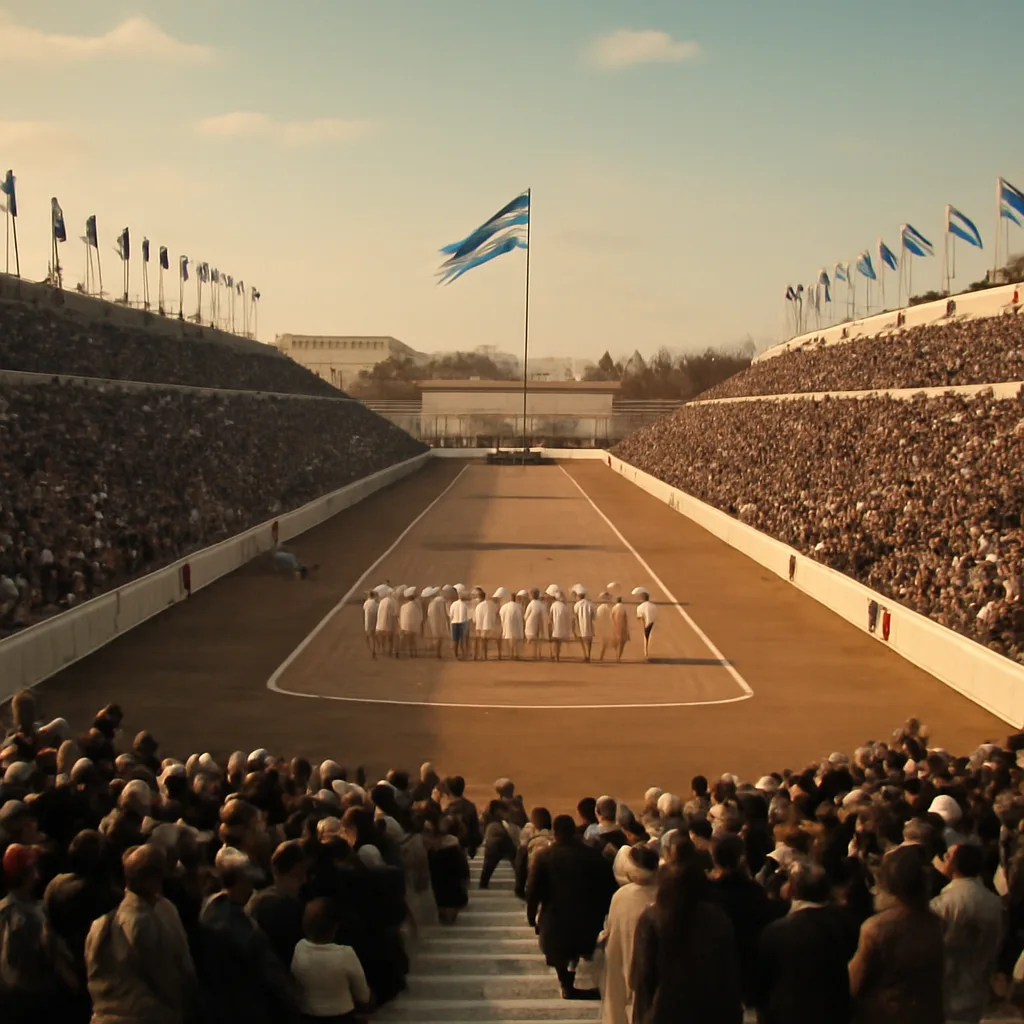
Greece faced limited time and resources but committed to hosting a program that would echo ancient traditions while using contemporary facilities. The Panathenaic Stadium (also called Kallimarmaro), an ancient marble stadium refurbished for the occasion, became the centerpiece. Financed largely by Greek benefactors and the government, the stadium provided a dramatic, symbolic venue with thousands of marble seats and a running track shaped by its classical origins.
Opening day and ceremony
On April 6, 1896, a date selected to coincide with national and religious observances in Greece, the Games opened with a public ceremony in Athens. King George I and other dignitaries attended, and athletes from a dozen nations marched into the stadium. The event blended modern organizational features—timetables, event officials, and medals—with cultural pageantry emphasizing Greece’s link to antiquity. Contemporary reports from newspapers and participants describe enthusiastic crowds, patriotic speeches, and a festive atmosphere.
Competitions and participants
Around 241 athletes (estimates vary by source) from 14 nations took part in 43 events spanning athletics (track and field), gymnastics, swimming, cycling, wrestling, weightlifting, and shooting. Most competitors were men; women were not officially included in the 1896 program. Notable successes included American runner Thomas Burke, who won the 100 meters and 400 meters, and Greek gymnast and weightlifter performances that captured local public interest. Events were contested under rules and equipment of the period, and some organizational irregularities and measurement differences occurred by modern standards.
Legacy and significance
Although modest by today’s standards, the 1896 Athens Games established the template for subsequent Olympiads: a multi-sport international competition conducted under an organizing committee with national delegations. The Games bolstered the prestige of the IOC and supported momentum for regular international competitions. They also fostered renewed global interest in physical education and amateur sport. Debates over amateurism, national representation, and event standards that began in 1896 would shape the Olympics’ development in the decades that followed.
Notes on dates and sources
The widely accepted opening date for the first modern Olympics is April 6, 1896. Contemporary accounts, IOC records, and later historical studies corroborate the overall sequence of events, though participant counts and some event details vary among sources. This summary draws on established historical scholarship and primary-period newspaper reporting; no invented quotations or unverifiable claims are included here.