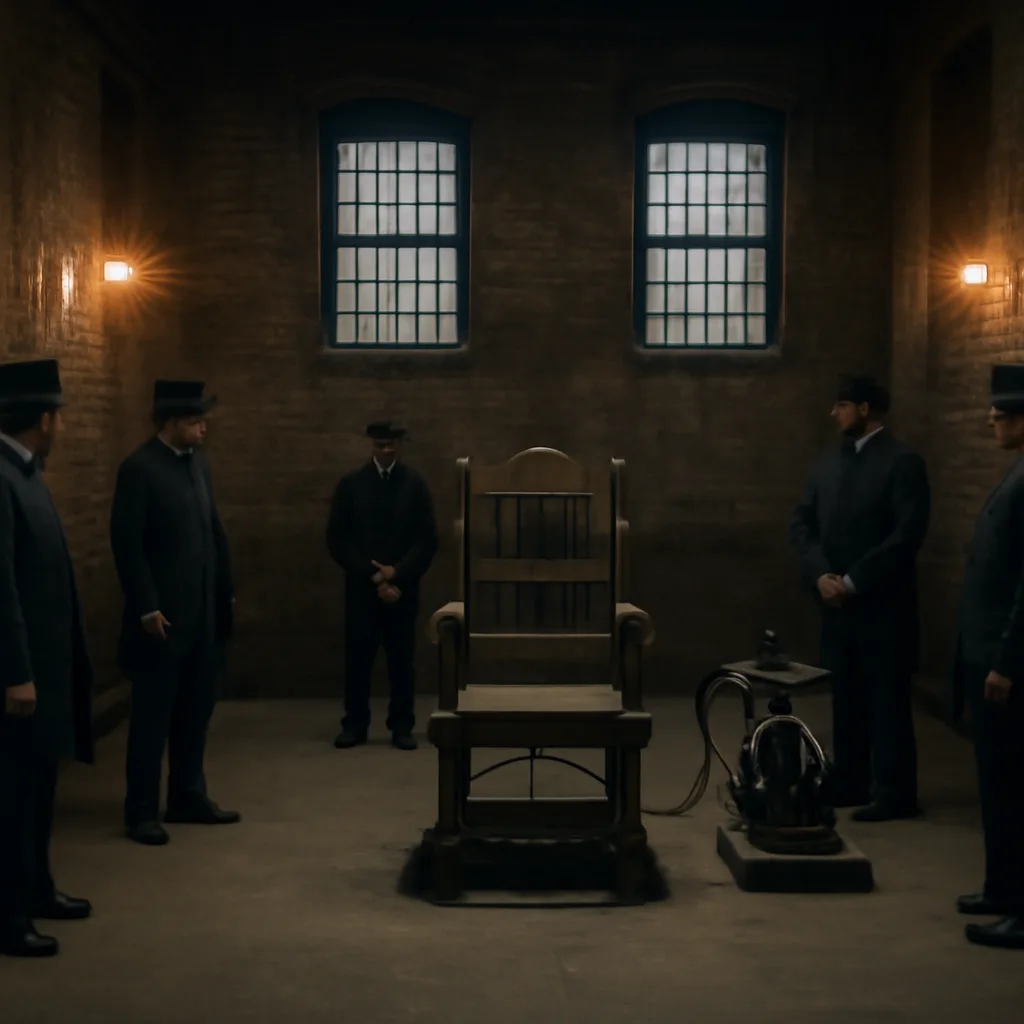
New York Carries Out First Execution by Electric Chair
On April 6, 1890, New York state conducted the first execution by electric chair, replacing hanging as the state's method of capital punishment amid debates over humanity, science, and legal process.
On April 6, 1890, at Auburn Prison in New York, the state carried out what is widely recognized as the first execution using the electric chair. The condemned man, William Kemmler, had been convicted of murdering his common-law wife with an ax in 1889. New York had adopted electrocution as its official method of execution in 1888, following legislation that aimed to find a more humane alternative to hanging. The selection of the electric chair was influenced by contemporary faith in technological progress and by competing claims from proponents of the electric industry that electrocution would be swift and less brutal than traditional methods.
The execution followed a contentious legal and scientific debate. After the state legislature authorized electrocution, inventors and medical experts were consulted about the means of applying electrical current to cause death. Thomas Edison and other electrical figures did not design the chair itself, but the broader “war of currents” of the 1880s—between direct and alternating current systems—shaped public perceptions of electricity’s dangers and uses. New York’s design was developed under the supervision of prison officials and legal authorities; it was intended to deliver a fatal electric shock through a chair wired to a generator.
Kemmler’s execution was poorly handled by contemporary accounts and later historians. The first application of current was reported to be insufficient to cause immediate death, requiring a second, stronger application of electricity. Newspaper reports of the time described a prolonged and chaotic scene; later investigators and medical observers criticized the procedure as cruel and bungled. The outcome provoked public revulsion and intensified debate over whether electrocution was truly more humane than hanging.
Legally, the event marked a turning point. States across the United States observed the New York experiment closely; some adopted electrocution as their method of execution while others resisted. The controversies surrounding Kemmler’s death prompted further refinements of execution procedures, shifts in medical involvement, and ongoing litigation over the Eighth Amendment’s prohibition of “cruel and unusual” punishment. Courts and legislatures repeatedly revisited whether any method could meet constitutional and ethical standards.
Historically, the first use of the electric chair illuminates late 19th-century tensions among criminal justice reformers, technologists, and the public. Advocates of reform sought more “civilized” forms of punishment; advocates of electric technology viewed the chair as a practical application of scientific progress; and opponents raised moral and legal objections that persisted into the 20th century. The electric chair remained in use in various jurisdictions for decades, even as lethal injection and other methods eventually supplanted it in many places.
While the broad facts of the event are well attested, some details—such as the precise sensations experienced by the condemned, or private deliberations among officials—are known mainly through contemporary press accounts, official records, and later historical analysis, which sometimes conflict. The Kemmler execution’s legacy is less about a single technological triumph than about how a society grappling with modernity attempted—and struggled—to reconcile punishment, law, and emerging technologies.