
11/19/1987 • 5 views
Investigation Opens into King's Cross Underground Fire
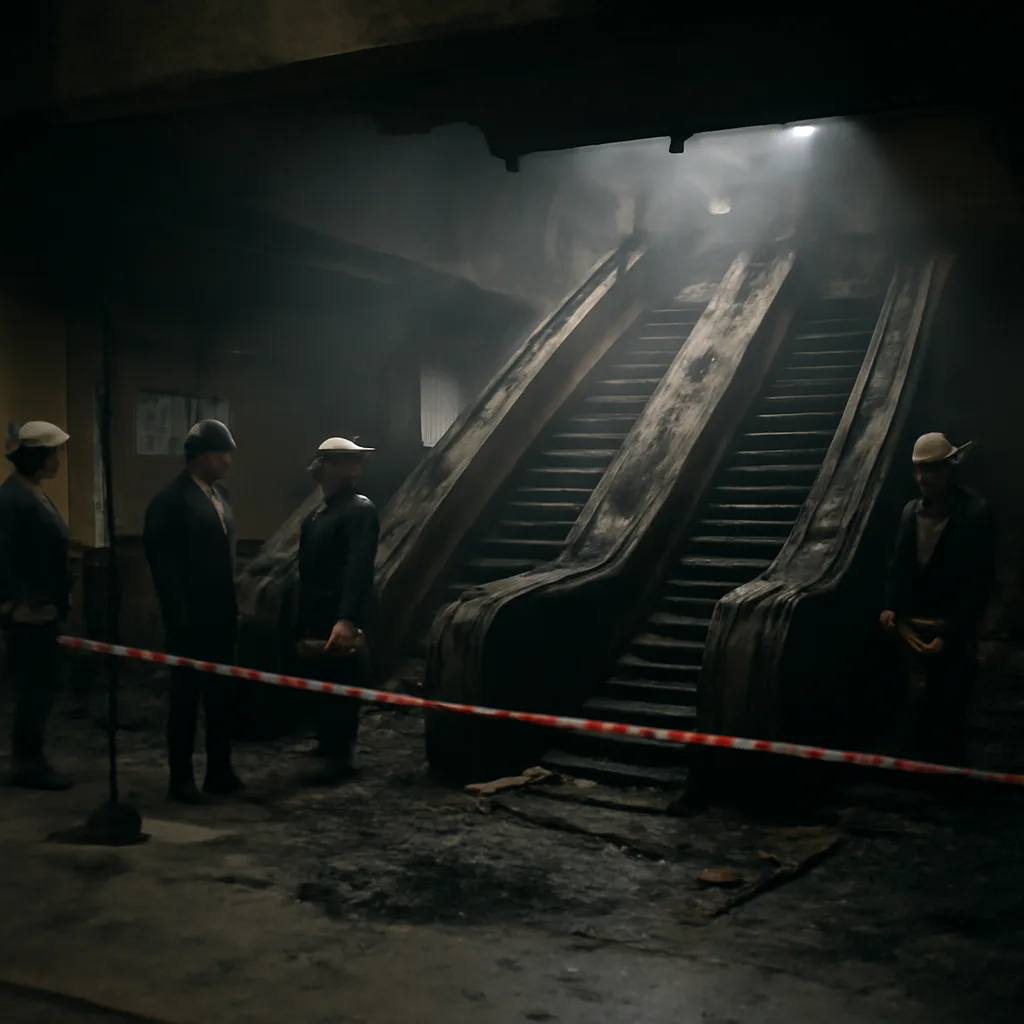
An inquiry has begun into the catastrophic fire at King's Cross Underground station on 19 November 1987, which killed 31 people and injured many more. Authorities are examining causes, safety procedures and station design amid public concern over London Underground fire risks.
Initial response and scene
Emergency services arrived quickly at the station, but the fire, fed by accumulated debris and the wooden escalator structure, spread in a way that complicated evacuation. Smoke and toxic fumes contributed significantly to casualties. The London Fire Brigade and Metropolitan Police secured the site and began recovery and evidence-gathering operations. Engineers and safety officials inspected the damaged areas to identify structural and mechanical failures.
Scope of the investigation
The official inquiry, later led by a public inquiry chaired by Sir Desmond Fennell, covered multiple strands: the immediate ignition source and mechanisms for fire propagation, the condition and maintenance of station infrastructure (including wooden escalators and electrical systems), evacuation procedures and staff training, passenger flow and signage, and the adequacy of existing fire prevention regulations for the Underground.
Technical and operational questions
Investigators examined how a small ignition could escalate into a fatal conflagration. Attention focused on combustible materials under and around escalators (including grease and accumulated litter), the combustibility of wooden escalator components, and the role of ventilation and smoke movement within the ticket hall and platform areas. The inquiry also reviewed the effectiveness of on-site fire detection and alarm systems, communications between staff and emergency services, and the decision-making processes used to manage evacuation and closure of affected lines.
Regulatory and organisational issues
Beyond technical causes, the investigation probed London Transport’s policies and maintenance regimes, staff training for emergency scenarios, and whether existing fire-safety regulations were adequate for sub-surface rail environments. The disaster highlighted tensions between historical station architecture and modern safety expectations, raising questions about the continued use of wooden escalators and the need for stricter controls on combustible accumulations in station voids.
Public and political reaction
The deaths and injuries prompted widespread public concern and media scrutiny. Political figures and transport authorities faced pressure to demonstrate rapid, transparent inquiry and to implement meaningful safety improvements. Campaigners for victims’ families sought accountability and tangible changes to prevent recurrence.
Outcomes and significance
Although the formal Fennell Inquiry reported in 1988 and made a series of recommendations, the investigation’s initiation marked a turning point for London Underground fire safety policy. Among long-term consequences were accelerated removal of wooden escalators from deep-level stations, revisions to fire safety regulations, improved staff training and emergency communication protocols, and changes to maintenance practices to reduce accumulations of flammable debris. The King's Cross fire remains a pivotal case in UK transport safety history, demonstrating how infrastructure, maintenance practices and emergency preparedness intersect in catastrophic incidents.
Uncertainties and further reading
Technical details about ignition mechanisms and smoke dynamics were complex and examined over months of inquiry and testing. For a full account, contemporary official inquiry reports and credible historical summaries should be consulted; this summary avoids speculation and is based on documented findings and widely reported outcomes from the post-incident investigations.